Mobile Commerce Trends Report
1,000+
100+
20+
.avif)
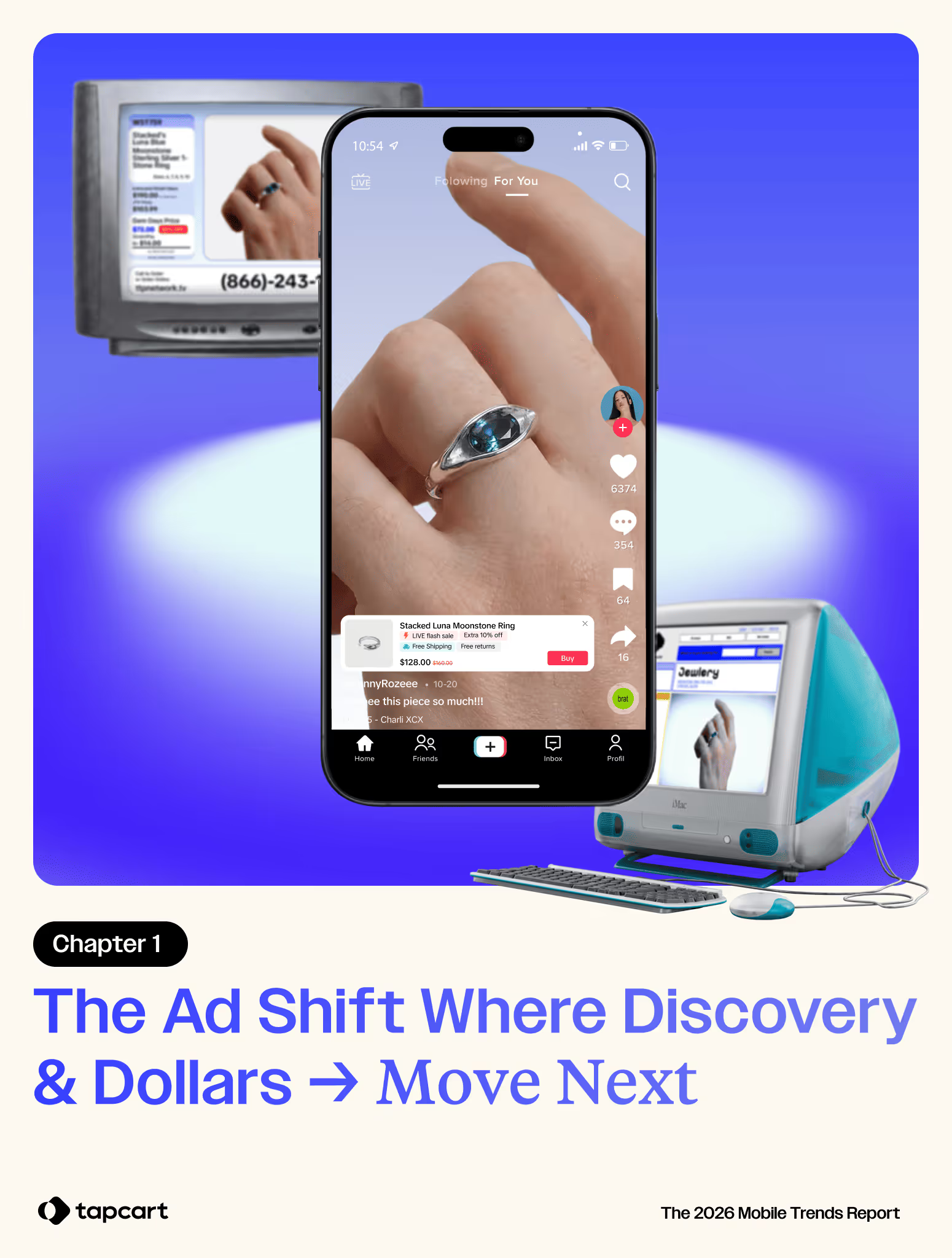
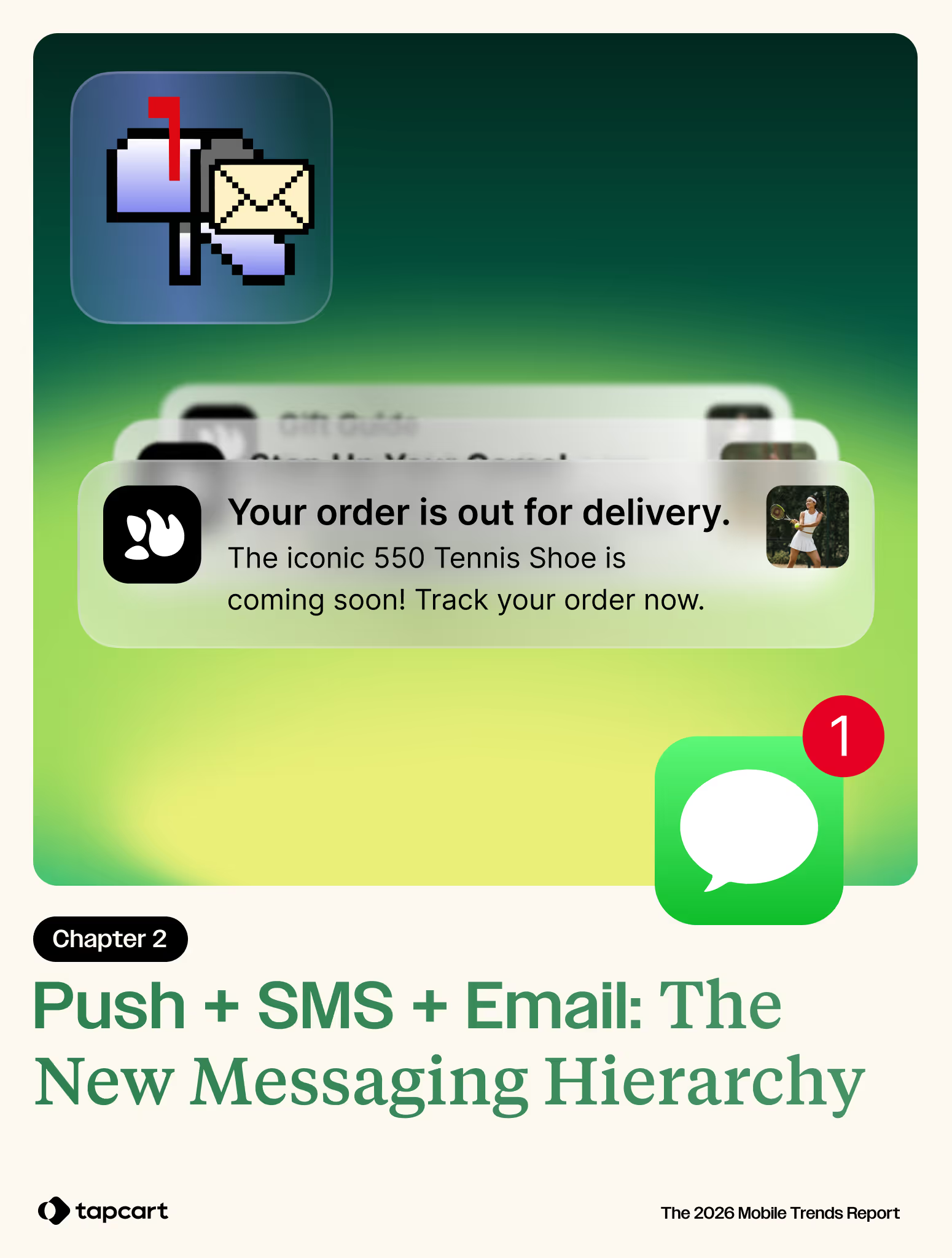
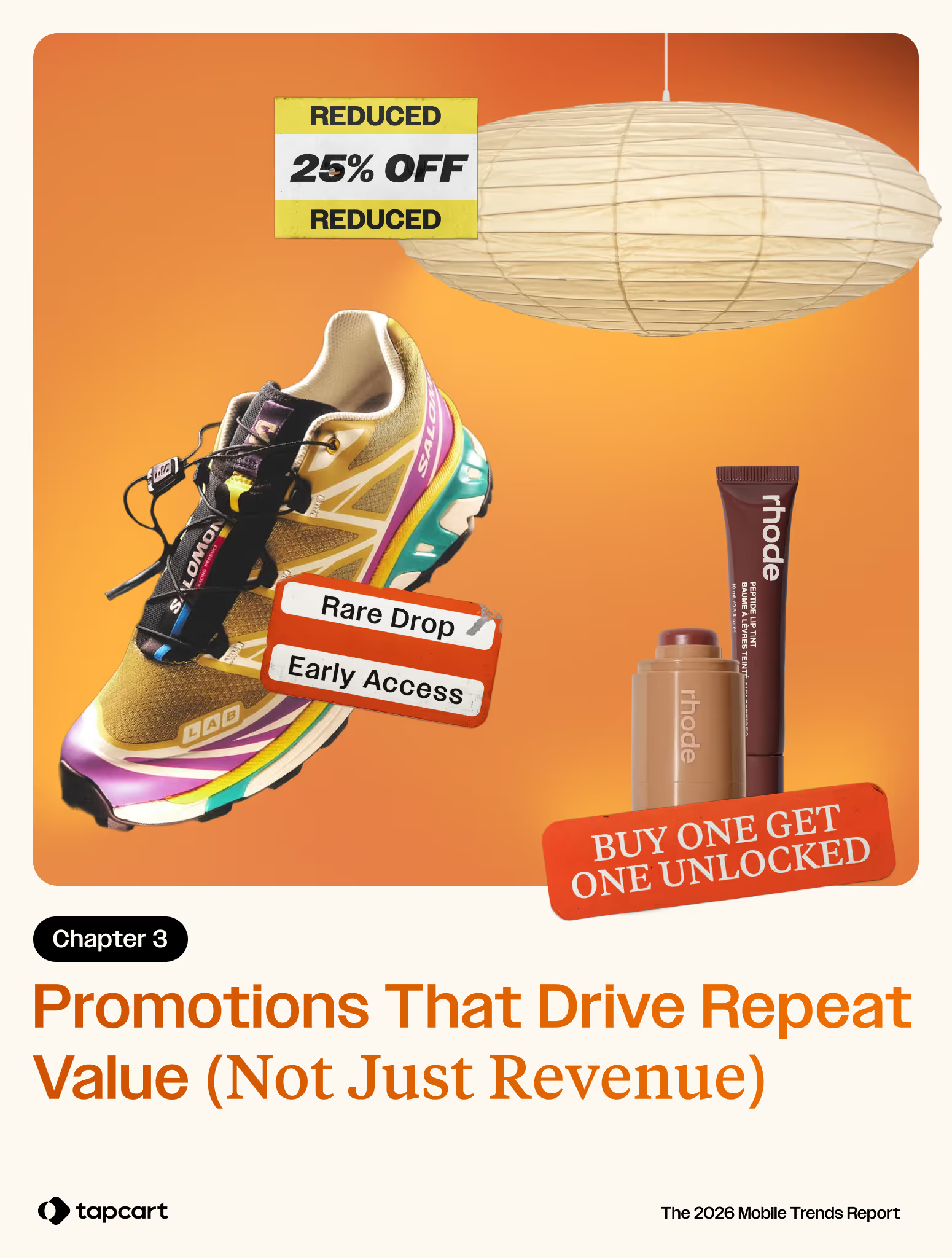
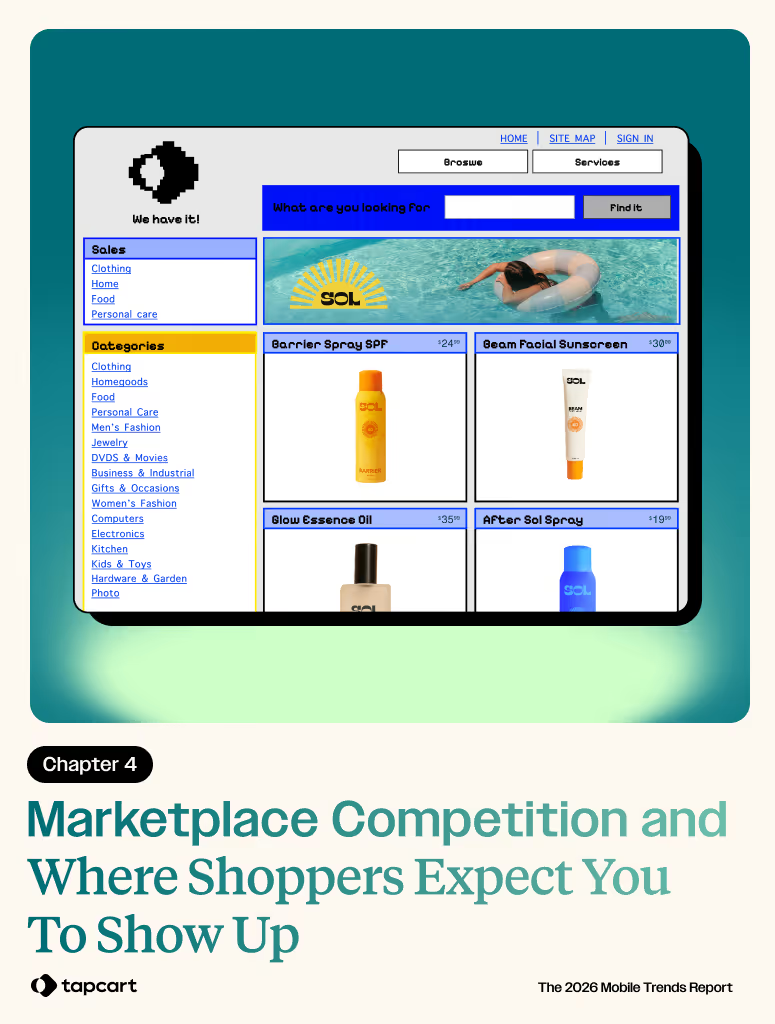








Table Of Contents

Table of Contents


The New AI x Mobile Commerce Reality
METHODOLOGY
This report is based on an online survey conducted between July 11 and July 21, 2025.
Tapcart partnered with Savanta, a third-party research provider, to design and field the survey and collect responses. All respondents were sourced through Savanta’s proprietary panel and screened to ensure they met Tapcart’s mobile and ecommerce shopping criteria.
In total, 1,203 completed surveys were collected.
All respondents met the following qualification criteria:
Age: Between 18 and 70 years old
- Recent ecommerce activity: Purchased something online within the last three months in a qualifying product category and shops during peak season in the last three years
- Mobile behavior: Uses a smartphone for at least some online shopping
- App usage: Has at least one mobile shopping app and makes purchases at least once per month
This ensured the data reflects active, mobile-first shoppers, not casual or infrequent buyers.
All responses were cleaned and validated according to Savanta’s standard quality assurance procedures, which remove low-quality or fraudulent responses (including inattentive, inconsistent, or otherwise unreliable submissions).
Throughout this report, certain differences in results are identified as statistically significant. This indicates that observed differences represent true behavioral variation and are not the result of random fluctuations in the data.
Percentages may not total 100% due to rounding or multi-select questions.
10 Stats That Define the 2026 Shopper:
Ecommerce in 2026 is defined by extremes. Shoppers are more impulsive yet more discerning, more open to new channels but far less tolerant of friction. They jump from TikTok to your site, from email to your app, from “maybe later” to “buy now” in a handful of micro-moments.
Journeys are fragmented, nonlinear, and increasingly expensive to get wrong. Which means teams no longer have the luxury of guessing.
That’s why AI has become the new competitive baseline. It allows brands to test before they invest, predict before they spend, and personalize experiences at scale across channels.
This report shows how leading teams are using AI to connect fragmented journeys, turn mobile apps into high-intent engines, convert impulse into predictable revenue, and protect margin through smarter promotions and loyalty.
If 2024 was experimentation and 2025 was adoption, 2026 is the year AI becomes the default strategy layer of ecommerce.
Access the free report:

The Ad Shift: Where Discovery and Dollars → Move Next


Fast

Facts
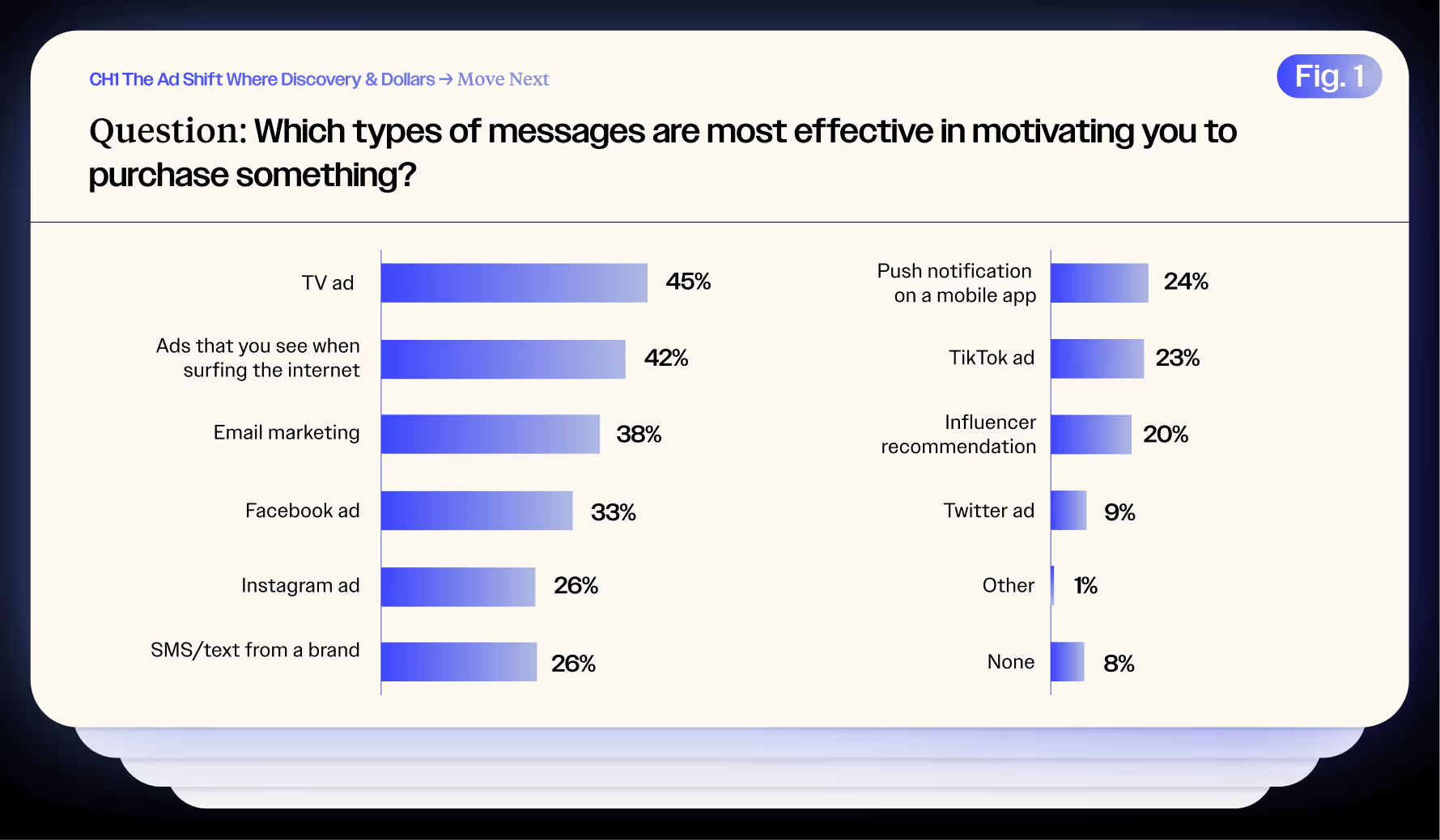
- TV is still the #1 channel for motivating purchases across generations.
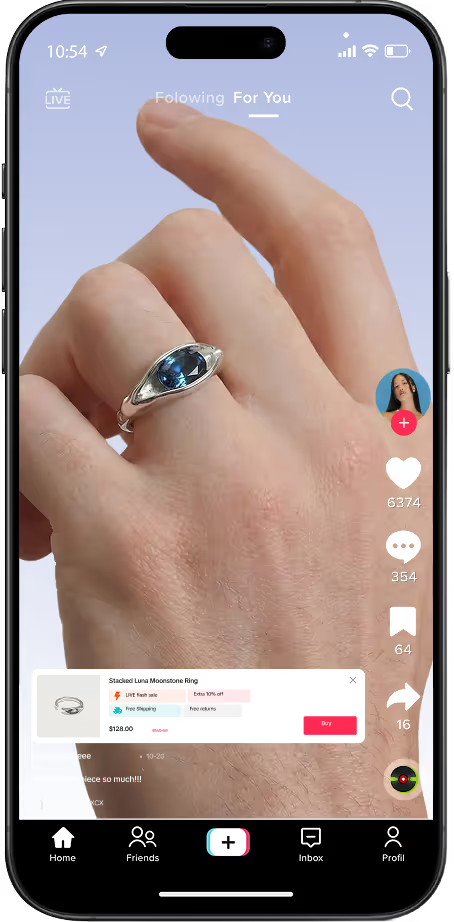
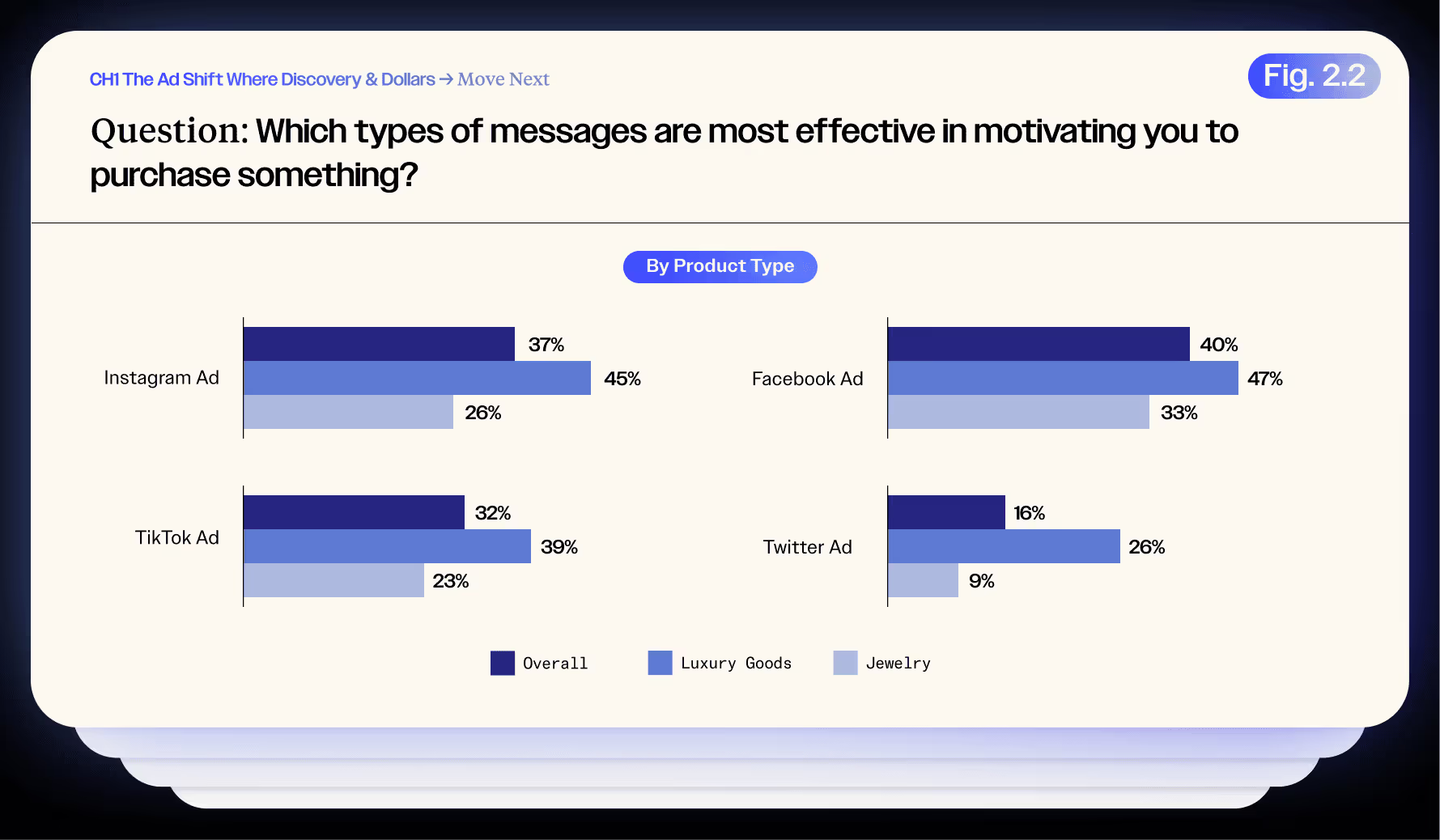
- Luxury shoppers respond strongest to paid social, with Facebook (47%), Instagram (45%), and TikTok (39%) ads outperforming other channels.
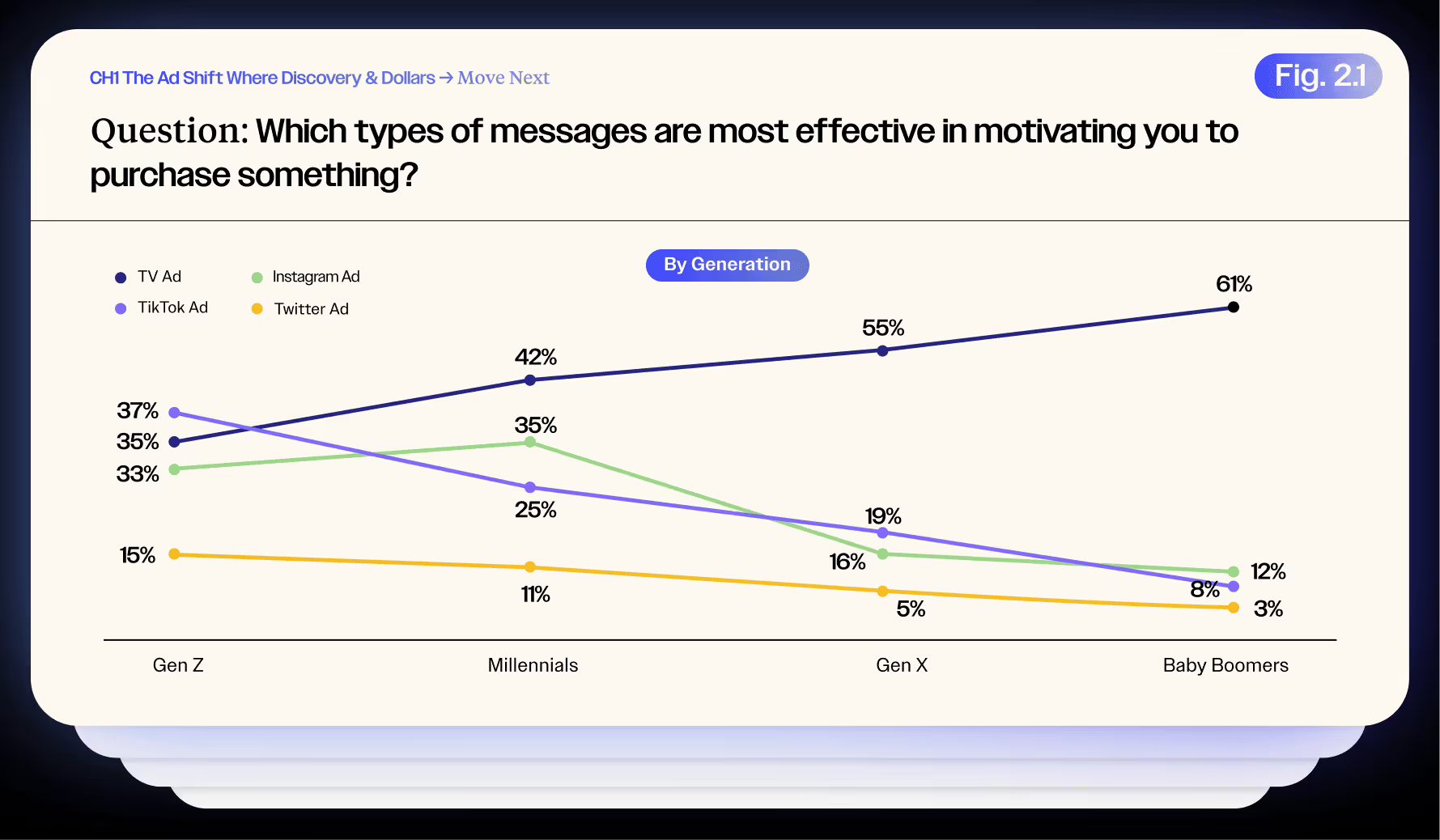
- Gen Z treats social ads like TV, while older shoppers still rely most on traditional TV.
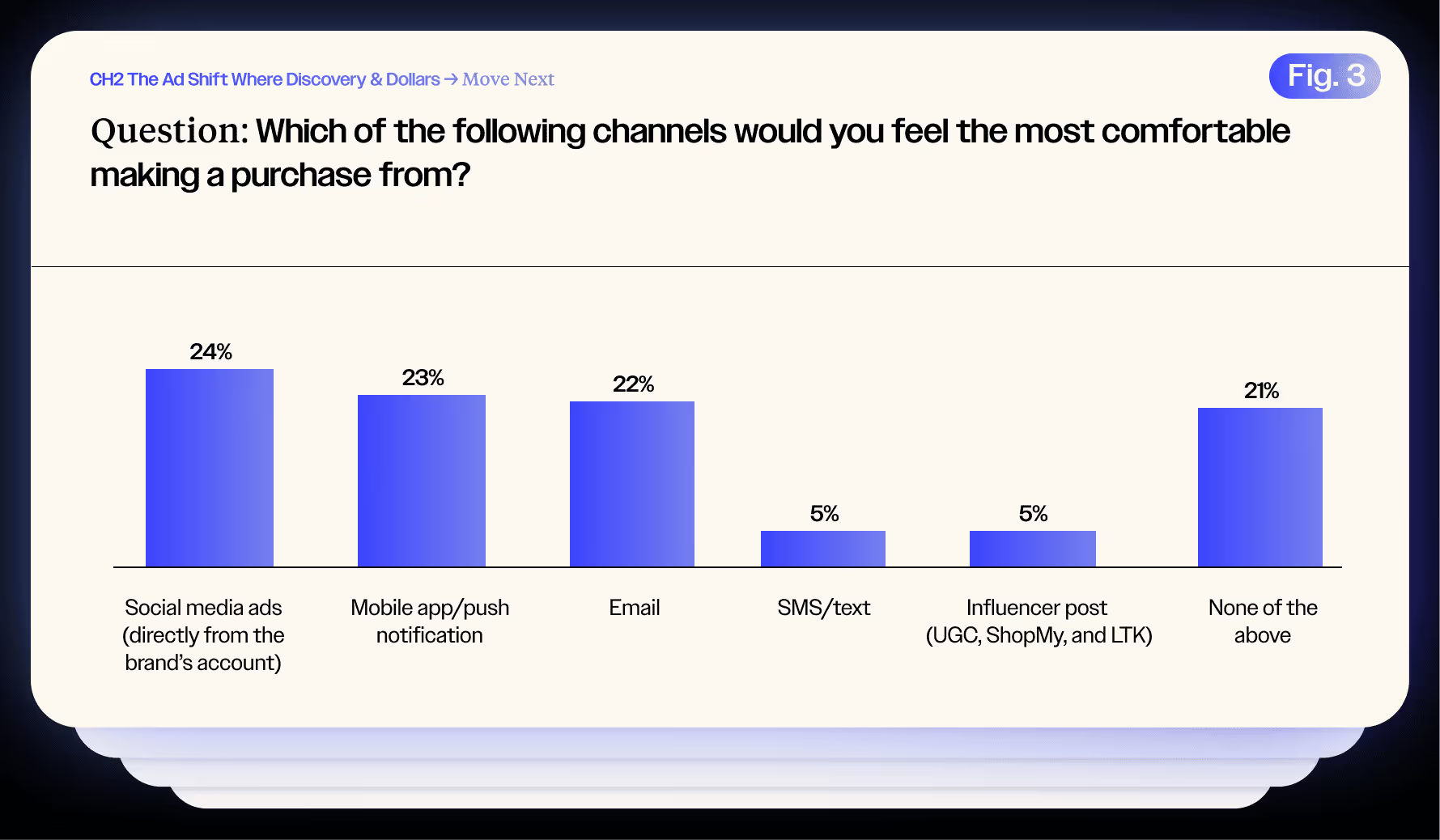
- Only ~1 in 4 shoppers are comfortable buying immediately from a social ad (24%), app push (23%), or email (22%)—meaning trust still decides most conversions.
What the Data Shows
1. Discovery: Where Shoppers First See and Respond to Ads
- TV still leads overall. It remains the most effective channel for motivating purchases, especially among shoppers over 45.
- Digital ads are nearly as strong. Internet ads perform just behind TV, and email + Facebook/Instagram are the only other channels that motivate at least one-third of shoppers.
- Social dominance among younger consumers. Instagram and TikTok ads rise sharply among younger respondents, often matching or surpassing traditional channels for early discovery.
2. Conversion Comfort: Where Shoppers Are Willing to Buy Immediately
- Direct-from-ad purchasing is now mainstream — for some.
- Nearly 1 in 4 shoppers say they’re most comfortable buying directly from:
- a social ad (24%)
- a mobile app (23%)
- an email (22%)
- ~20–25% → none of the above (varies by cohort)
- But trust gaps remain. Only 5% feel comfortable purchasing through influencer content or SMS.
- And skepticism is rising. A similar share of respondents say they wouldn’t buy directly from any channel — a major trust signal that affects ad-to-checkout strategy.
3. Generational Segmentation: The Sharpest Divide in the Data
- Gen Z treats social like TV. Among Gen Z, Instagram and TikTok are as effective as TV at motivating purchases — a pattern not seen in any older cohort.
- Effectiveness declines with age. Social ad impact drops steadily after age 30, while TV and email rise significantly for Gen X and Boomers.
- Older shoppers require clarity and trust. Boomers convert best on channels that feel linear, informative, and familiar — TV and email remain their gold standard.
4. Luxury Buyers: The Most Distinctive Audience Segment
- Luxury and jewelry shoppers skew social, hard.
They are far more likely than average shoppers to be influenced by:- TikTok
- Visual-first environments matter. These shoppers respond strongly to premium imagery, vertical video, and aspirational creative.
- High-touch personalization influences conversion. Luxury buyers reward brands that match tone, exclusivity, and emotional resonance across every touchpoint.
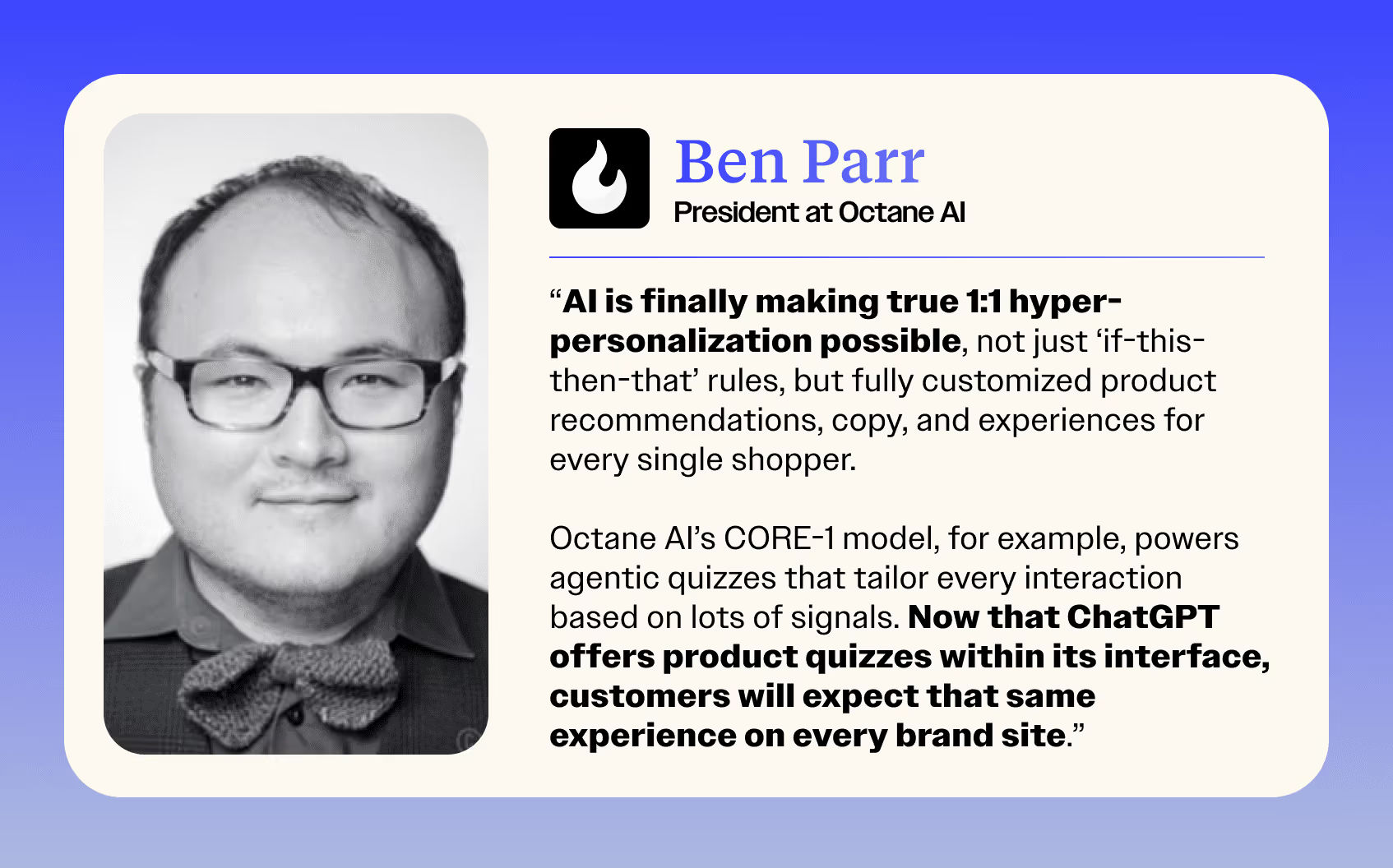
Taken together, the data shows shoppers no longer respond to static personalization rules. Shoppers expect experiences that adapt in real time to who they are, what they’re doing, and why they’re there.
What It Means for Brands
Why Fragmented Attention Is Quietly Blowing Up Your CAC
The customer journey is fragmenting faster than most brands can keep up with. Shoppers now discover, evaluate, and convert across entirely different emotional environments, and the gap between those environments is widening.
- Rising CAC means misallocated spend is more expensive than ever.
- Creative mismatch (wrong tone, wrong channel, wrong moment) erodes trust instantly.
- Emotional resonance varies by audience, and the gap is widening: Gen Z needs social-first storytelling; Boomers want email and TV clarity.
- Luxury and premium shoppers demand high-touch personalization, and tolerate fewer friction points.
This shift is already playing out in how leading teams are applying AI across creative production and conversion paths.
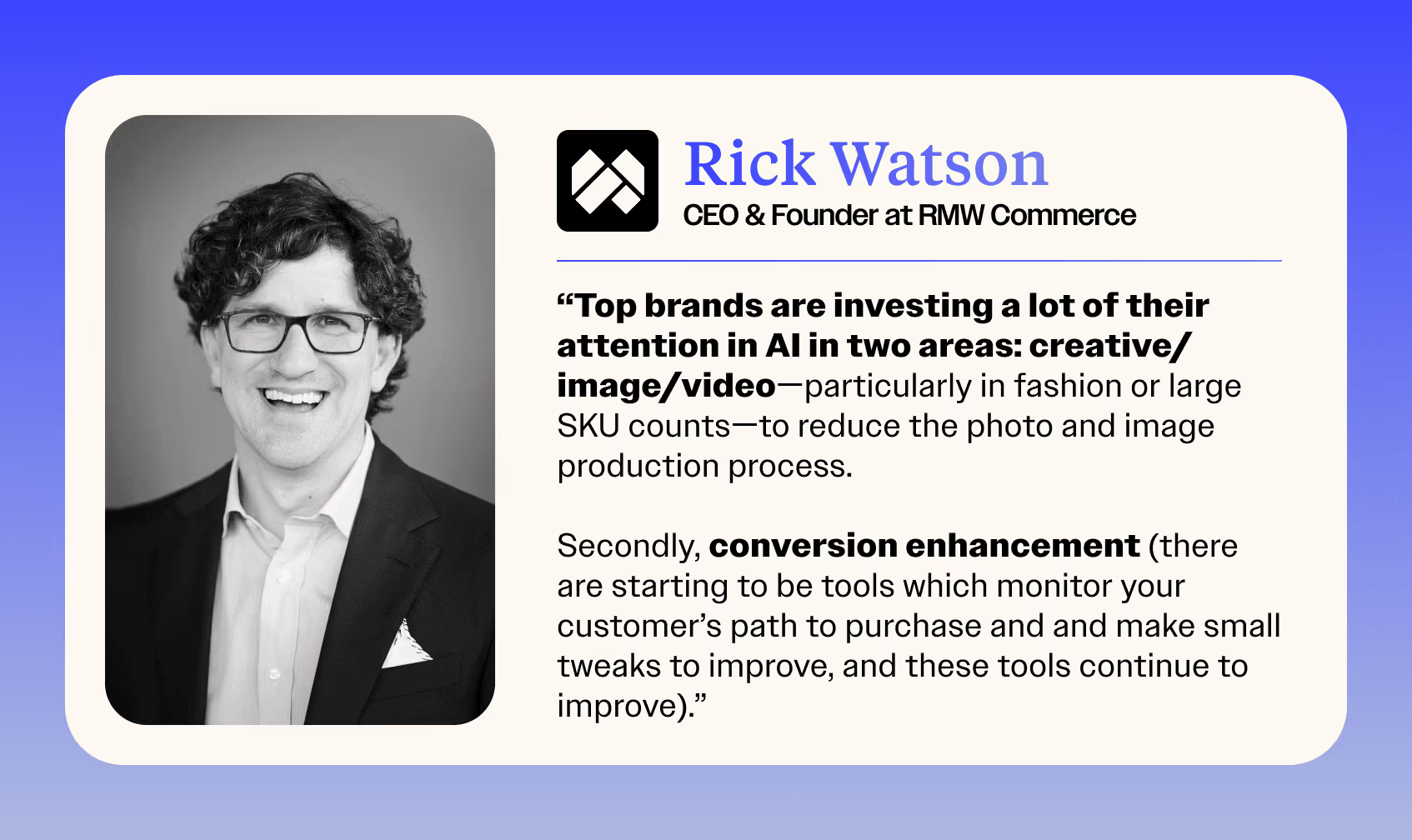
Case File → Alo: Narrative Continuity Across Every Channel
Alo reduces funnel drop-off by tailoring creative to the channel and audience (TikTok-native UGC for Gen Z; longer-form tutorials/BTS for older shoppers) while keeping the story consistent from ad → PDP so every click feels like a seamless continuation.
Steal this play:
- Pick one “hero SKU” per campaign and let it carry the story across social, landing, PDP, and retargeting.
- On PDP, lead with proof—not poetry: feature callouts, use-case images, and “this solves X” clarity above the fold.
- Keep the promise consistent: if the ad sells “the perfect travel bag,” the PDP should immediately show travel-specific proof (compartments, organization, carry-on fit).
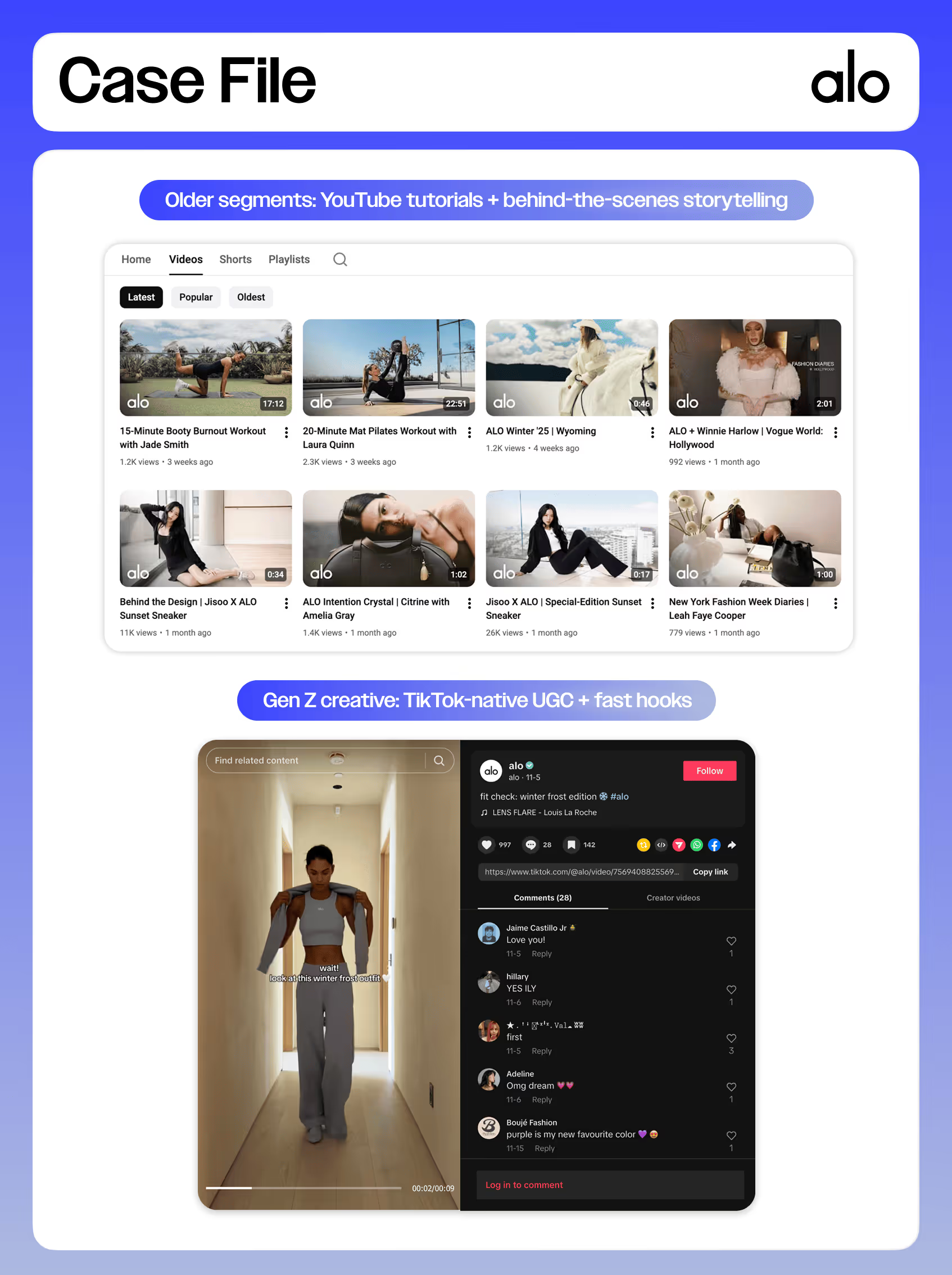
Case File → Calpak: Validates TikTok Hype with Proof-Led PDP Design
CALPAK turns TikTok discovery into conversion by rallying campaigns around a single hero product (the Luka Duffel) and using the PDP to instantly validate the hype with scannable utility proof (features, use cases, “why it’s worth it”) that makes checkout feel obvious.
Steal this play:
- Pick one “hero SKU” per campaign and let it carry the story across social, landing, PDP, and retargeting.
- On PDP, lead with proof—not poetry: feature callouts, use-case images, and “this solves X” clarity above the fold.
- Keep the promise consistent: if the ad sells “the perfect travel bag,” the PDP should immediately show travel-specific proof (compartments, organization, carry-on fit).
AI Actions to Try Now
Before we dive in, here's a simple way to think about how modern teams are applying AI across growth.
Most AI tactics fall into three practical layers, including how teams decide, how experiences feel, and how journeys stay connected across channels.
This structure is guided by Huang & Rust’s AI framework, but what matters here is execution. The actions below show how leading brands are using each layer to reduce waste, increase relevance, and convert intent faster.
How AI Cuts CAC and Lifts ROAS Across Channels
1. Predictive Channel Allocation: Stop Funding the Wrong Screens (Thinking AI)
Your audiences aren’t just scattered across different channels, they emotionally prefer different ad environments.
- Older shoppers respond strongest to TV and email, where messaging feels linear, informative, and familiar.
- Gen Z and luxury buyers convert on TikTok, Instagram, and vertical video, where storytelling feels fast, aspirational, and visual-first.
The challenge with this? Human teams are too slow to manually redistribute budget across fragmented channels, especially when performance shifts hourly during peak season.
Try This AI Tactic:
Use predictive models to automatically identify the highest-converting channel by:
- Age (Gen Z vs Boomers)
- Category (luxury vs essentials)
- Intent level (browsers vs cart abandoners)
- Past engagement (click depth, session quality, add-to-carts)
This is why channel strategy alone isn’t enough. Emotional alignment now determines whether creative actually converts.
2. Emotionally Aligned Creative: Matching the Mood, Not Just the Demographic (Feeling AI)
Different audiences don’t just prefer different channels, they prefer different emotional languages.
AI can autonomously tailor tone, structure, and visual identity to match:
- Vertical, high-energy video for younger shoppers
- High-trust, clarity-first messaging for older audiences
- Aspirational, premium visuals for luxury buyers
- Problem/solution frameworks for essentials shoppers
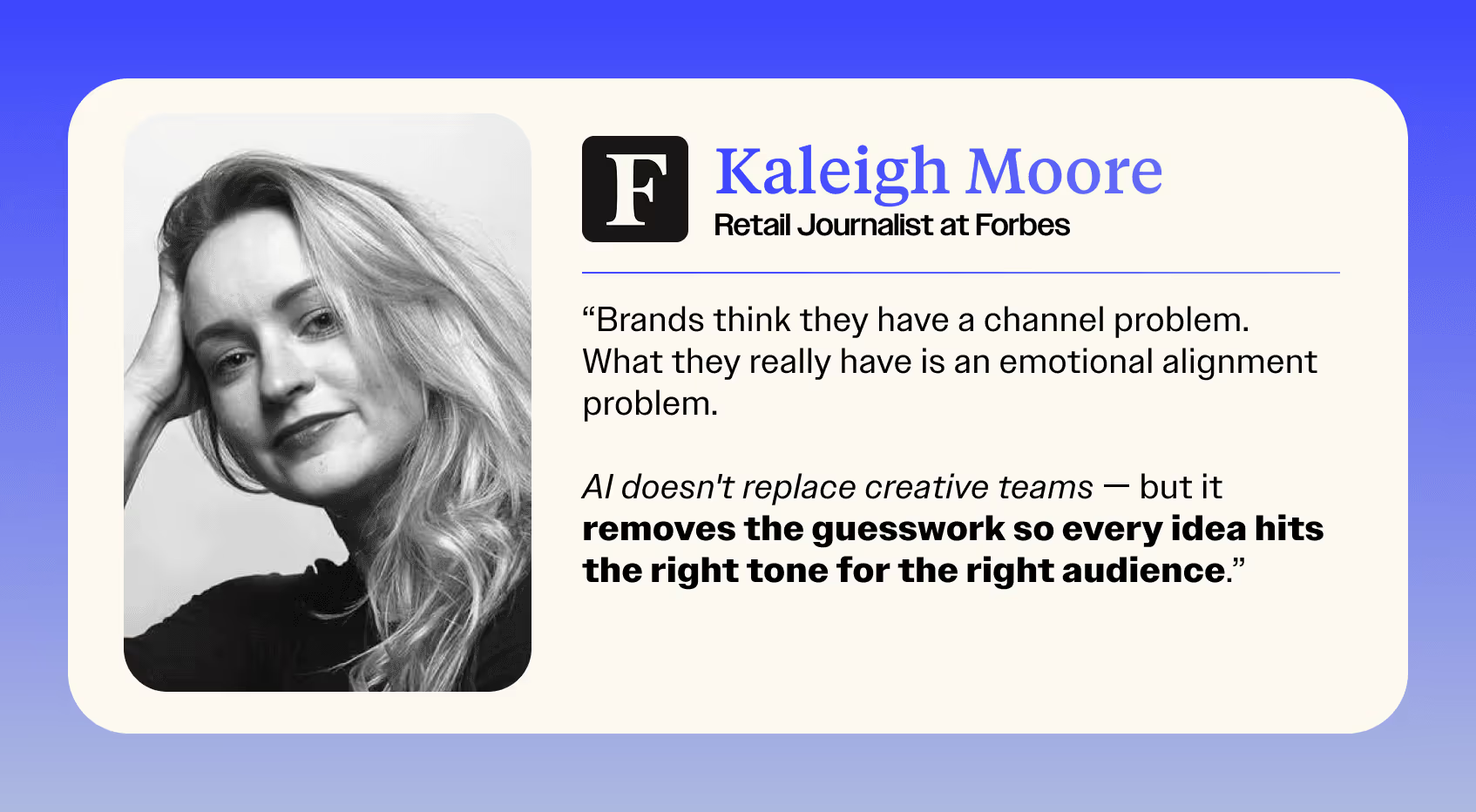
This matters because the real conversion killer isn’t bad creative, it’s emotionally mismatched creative. What AI now does automatically is
- Adjusts ad tone to match demographic sentiment
- Autogenerates dozens of creative variants for testing
- Predicts which visuals will outperform before launch
- Localizes the “energy” of each ad to the culture of the platform (TikTok ≠ Reels ≠ TV ≠ email)
AI is making ads faster and emotionally accurate.

3. Making Every Click Feel Like the Same Story (Narrative AI)
Today’s shopper doesn’t move through a linear funnel. They’re bouncing all over the place, across multiple channels and touchpoints.
A TikTok ad → an IG Story → your mobile app → an email → the checkout.
This is where most brands lose conversions: the tone, visuals, and messaging don’t match.
If the first touchpoint feels fun and modern, but the PDP feels generic or outdated, the buyer feels a story break and drops.
Since ~1 in 4 consumers is now comfortable buying directly from an ad, AI must ensure the entire journey feels like one continuous experience:
The ad →The landing page → The PDP → The app → The email → The push…
…all share the same emotional arc.
What AI does here:
- Carries over messaging from ad → PDP automatically
- Surfaces ad-referenced attributes in the product page modules
- Syncs visuals across paid + owned channels
- Adjusts tone dynamically based on the ad that brought the user in
- Creates persistent narrative “threads” across touchpoints
This unlocks a connected, story-driven buying experience that feels intentional, not stitched together.
Mini AI Toolbox
- Notion AI Agents Collection (Paid) -> Prebuilt multi-agent automations for campaign planning, creative, and analytics.
- ChatGPT Prompts Library for Marketers (Free) -> Structured frameworks tailored to ecommerce, segmentation, and storytelling.
- AdCreative.ai -> Generates image + video ads using your URL, scores them on predicted performance, and integrates with Meta/Google for rapid testing.
- Pencil -> Builds ad variants and assigns each one a predictive “Pencil Score” to prioritize winning concepts.Structured frameworks tailored to ecommerce, segmentation, and storytelling.
- Creatify -> Lightweight tools for spinning up fast video/image variants for lean teams.
Push + SMS + Email: The New Messaging Hierarchy
Fast

Facts
- 84% of luxury shoppers engage with push notifications (the highest of any category).
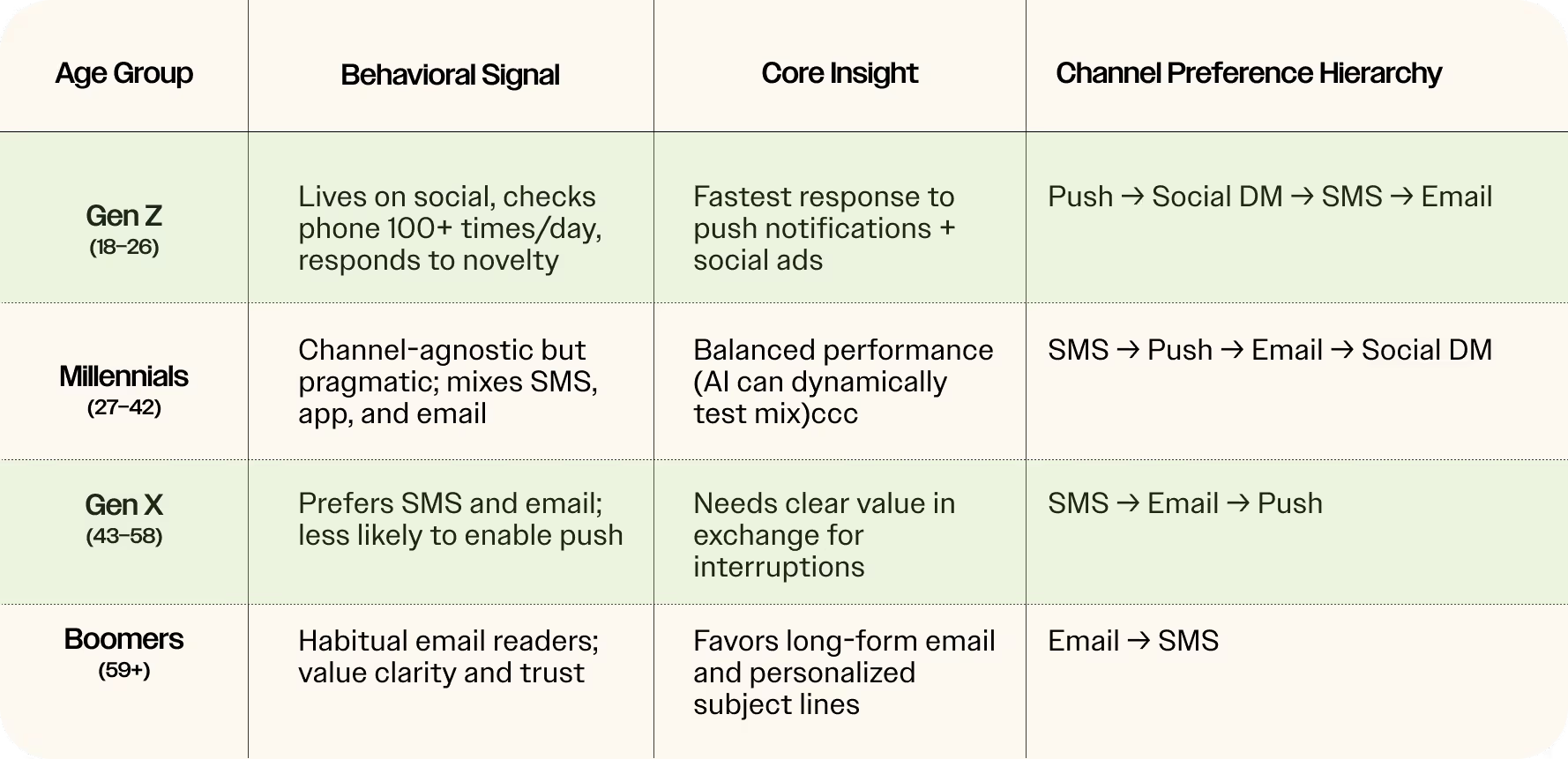
- Push wins with Gen Z, SMS with Gen X, email with Boomers. Preference drops steadily with age.
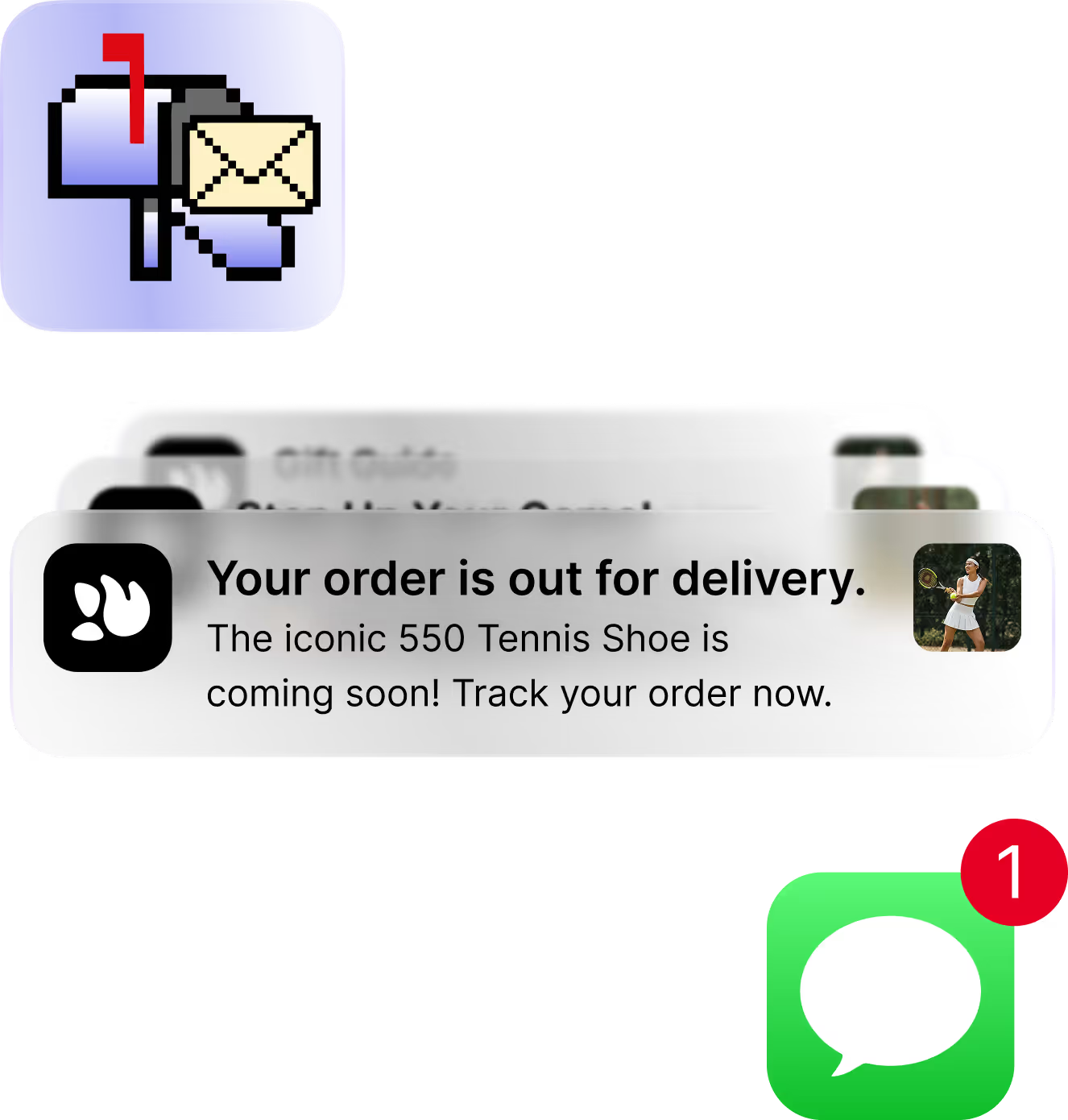
- Shipping updates (43%) and flash sales (42%) are the most effective notifications overall.
- 33% shoppers rarely or never check push, raising the cost of misrouted messages.
What the Data Shows
1. Push Notification Behavior: High-Intent, High-Value, and Unlocked by AI Precision
- Only 25% of shoppers look at push notifications “all or most of the time.”
- 40% check them occasionally.
- 35% rarely or never look at push.
- Luxury shoppers are the strongest push-engagers across the entire dataset. They’re significantly more likely to open and act on push notifications compared to other segments.
- The most valuable push notifications are time-sensitive:
- Shipping updates
- Flash sales
- Low-inventory alerts
- The least useful push messages are:
- General brand updates (only 4%)
- New arrivals
- Generic product recommendations
- Push beats SMS for urgent moments. When urgency is high (flash sale, restock, countdown), shoppers slightly prefer push (41%) over SMS (31%).
2. Urgency Is Generational: Push for Gen Z, SMS for Gen X, Email for Boomers
- SMS preference grows with age. Gen X prefers SMS to push. Boomers prefer email → SMS → push in that order.
- SMS wins for medium urgency (restock, cart reminder, back-in-stock)
- Email is low-engagement, except for automated flows. Only 15% prefer email for time-sensitive updates, BUT abandoned-cart automations outperform campaigns by 30× RPR, proving “slow” channels still convert when automated + personalized, according to Klaviyo’s 2025 email marketing benchmarks report.
- Email wins for low urgency (narrative, loyalty, education)
- Many shoppers avoid real-time messages altogether. Roughly a quarter prefer “none of the above” for buy-now prompts, signaling rising skepticism and a demand for trust, not just urgency.
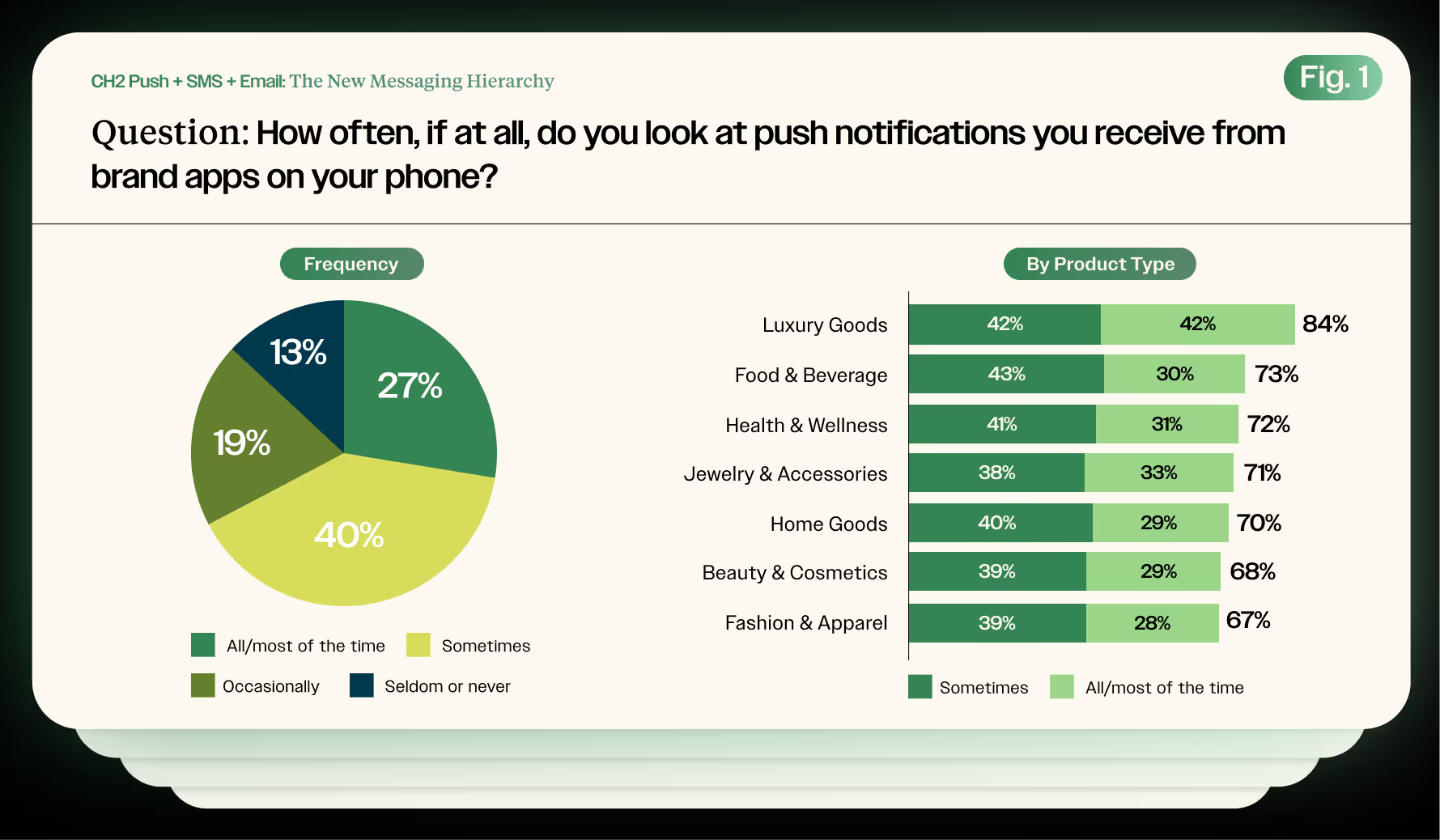

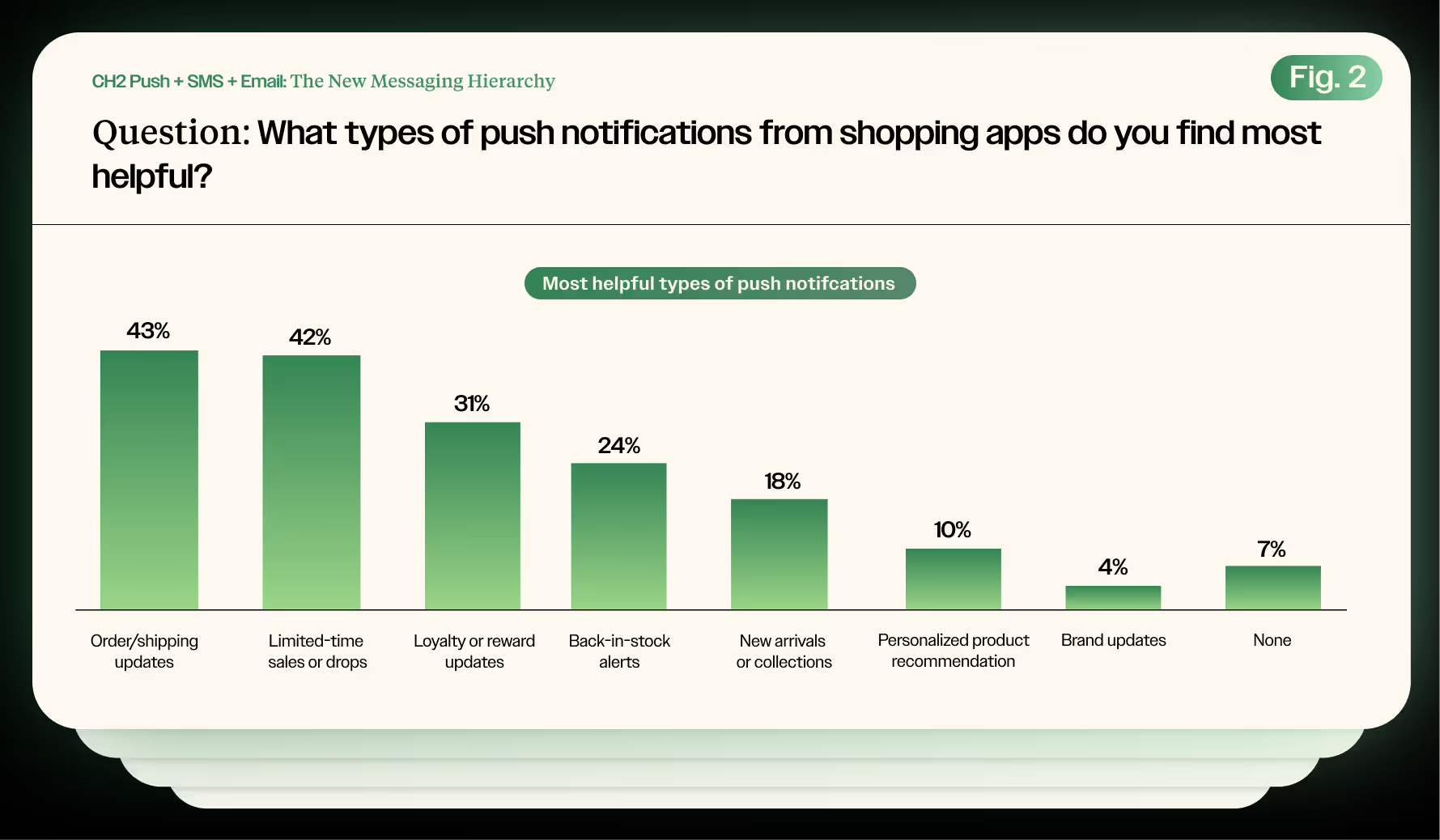
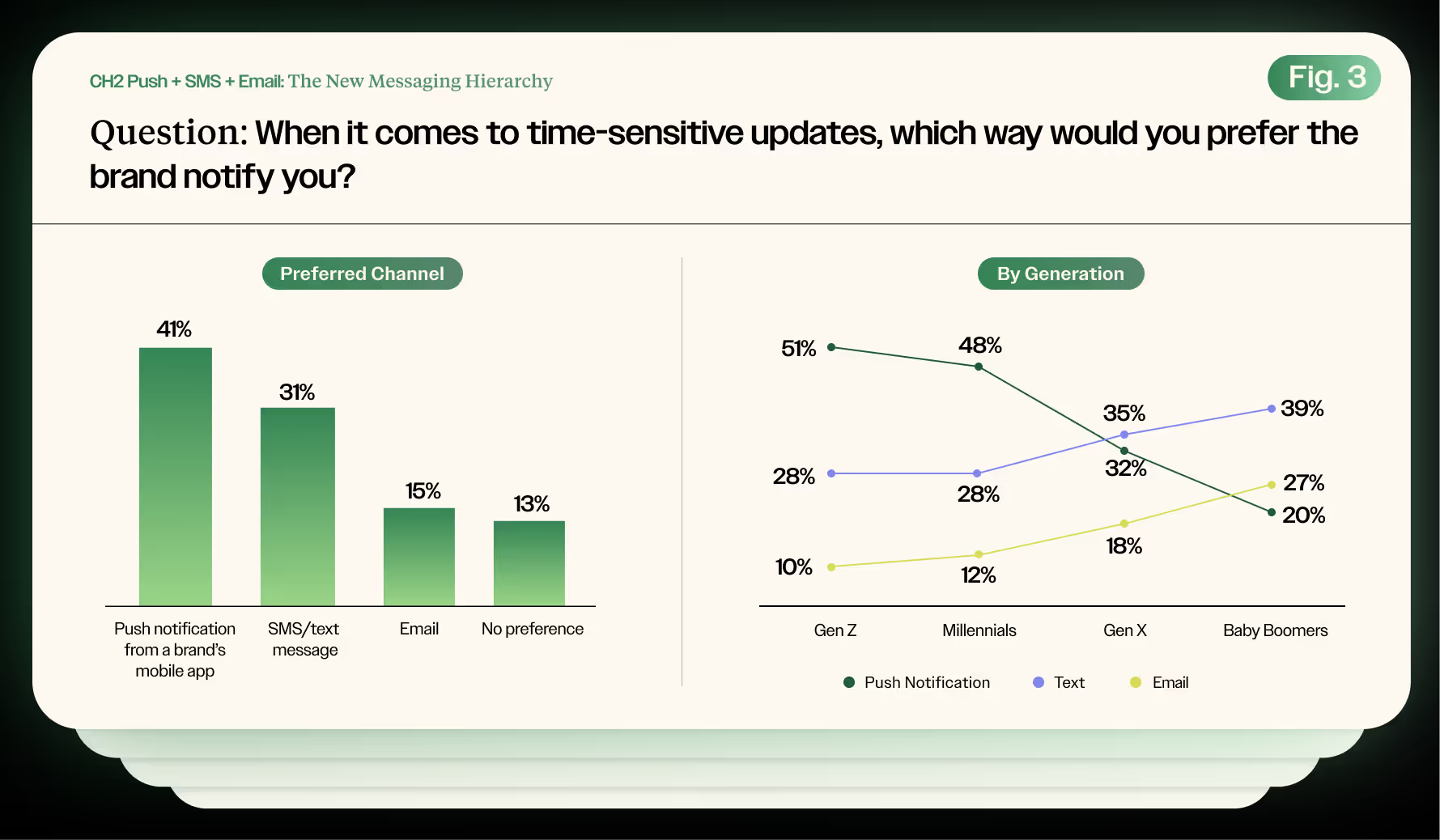
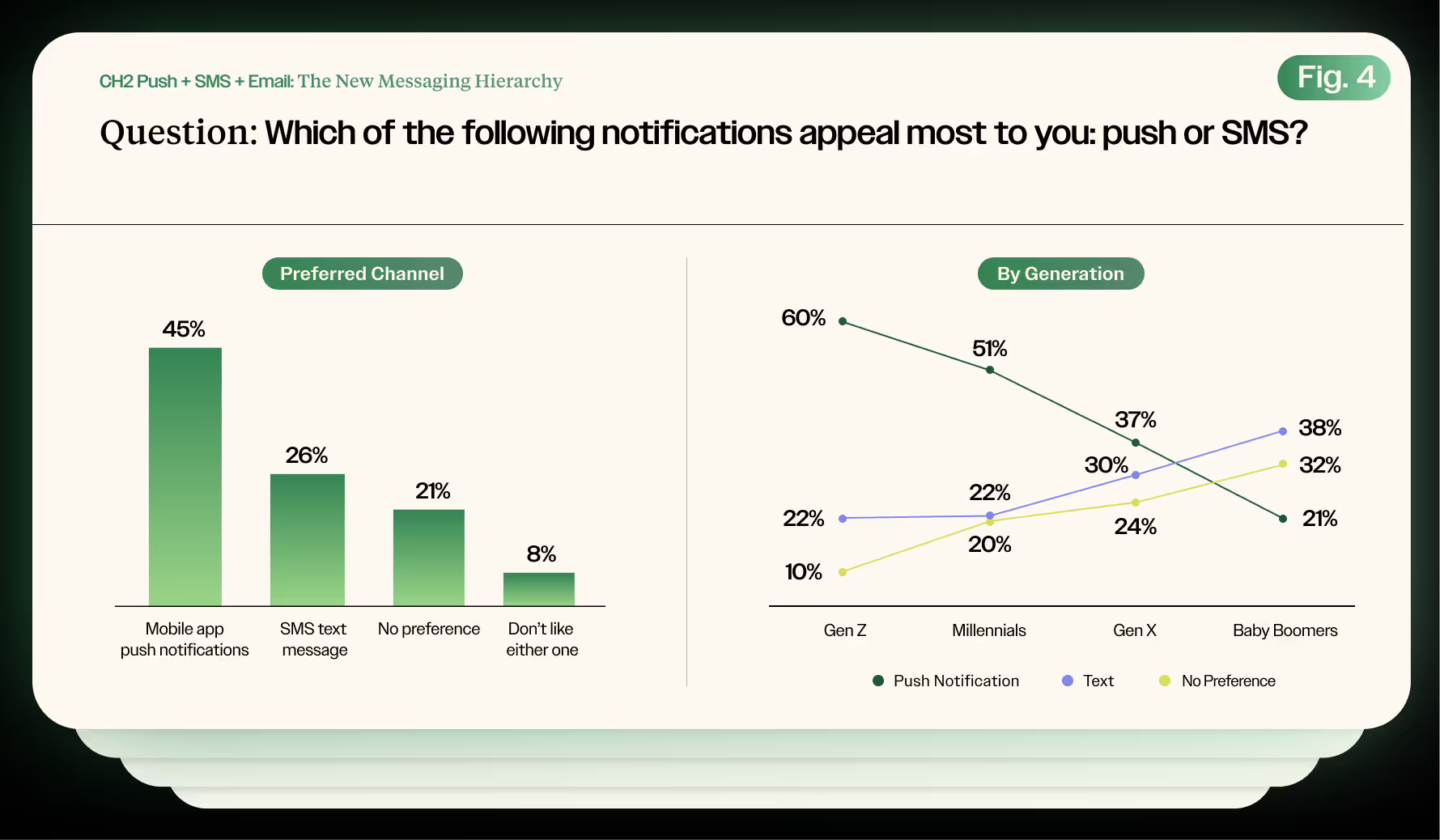
These patterns make one thing clear: the challenge isn’t sending more messages, but it’s deciding which message belongs where and when. That orchestration problem is exactly where AI begins to change how modern teams operate.
What It Means for Brands
Why Sending More Messages Isn’t the Problem —Misrouting Them Is
The modern consumer is overwhelmed by notifications. They don’t simply ignore what feels irrelevant; they actively opt out.
This means a poorly routed message doesn’t just miss revenue; it erodes trust and future deliverability. But the real challenge is deeper than channel overload:
- Consumers don’t behave uniformly anymore. A Gen Z shopper can check their phone 100+ times a day; a Boomer checks email twice and ignores push entirely.
- Brands often assume their best messages should go to every channel. They shouldn’t.
- The emotional context of each channel matters. SMS feels personal. Push feels instant. Email feels thoughtful.
- The cost of a mismatch is rising. CAC is up, inbox fatigue is real, and the tolerance for “batch-and-blast” messaging is gone.
In an era where shoppers jump from TikTok ad → SMS → email → brand app → checkout, the brands that win aren’t the ones who message the most because they’re the ones who message correctly.
That’s why AI must take over the orchestration layer.
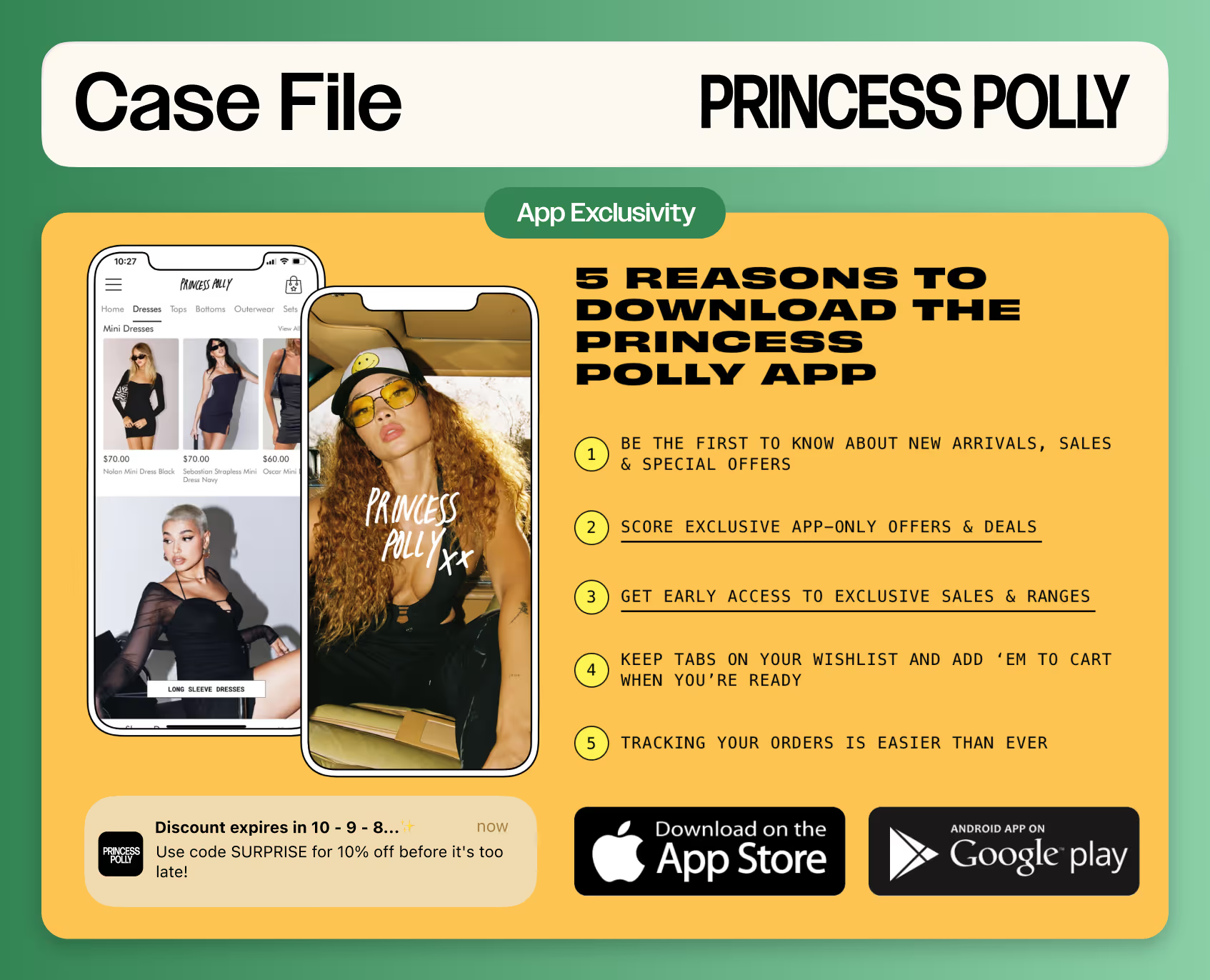
Case File → Princess Polly: The Blueprint for Converting Social Demand into Owned Revenue
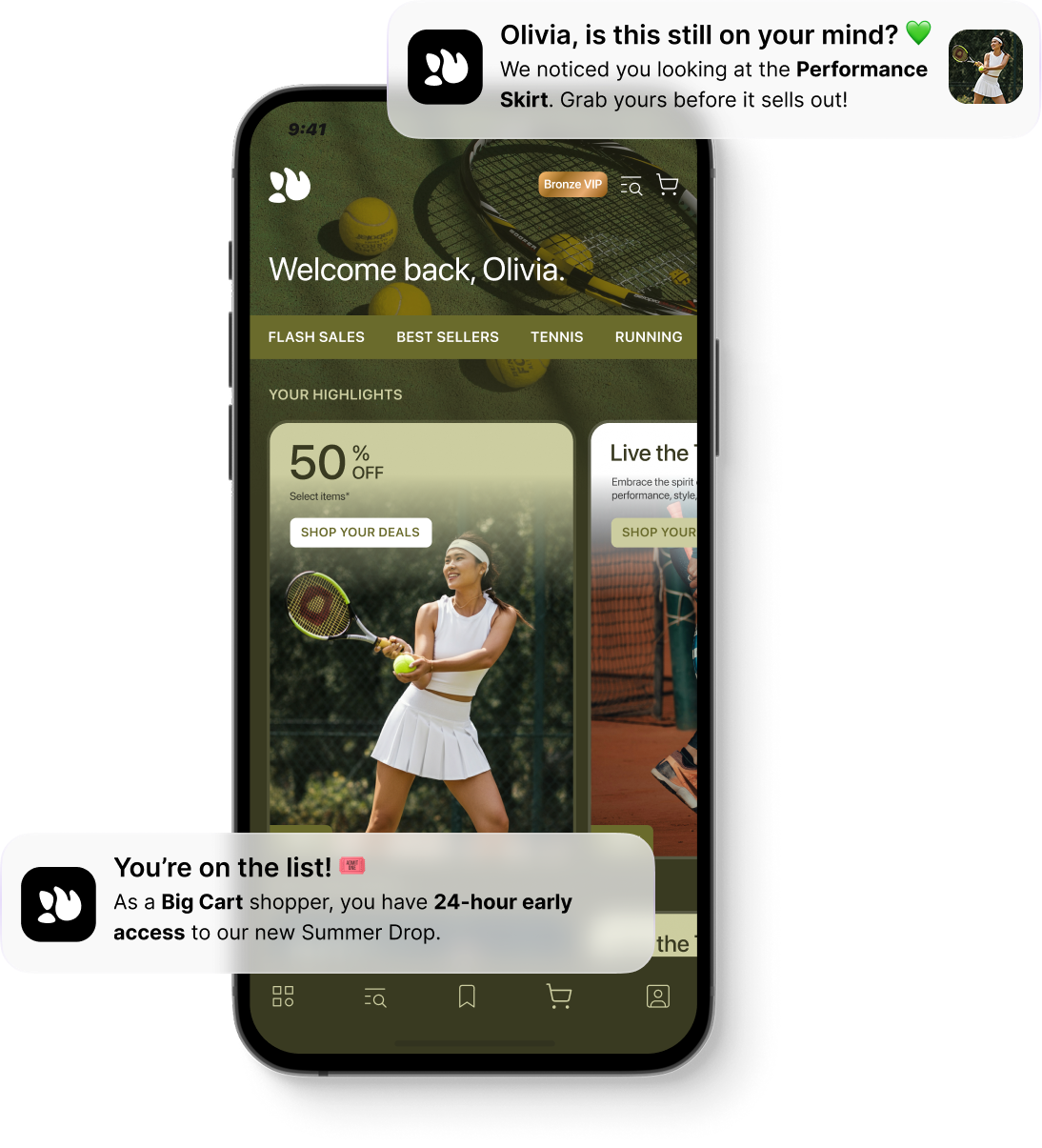
Princess Polly turns social discovery into an owned, high-intent customer loop. They use app-first incentives (early access + app-exclusive discounts) to convert hype quickly, then rely on push to keep customers engaged and buying.
Why this works: Princess Polly captures demand at peak hype with app-first access, then turns that moment into an owned retention loop—using push to re-engage for free and positioning the app as a “VIP lane” customers actually want to enter.
They were able to send thousands of push notifications without paying for every touchpoint. And the best part? 28% of total revenue comes from app and they see a 27% higher CVR on app vs. mobile website
Steal this play:
- Tie drops and promotions to app-first access (early access + app-only perks).
- Use push to extend the story after social discovery (launch reminders, back-in-stock, VIP access).
- Build the app as the “VIP lane” so customers choose it as their fastest path to checkout.
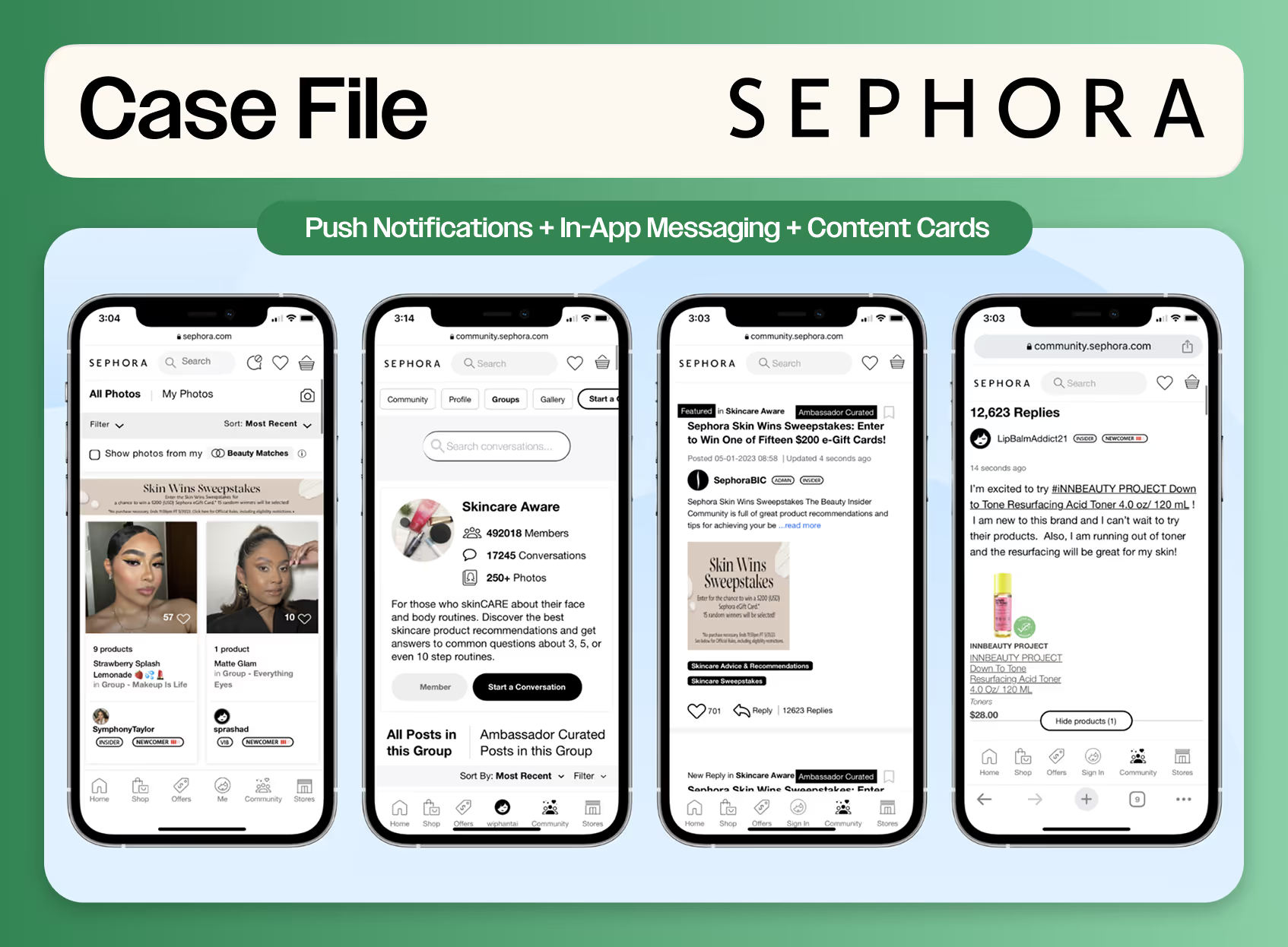
Case File → Sephora: Orchestrated Messaging That Doesn’t Rely on One Channel
Sephora SEA proves what enterprise teams already know: the best messaging doesn’t “pick a channel,” it stacks channels by purpose. To drive adoption of an AR feature, they used a coordinated sequence of push notifications + in-app messaging + Content Cards (persistent in-app content), paired with a short step-by-step video that reduced friction and made the action obvious.
Why this works: Push notifications create the moment. In-app messaging delivers the guidance. Content Cards catch everyone who didn’t click, without spamming or relying on a second opt-in.
The result: Sephora SEA drove a +28% increase in user adoption and a +48% lift in traffic to the AR experience.
Steal this play:
- Use push for urgency, then backstop with a persistent in-app module so the message is still there when the shopper returns.
- Pair the message with “do-this-next” creative (short video, 3 steps, or a single CTA) to reduce cognitive load.
Segment by behavior, not just demographics (recent browsers, VIPs, category affinity), so every send feels like service, and not noise.
AI Actions to Try Now
How AI Orchestrates Messaging So You Don’t Burn Out Your List
1. Predictive Routing: Put Each Message in the Channel That Can Actually Win (Thinking AI)
AI can now evaluate which channel a shopper is most likely to respond to based on:
- Age and generational behavior
- Category affinity (luxury vs essentials)
- Session quality
- Past engagement with push/SMS/email
- Device usage
- Urgency level
- Purchase intent signals
Instead of sending everything everywhere, AI reroutes each message to the channel that has the highest conversion probability for that individual shopper.
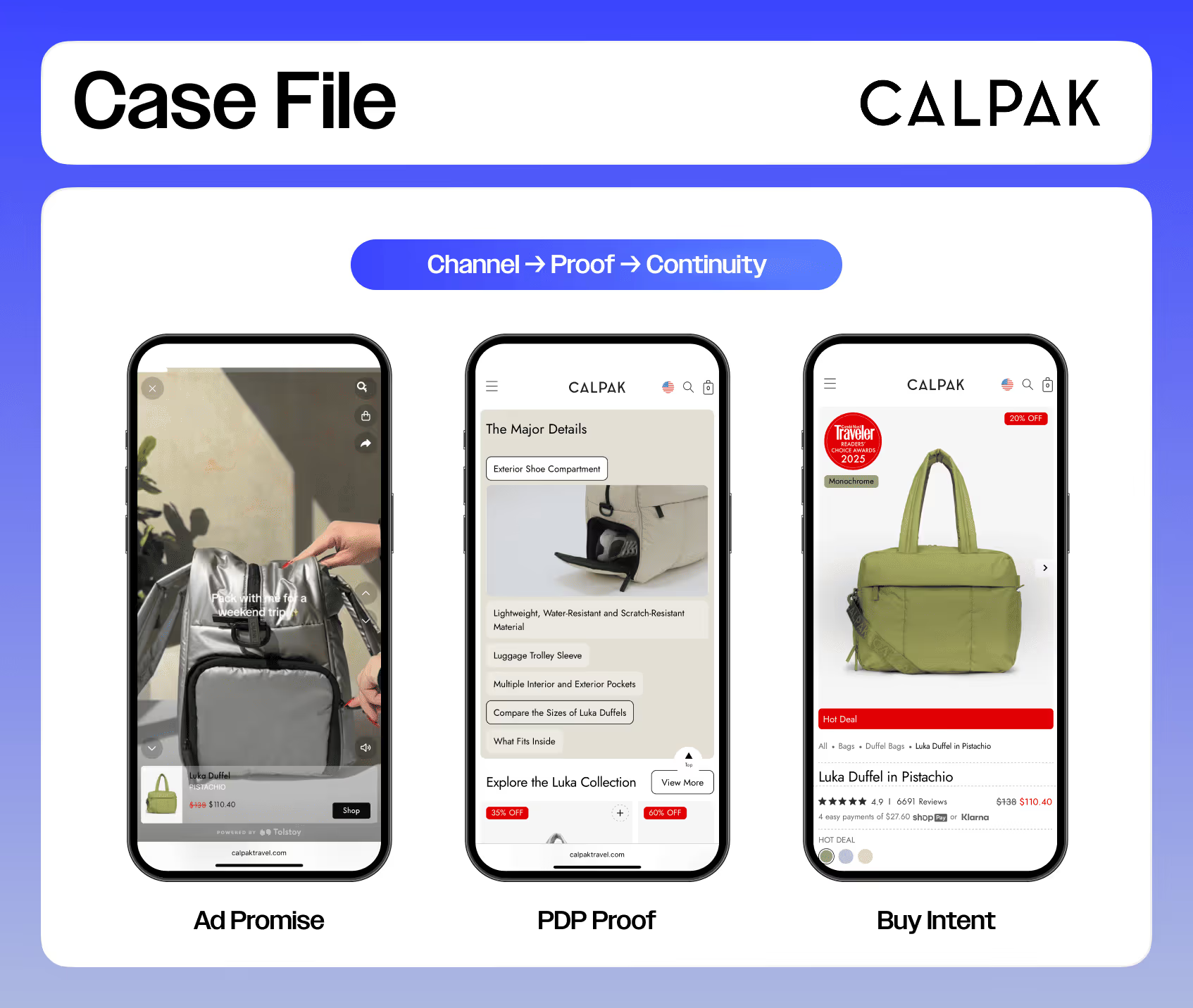
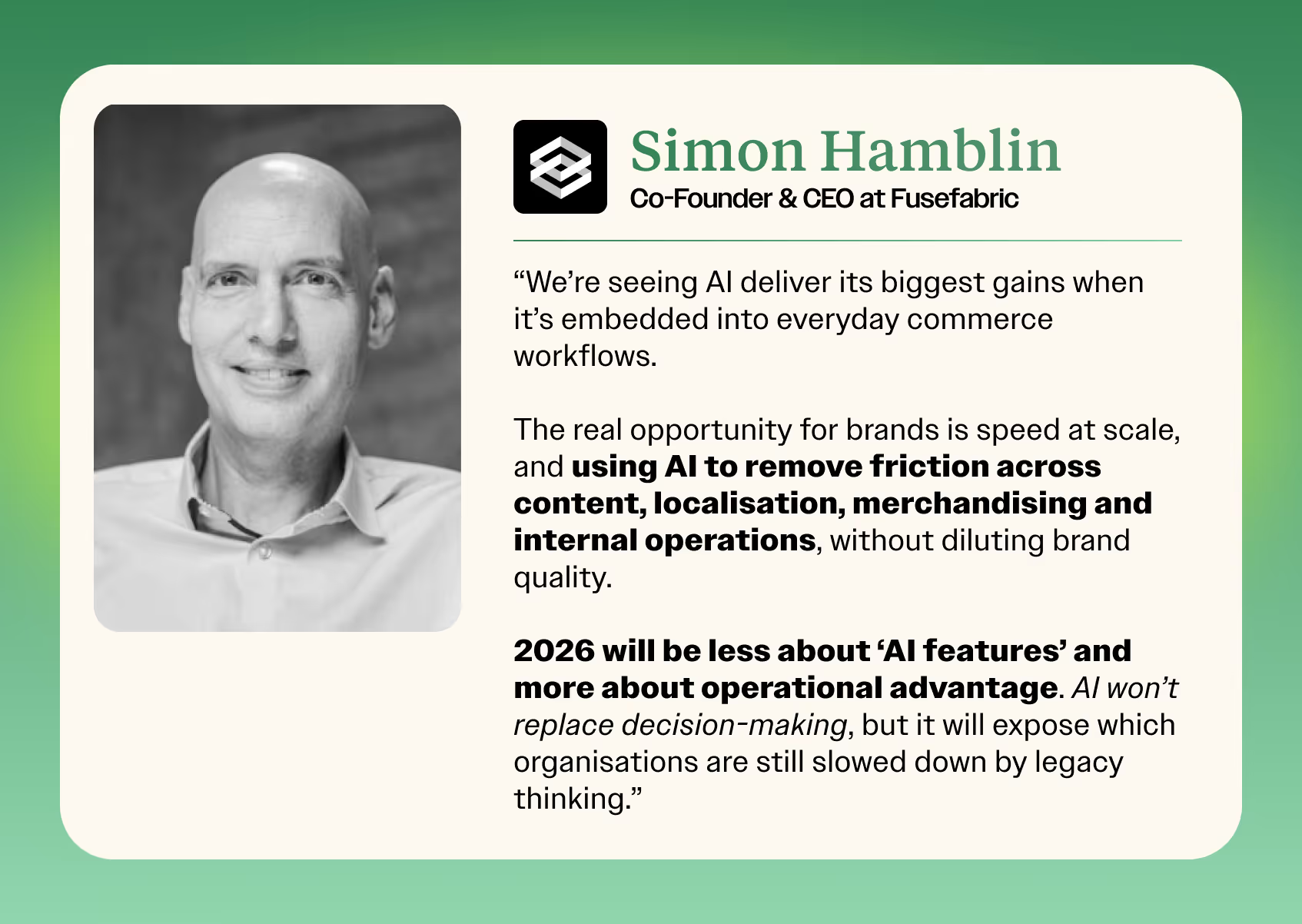
As channels fragment and expectations rise, the brands pulling ahead aren’t layering AI on top of broken processes, they’re weaving it directly into how work gets done. From content and localization to merchandising and internal operations, AI is becoming infrastructure. Simon Hamblin, Co-Founder & CEO of Fusefabric, captures where this shift is heading:
2. Emotional Native: Writing Push, SMS, and Email in Their Native Languages (Feeling AI)
Every channel has its own emotional code, and AI is now able to write natively for each environment:
- Push: short, urgent, energetic
- SMS: clear, concise value
- Email: narrative, trust-focused
- Luxury segments: premium, restrained tone
- Younger segments: fast, casual, emoji-friendly
AI models can even adjust tone by age, urgency, time of day, and previous interactions. This ensures that the message feels like it was written for the shopper, and not blasted to everyone.
3. Threaded Journeys: One Story, Many Channels (Narrative AI)
Consumers rarely convert from the first message. What converts is a cohesive story across channels.
Most brands break the narrative without realizing it:
- TikTok ad: playful
- Push: generic
- Email: corporate
- PDP: factual
- SMS: urgent
AI fixes this by ensuring the tone, visuals, and messaging carry from the ad → the push → the email → the checkout page. It becomes one cohesive journey instead of a series of disconnected nudges.
This alone materially lifts conversion because it reduces cognitive dissonance, which is the silent killer of mobile commerce.
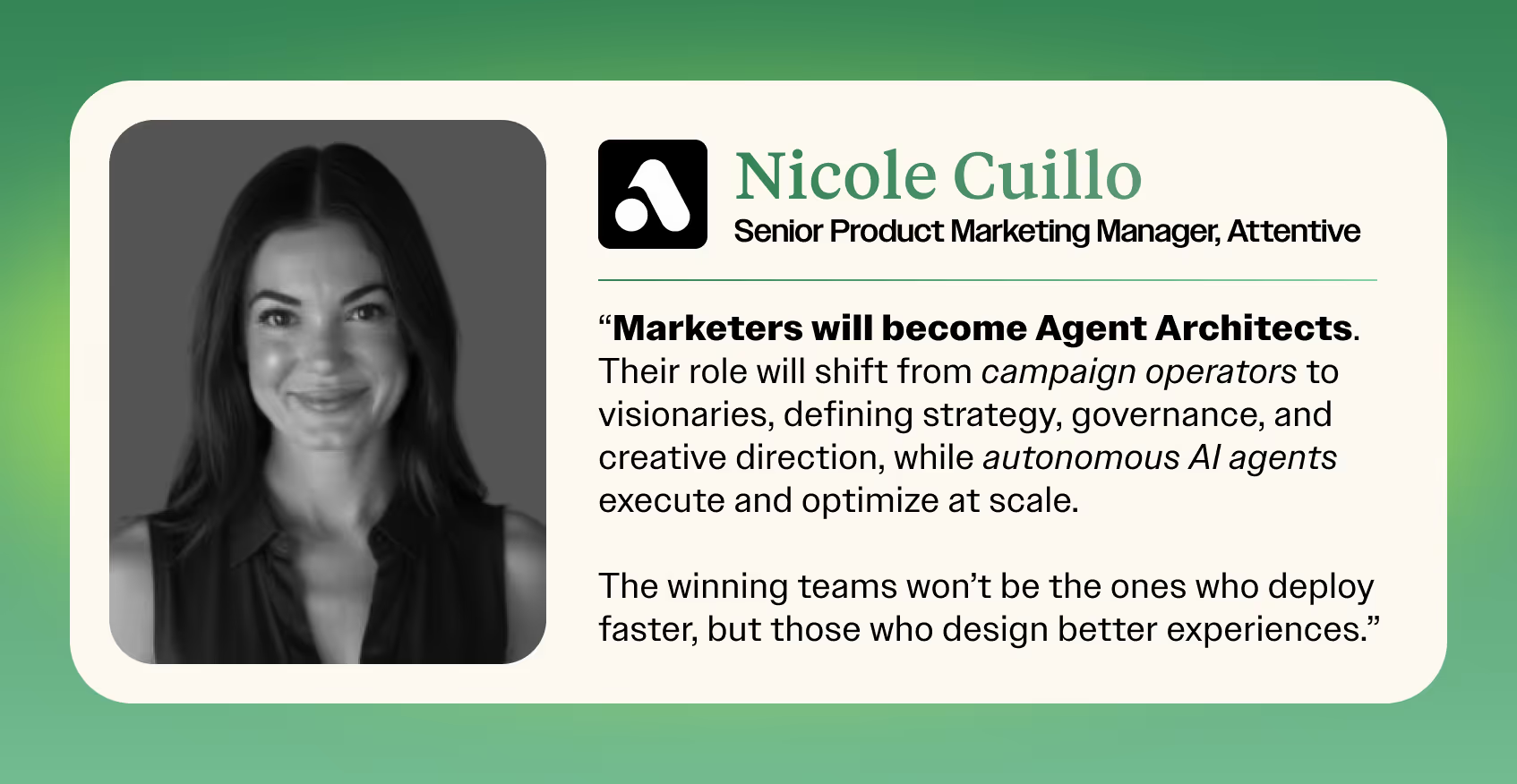
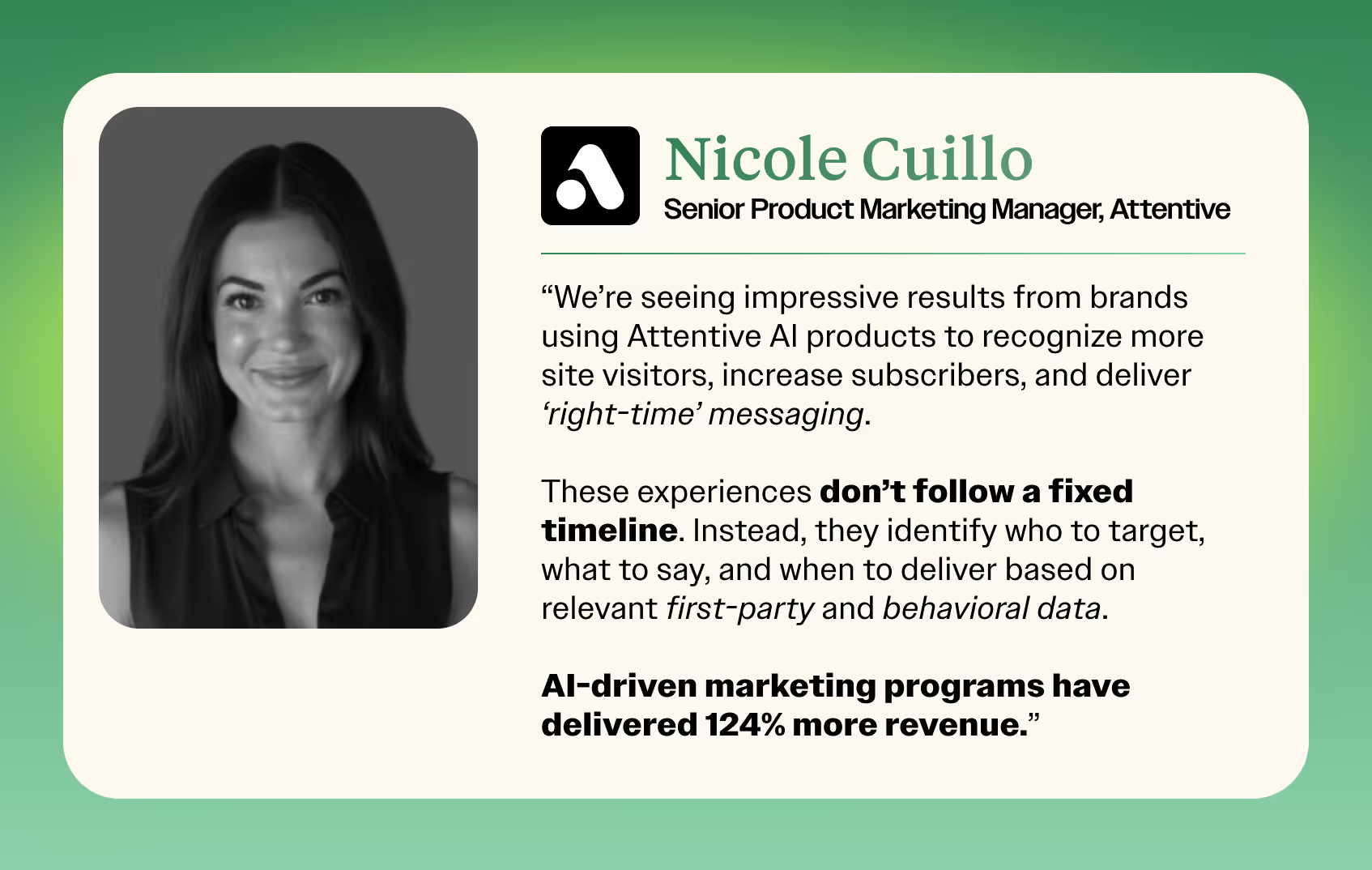
What this data makes clear is that messaging performance isn’t about volume, but it’s about timing, routing, and relevance. As Nicole Cuillo, Senior Product Marketing Manager at Attentive, puts it, the teams pulling ahead are redesigning how messaging decisions get made in the first place.
Messaging Framework To Try (With AI Prompts)
To make this actionable, the data rolls up into a simple routing framework. Different generations don’t just prefer different channels — they respond to different signals, levels of urgency, and value exchanges. This table summarizes how leading teams align message type, channel, and timing by audience.
Once channel routing and urgency are clear, AI’s real value shows up in execution. The prompts below are designed to help teams generate on-brand, context-aware messages for different urgency levels, without defaulting to batch-and-blast or one-size-fits-all copy.
Each prompt can be adapted for your brand voice, product category, and channel mix, and is intentionally structured so AI handles speed and variation while humans retain creative control.
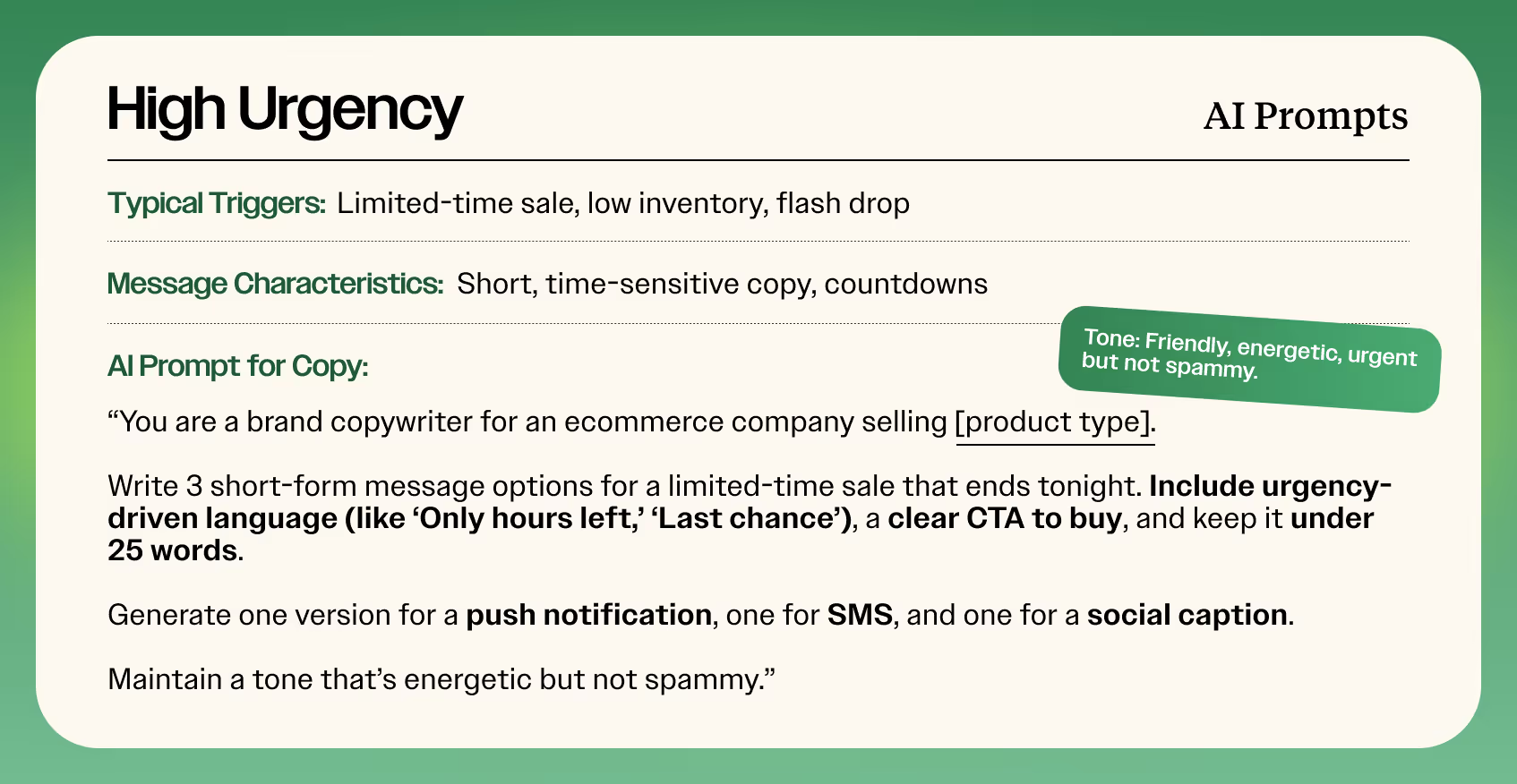
High Urgency
Best for: Flash sales, limited-time offers, low-inventory alerts, drops
Message strategy: Short, time-sensitive, clarity first
AI Prompt:
You are a brand copywriter for an ecommerce company selling [product type].
Write 3 short-form message options for a limited-time sale that ends tonight.
Requirements:
- Use urgency-driven language (e.g., “Only hours left,” “Last chance,” “Almost gone”)
- Include one clear CTA to buy
- Keep each message under 25 words
- Maintain a tone that is energetic and high-clarity, but not spammy or pushy
Generate:
- 1 version for a push notification
- 1 version for SMS
- 1 version for a social caption
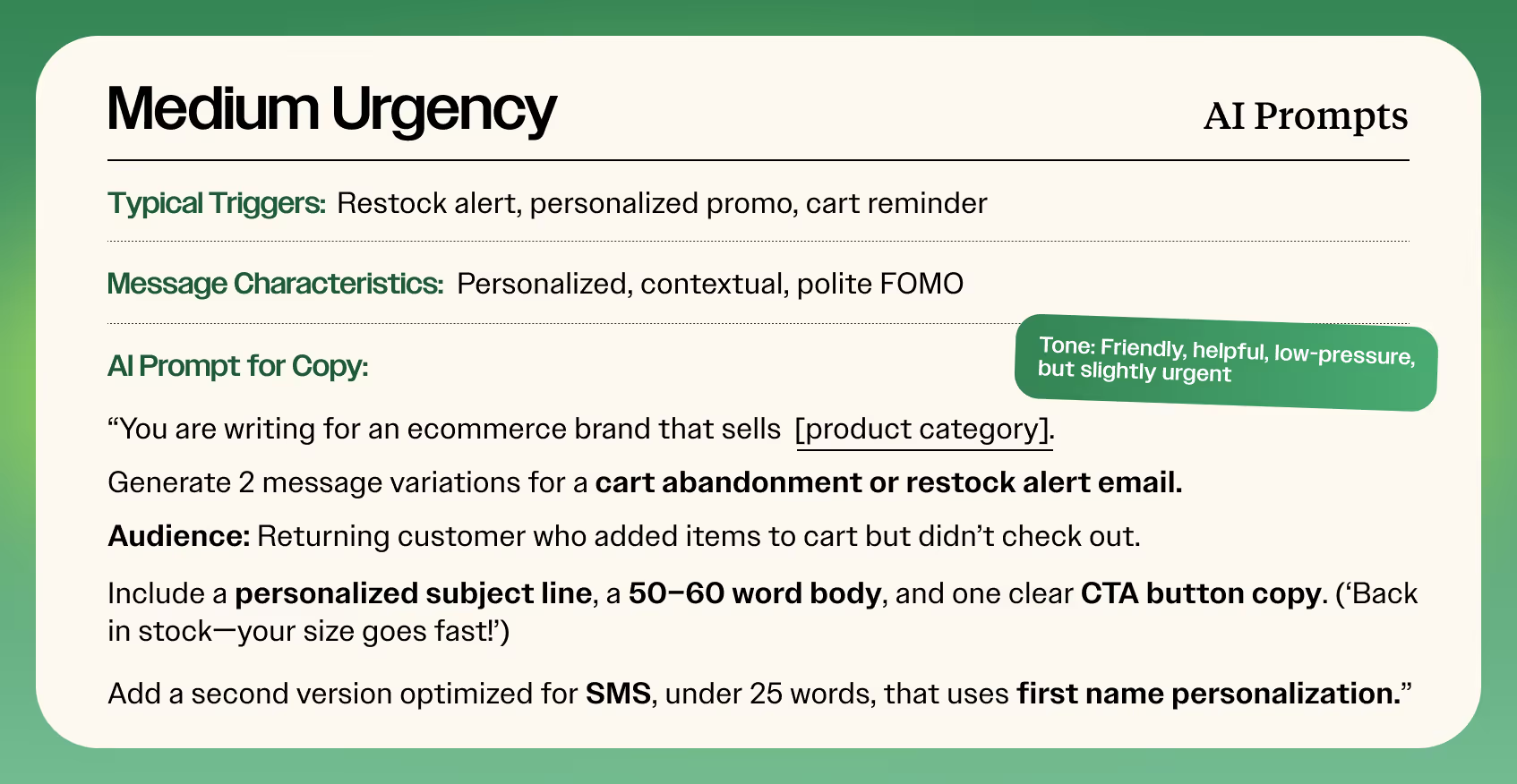
Medium Urgency
Best for: Restock alerts, personalized promotions, cart reminders
Message strategy: Contextual, helpful, light FOMO
AI Prompt
You are writing for an ecommerce brand that sells [product category].
Create 2 message variations for a cart abandonment or restock alert.
Audience:
- Returning customer
- Added items to cart but did not check out
Requirements:
- Tone: friendly, helpful, low-pressure, with subtle urgency
- Emphasize relevance and usefulness over pressure
- Include personalization cues (e.g., product viewed, size, category)
Deliver:
- Email version with:
- Personalized subject line
- 50–60 word body
- One clear CTA button
- SMS version under 25 words using first-name personalization
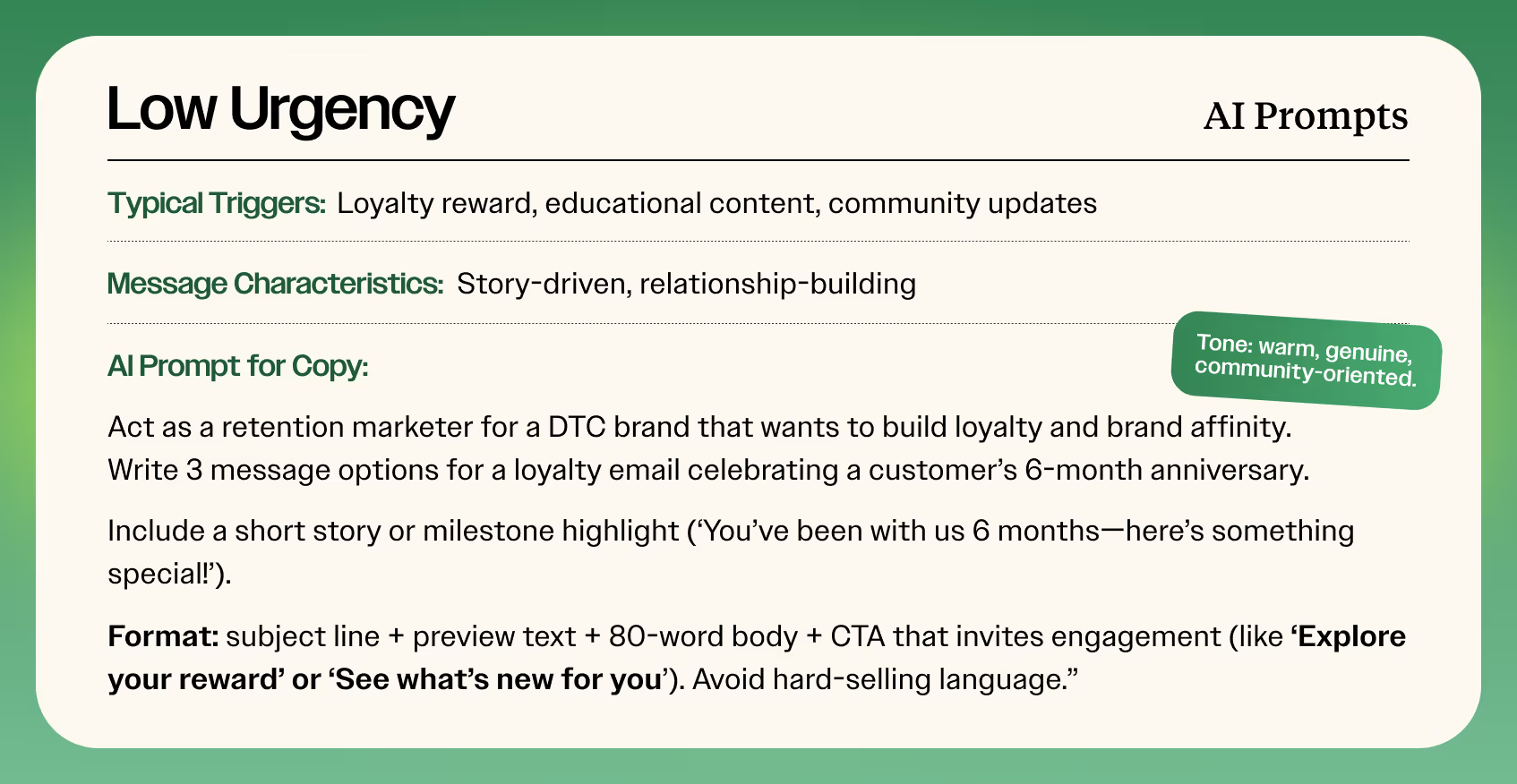
Low Urgency
Best for: Loyalty rewards, education, community updates, brand storytelling
Message strategy: Relationship-building, trust-first, long-term value
AI Prompt
Act as a retention marketer for a DTC brand focused on loyalty and brand affinity.
Write 3 message options for a loyalty email celebrating a customer’s 6-month anniversary.
Requirements:
- Include a short milestone moment (e.g., “You’ve been with us for 6 months”)
- Tone: warm, genuine, community-oriented
- Avoid hard-selling language
- Focus on appreciation, trust, and long-term value
Format each option with:
- Subject line
- Preview text
- ~80-word email body
- CTA that invites engagement (like “Explore your reward,” “See what’s new for you”)
How to Use These Prompts
These prompts work best when paired with:
- Behavioral segmentation (recent activity, intent signals, lifecycle stage)
- Channel-specific delivery rules
- Clear guardrails around brand voice and frequency
AI handles speed and variation. Humans set strategy, tone, and trust.
Mini AI Toolbox
- Tapcart AI Push Notifications -> Creates, personalizes, and sends push notifications automatically based on behavior, urgency, and predicted response.
- Klaviyo AI -> Optimizes send timing, subject lines, and flow logic across email + SMS.
- Attentive AI -> Smart routing, AI copy, and predictive send-time optimization for SMS.
Promotions That Drive Repeat Value: Not Just Revenue
Fast

Facts
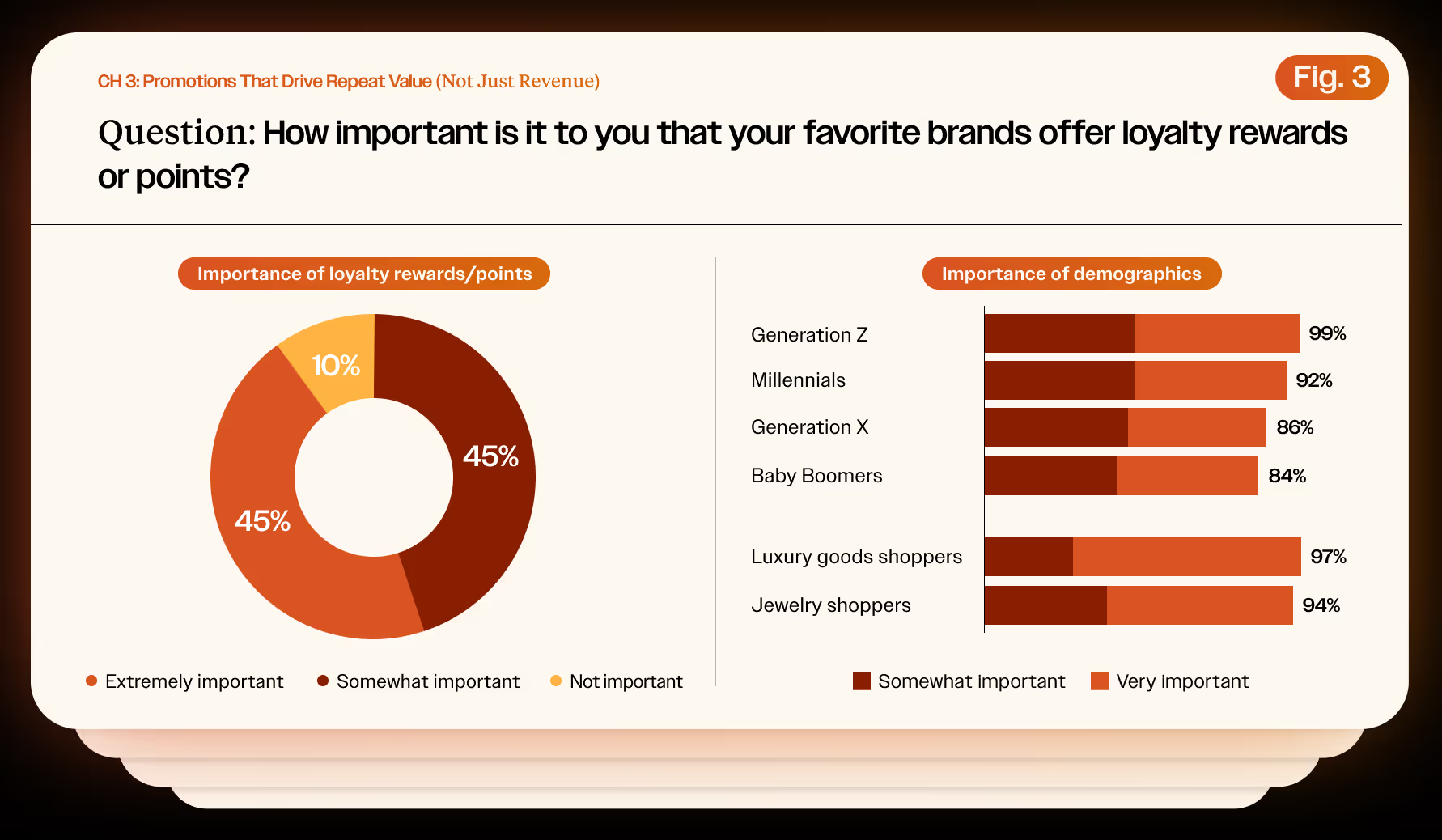
- Loyalty has gone mainstream: 90% of shoppers value rewards programs, and nearly 50% call them “extremely important.” Gen Z and luxury shoppers over-index the most.
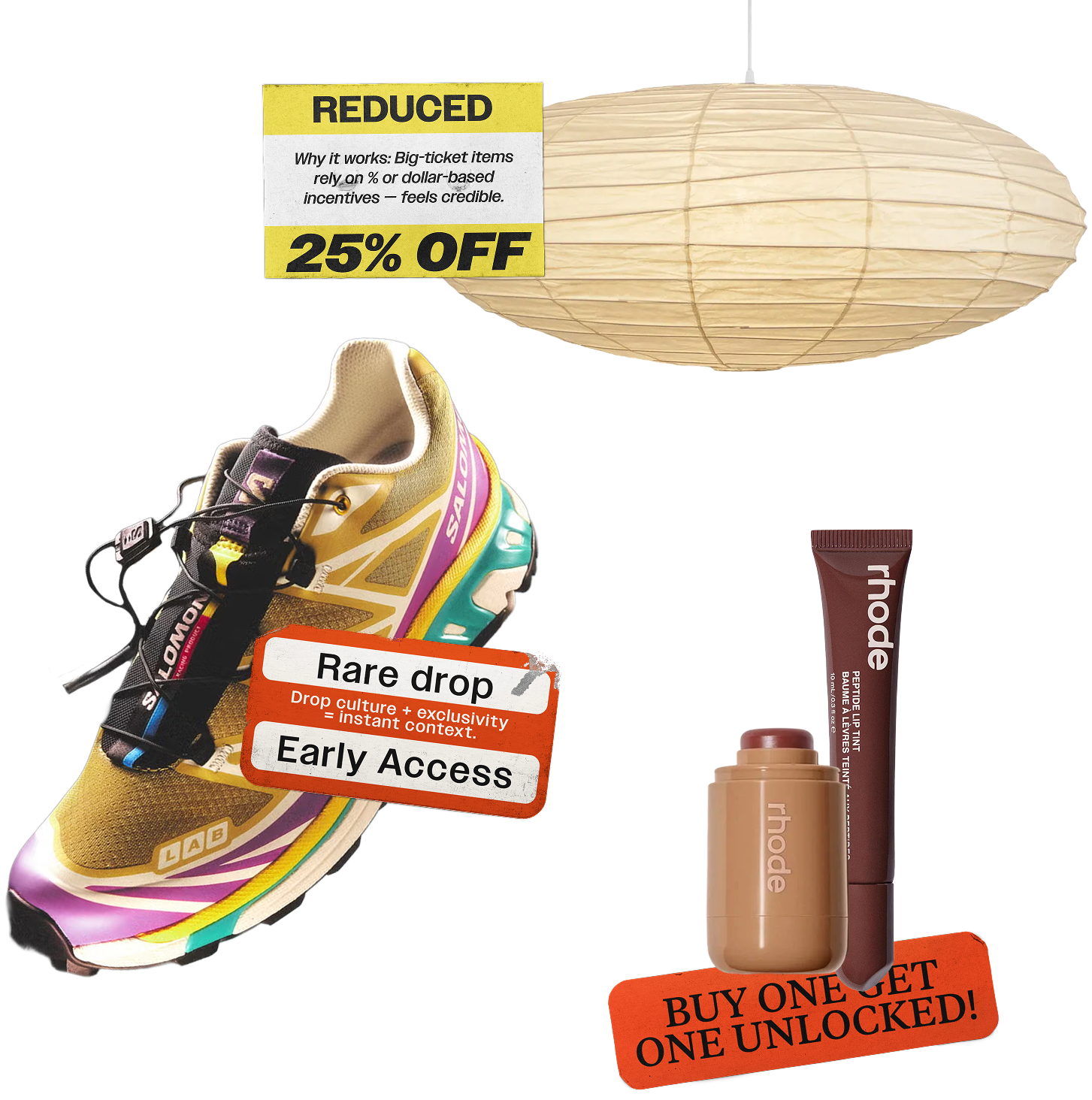
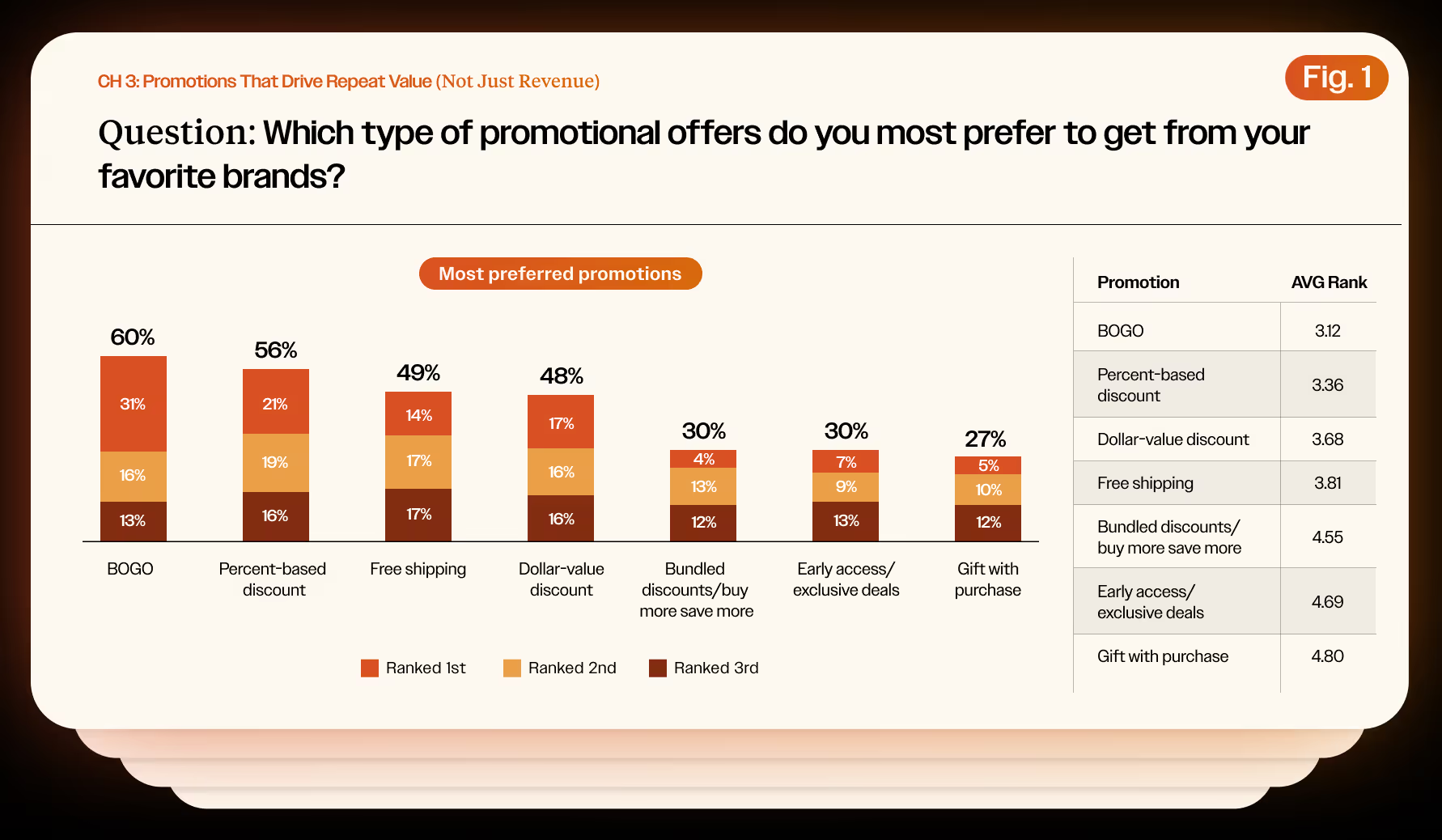
- BOGO is the most motivating promotion of 2026: 62% of shoppers rank it in their top three offers, making it the #1 value signal across all generations.
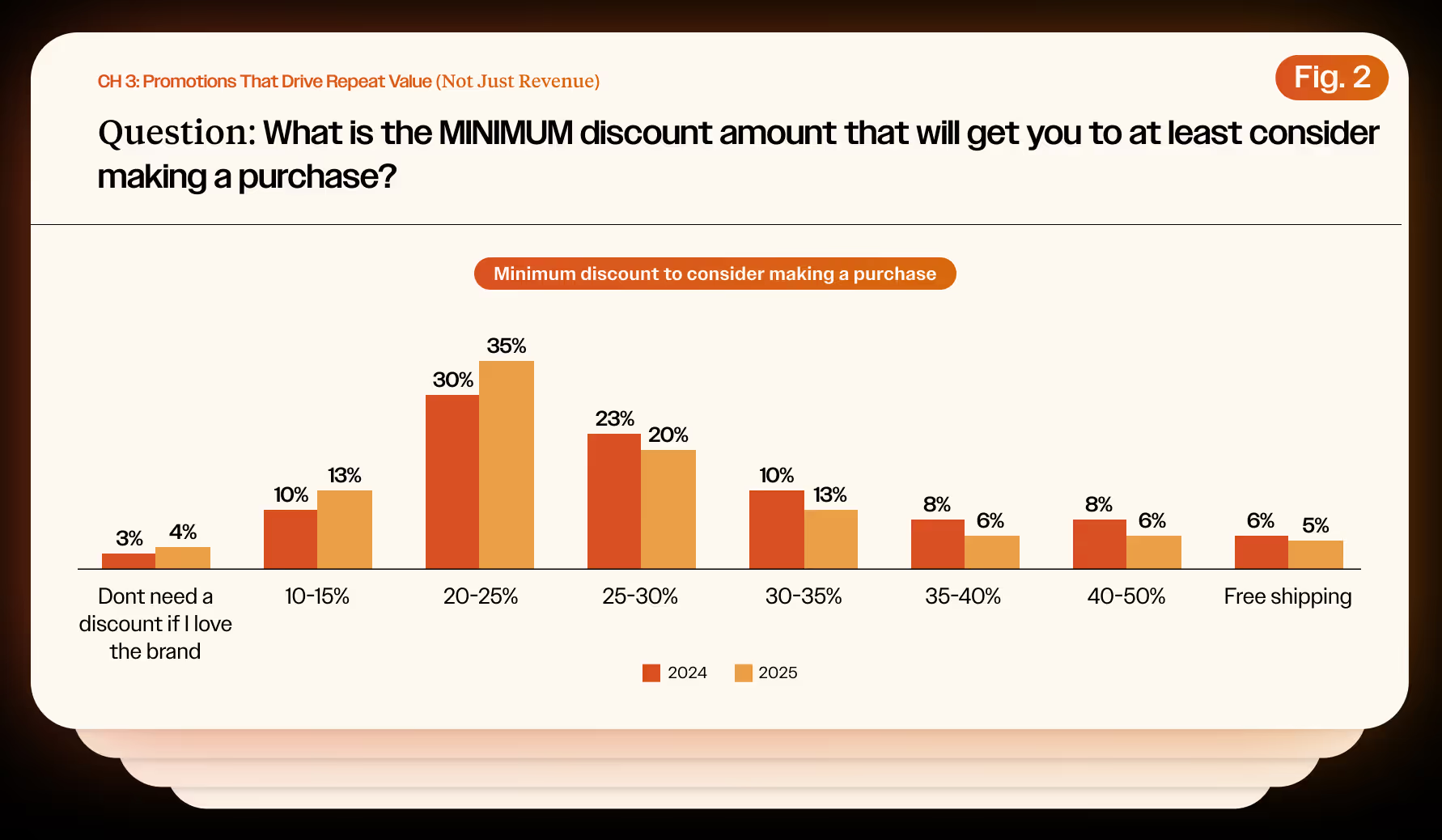
- Deep discounting is no longer required to convert: 70% of shoppers will purchase with 30% off or less, and half convert at just 25% off (up from 40% last year).
What the Data Shows
1. BOGO Wins and Discount Dependency Is Shrinking
- 60% shoppers place BOGO in their top three; one-third rank it first. It also earns the strongest average rank (3.12) of all offers.
- Percentage-based discounts still convert, but the minimum effective discount is falling:
- 70% convert at 30% off or less
- 50% convert at 25% or less (up from 40% last year)
- Only 10% require 40%+
- What this signals: Shoppers are becoming less discount-dependent. Value framing now matters more than depth. Luxury shoppers reinforce this shift. They convert with smaller incentives, particularly in high-margin categories — making them one of the most margin-efficient segments when promotions are personalized.
2. Value-Based Offers Beat Savings Alone
- Not all incentives are created equal. Promotions that feel like value outperform those that simply reduce price.
- Underperforming offers:
- Dollar-off discounts (worst-performing across all age groups)
- Gift with purchase (lowest-ranked overall)
- Free shipping (matters primarily to Gen X and Boomers)
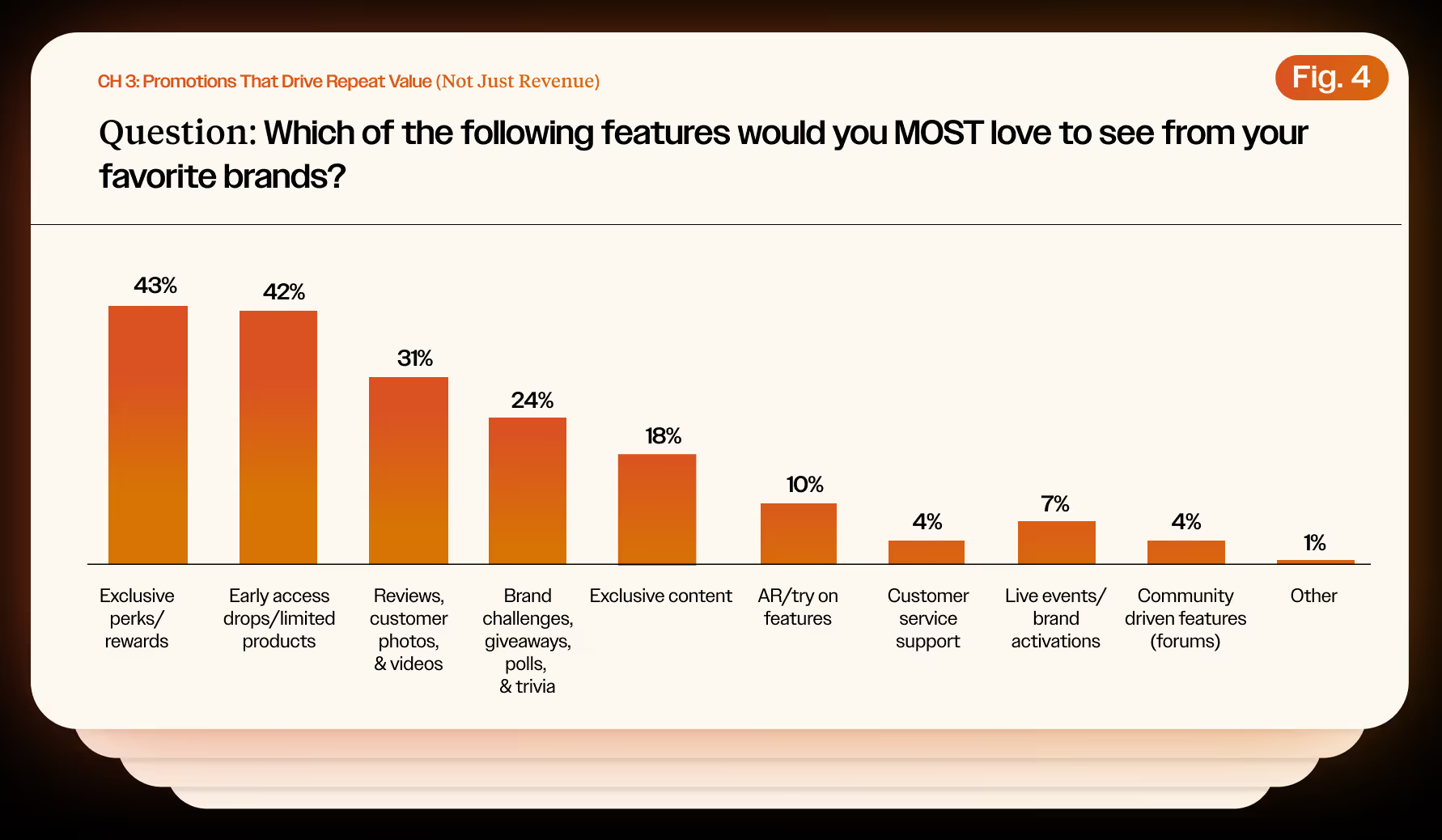
- Community features and brand events, while valuable for brand-building, rank low as purchase motivators — less than 10% of shoppers list them as important during decision-making moments.
- What this signals: Shoppers don’t want more promotions. They want better value signals — access, recognition, and perceived advantage.
- Top-performing value signals:
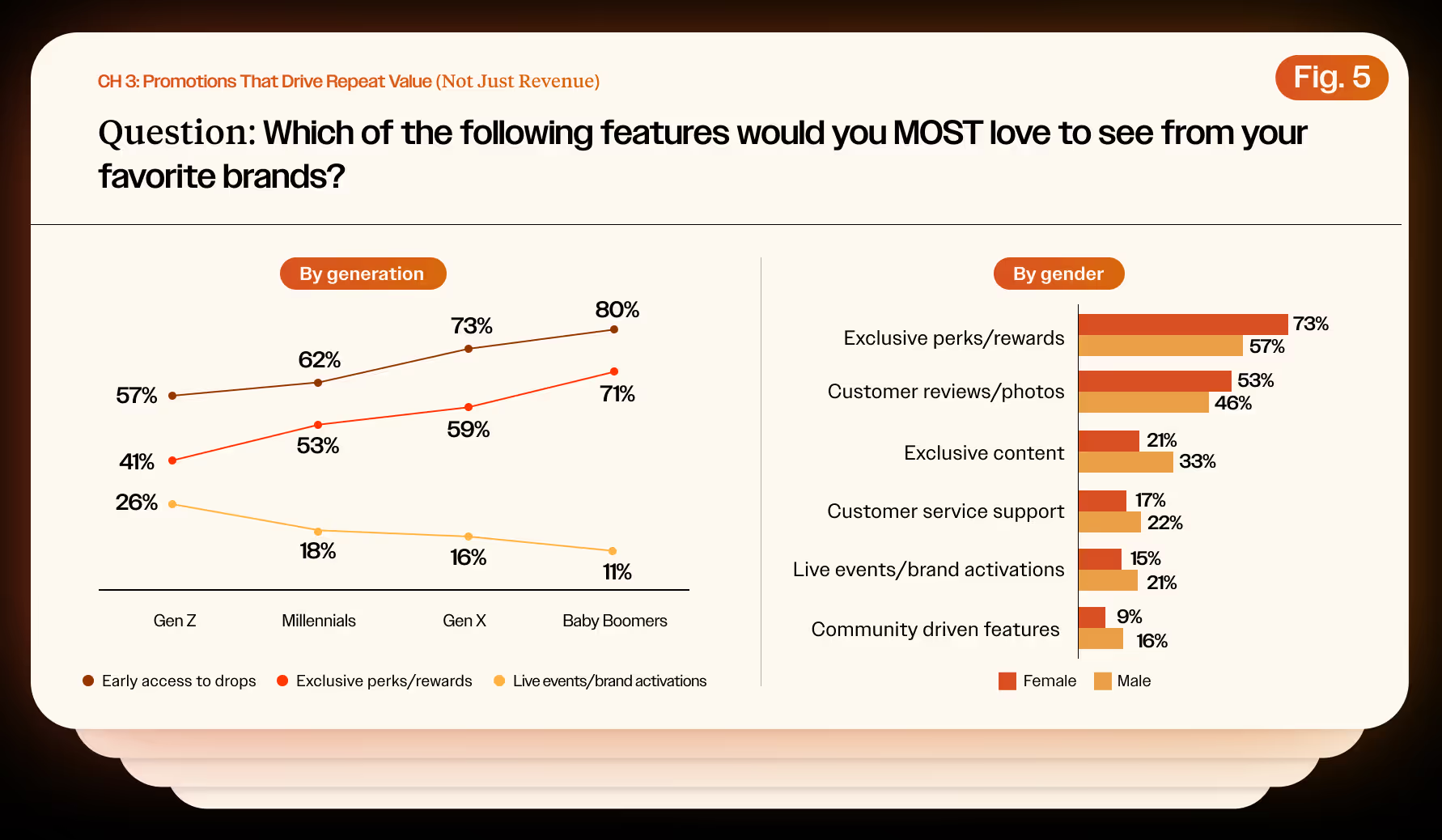
- Exclusive perks and rewards, selected by 67% of shoppers as most desirable
- Early access and access-based incentives among loyalty-driven buyers
3. Generational + Gender Splits Define Promotion Strategy
- Gen Z and Millennials over-index on exclusivity, early access, and limited drops.
- Gen X and Boomers prefer traditional value signals like free shipping and predictable percentage discounts.
- Early access ranks especially high among Millennials, Gen Z, and luxury buyers
- Across all demographics:
- 90% of shoppers say loyalty programs are at least “somewhat important.
- ~50% say “extremely important.”
- Only 6% say loyalty isn’t important. Loyalty expectations are becoming universal.
- Gender differences add nuance:
- Female shoppers prefer exclusive perks and customer reviews/photos more than men.
- Male shoppers show more interest than women in less common loyalty features (limited editions, experimental perks).
- What this signals: Loyalty expectations are no longer optional — they’re universal. The winning strategy isn’t one-size-fits-all discounts, but personalized incentives aligned to sensitivity, segment, and intent.
As discounts lose their power, trust is stepping in to do the heavy lifting.
Shoppers aren’t just asking “Is this on sale?”, they’re asking “Is this worth it?” And increasingly, they’re looking for that answer in reviews, photos, and real customer language, not brand claims.
For leading brands, reviews are no longer just conversion assets. They’re becoming one of the highest-signal inputs for AI-powered discovery, search, and recommendation engines both on-site and off.
Here’s how forward-thinking teams are turning customer feedback into a competitive advantage.
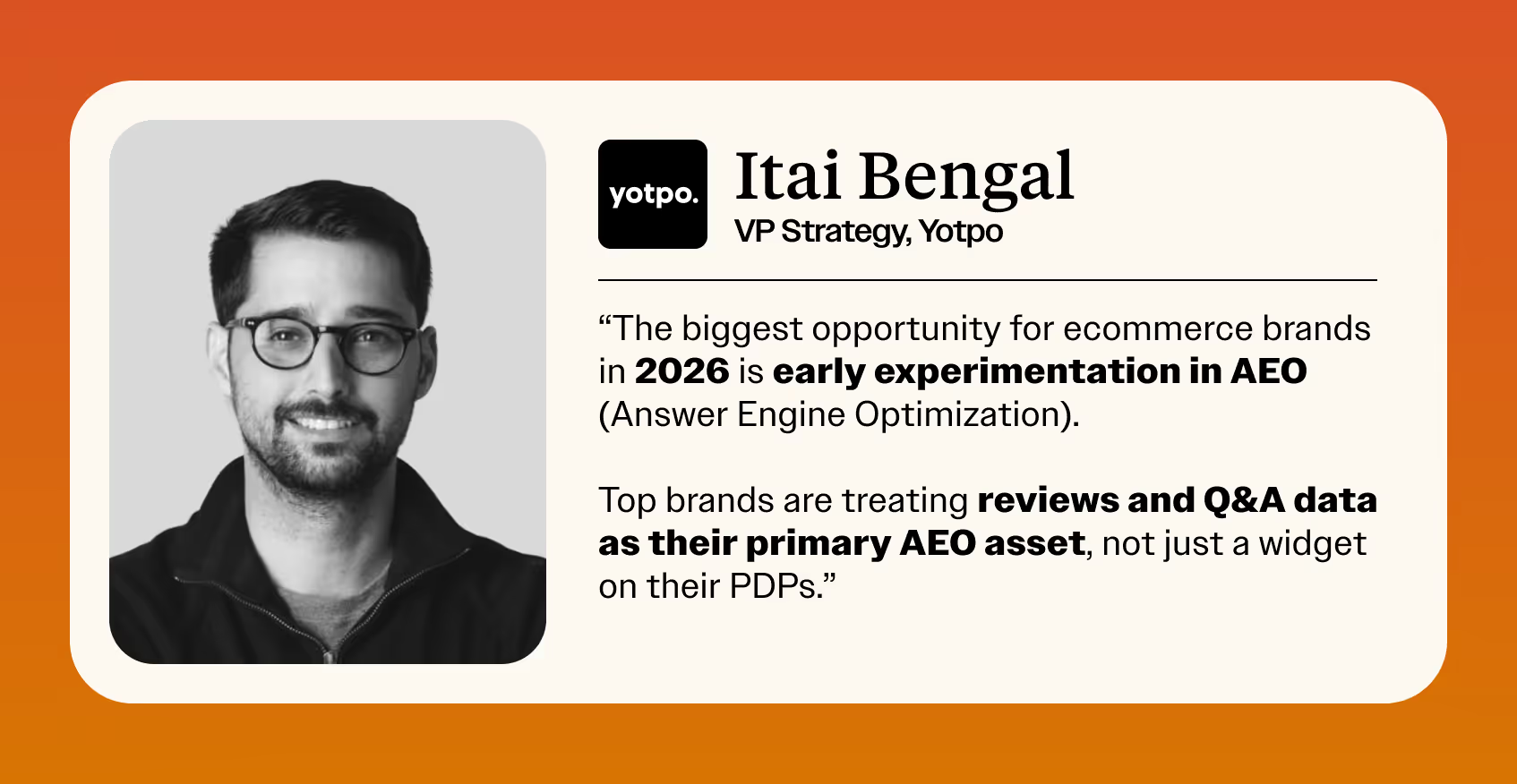
Steal this play: Treat your reviews as a product: prompt for depth, summarize with AI, sort intelligently, then syndicate the best answers into your offsite content strategy.
What leading brands are doing right now (in the weeds):
Leading teams use tools like Yotpo Smart Prompts to collect longer, image-rich, topic-dense reviews, then apply AI Review Summaries and Smart Sorting so the most useful content surfaces instantly on PDPs. They also activate loyal customers and communities to generate additional, high-signal content built for offsite discovery (like Reddit-style threads, Q&A posts, blog FAQs), often incentivized with rewards that compound retention and CLTV.
Why this matters now:
Answer engines are becoming a real shopping surface. Some estimates suggest ChatGPT already accounts for ~8% of US search (up ~3× since the start of the year) and shopping is a top use case, reinforced by OpenAI’s recent shopping-related launches and Shopify tie-ins.
4. Luxury Shoppers Need Smaller Incentives
- High-end categories convert with less discounting, which is ideal for enterprise brands with margin constraints.
- Luxury shoppers convert with: smaller discounts, higher responsiveness to exclusivity, and stronger loyalty program engagement
- They are also more influenced by early access than other segments.
→ This segment is highly margin-efficient if promotions are personalized.
5. Reviews & Transparency Are Critical Trust Builders
- Customer reviews/photos rank among the top requested features shoppers want from their favorite brands.
- This is especially true for female shoppers, who rate UGC as highly influential.
→ Shoppers want proof and transparency over deeper discounts.
Value doesn’t end when the order is placed.
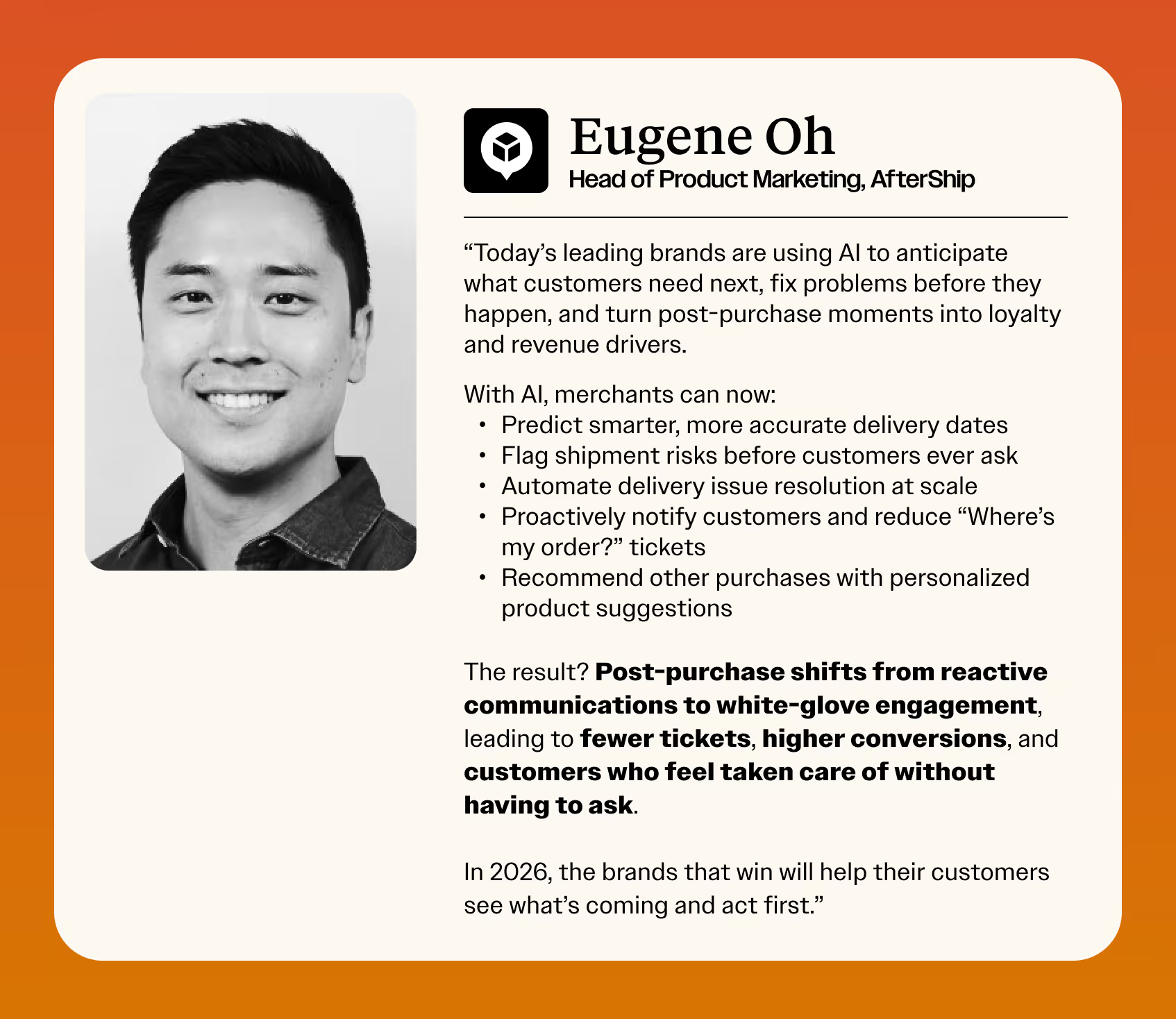
As loyalty expectations rise, post-purchase has quietly become one of the most important (and overlooked) opportunities to reinforce trust, reduce friction, and drive repeat revenue. The brands pulling ahead aren’t reacting faster when things go wrong; they’re anticipating needs before customers ever ask.
Here’s what that evolution looks like in practice.
What It Means for Brands
Why Blanket Discounts Are Quietly Taxing Your Margins
Shoppers aren’t just deal-driven anymore, they’re value-driven, margin-aware, and increasingly strategic about where and when they spend. And that shift has massive implications for brands.
The old promo playbook “go louder, discount deeper, hope for volume” no longer works in a world where:
- CAC is rising and margin pressure is at an all-time high
- Consumers compare prices instantly across apps, marketplaces, and social
- Emotional trust determines where shoppers convert, not the size of the markdown
- Loyalty expectations have gone mainstream (90% say rewards matter)
Discounting used to be a lever you could pull freely. Now it’s a liability if misused.
The deeper issue is that not all customers need or respond to the same incentives, and blanket promotions create more problems than they solve:
- Luxury and high-LTV cohorts convert with less discounting
- Younger shoppers chase exclusivity, not raw savings
- Older shoppers are more deal-sensitive but less impulse-driven
- Enterprise brands stand to lose margin and brand equity if they over-incentivize
The promotional landscape has fragmented just like the media landscape, and the cost of misalignment is rising. A poorly timed discount doesn’t just erode margin; it trains customers to wait for deeper cuts, sabotages LTV, and compresses contribution margin for quarters to come.
And in an economy where shoppers happily toggle between Amazon, TikTok, email, and your mobile app before purchasing, the brands that win won’t be the ones offering the biggest discounts.
They’ll be the ones offering the right value, to the right customer, at the exact moment it matters, without destroying profitability.
That’s why AI has to run point on promotions.
As discount efficiency declines, bundling is emerging as one of the most reliable ways to increase order value without sacrificing margin.
The challenge isn’t whether bundles work — it’s knowing which combinations actually resonate with shoppers. For years, brands have relied on instinct or imitation. Now, data and AI are changing how bundles are built, priced, and deployed.
Here’s how teams are turning bundling into a repeatable profit lever:
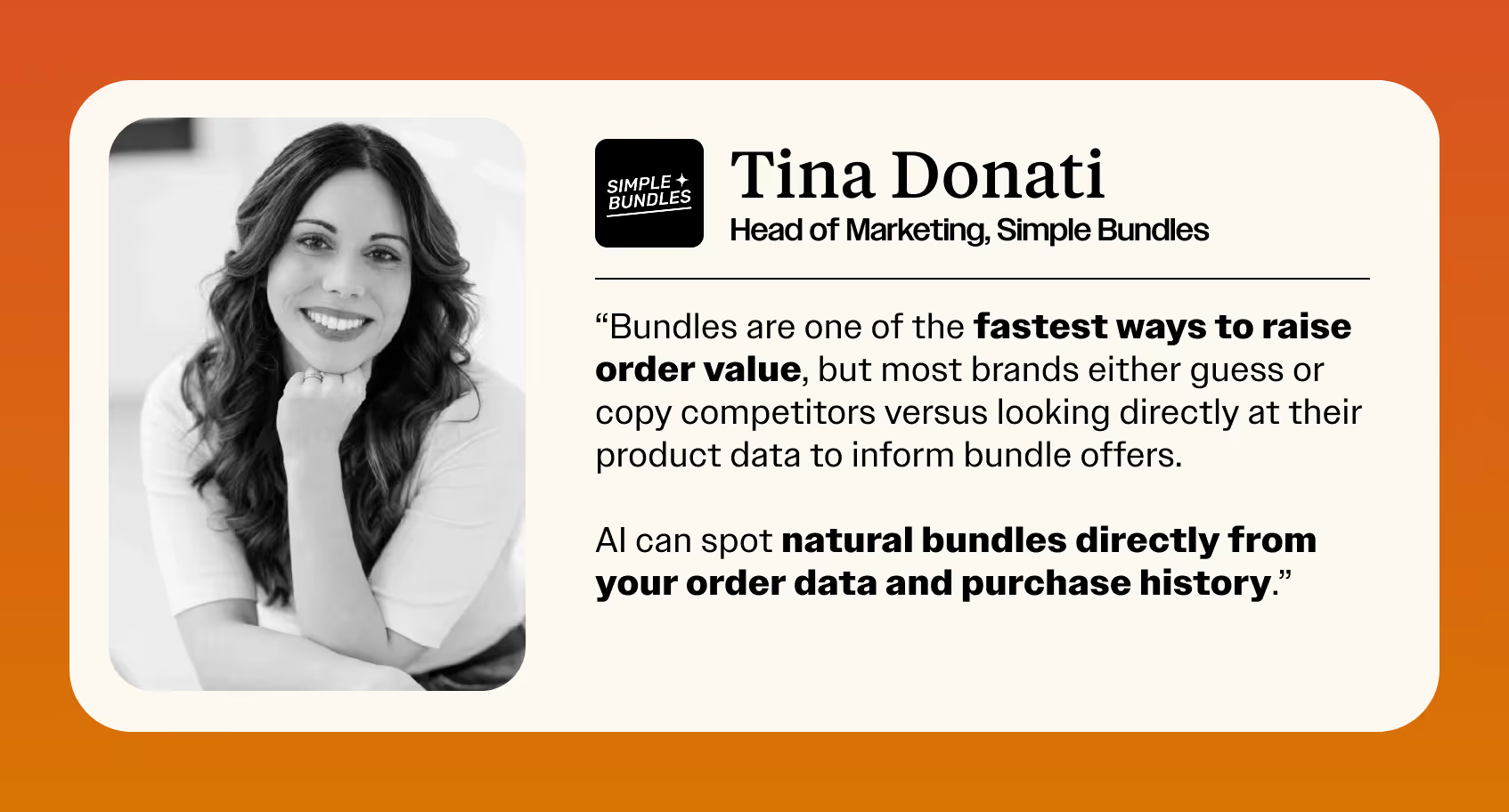
Steal this play: Use AI to mine your order data for bundle pairings, then launch 2–3 high-confidence bundles (with a clear value story) instead of guessing.
What to do (AI prompt you can copy/paste):
Prompt: Analyze this anonymized spreadsheet of 50 recent orders.
- Identify products frequently purchased together in the same order.
- Identify items commonly bought as a second purchase within 30 days of the first.
- Flag high-frequency or high-value pairings and any patterns by category/price point.
Output: Recommend 3 bundle ideas formatted as: Bundle Name → Items → Price → Why It Works (include a short note on where to promote each bundle: PDP, cart, post-purchase, email/SMS/push).
Why this matters:
Order data turns bundling from a creative guess into a repeatable profit lever: helping you decide what to bundle, how to position the offer, and where to deploy it for maximum AOV and margin.
AI is the only way to:
- Prevent overdiscounting
- Personalize incentives by sensitivity, segment, and behavior
- Protect margins while increasing AOV
- Turn promotions into retention engines instead of one-time hits
In 2026, smart promotions aren’t a marketing tactic, they’re a financial strategy. And AI is the operating system that makes them sustainable.
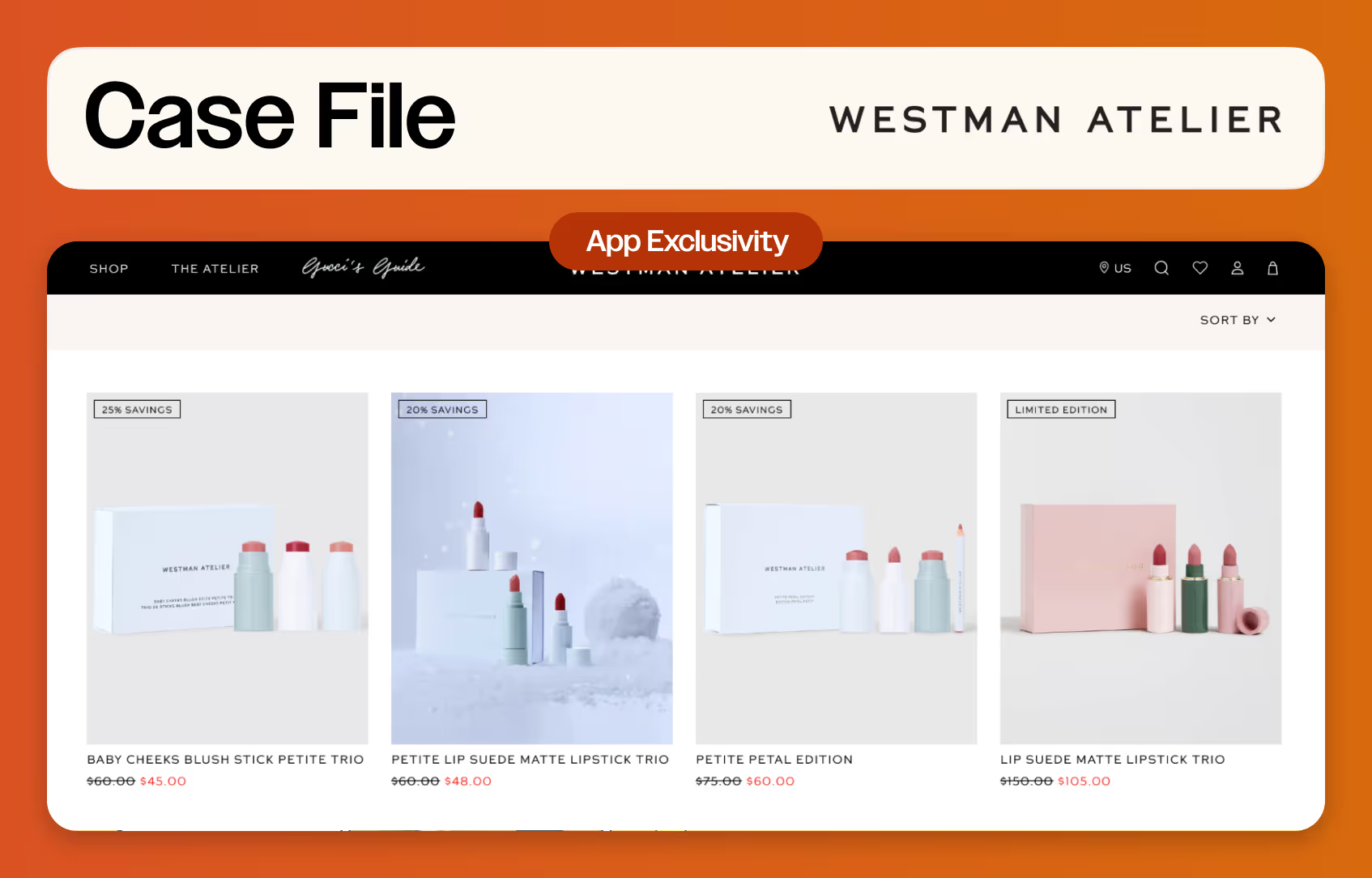
Case File → Westman Atelier: Value-Stacked Promotions Done Right
Westman Atelier makes promos feel premium by mixing bundles, percentage-off offers, dollar-offs, and scarcity cues like “online exclusive” to appeal to both value seekers and premium buyers — without leaning into deep discounting. This way shoppers feel like they’re getting more, and not just paying less.
Steal this play:
- Lead with “sets,” not sitewide discounts. Build 2–4 curated “starter kits” (like theSignature Skin Duo, Essentials Edit) and show the value math right on the tile: price + “$X value.”
- Use “online exclusive” as the incentive. Make at least one hero set exclusive so the offer is access/status (and doesn’t train customers to wait for markdowns).
- Create a savings ladder. Offer good/better/best sets (“duo” → “trio” → “full line-up”) so customers self-upgrade without needing deeper discounts.
- Make gifting a value wrapper. Repackage sets into seasonal edits/gift guides so “promotion” reads as curation (premium) rather than price cutting.
Case File → Kith: Exclusivity-First Promotions (No Margin Meltdown)
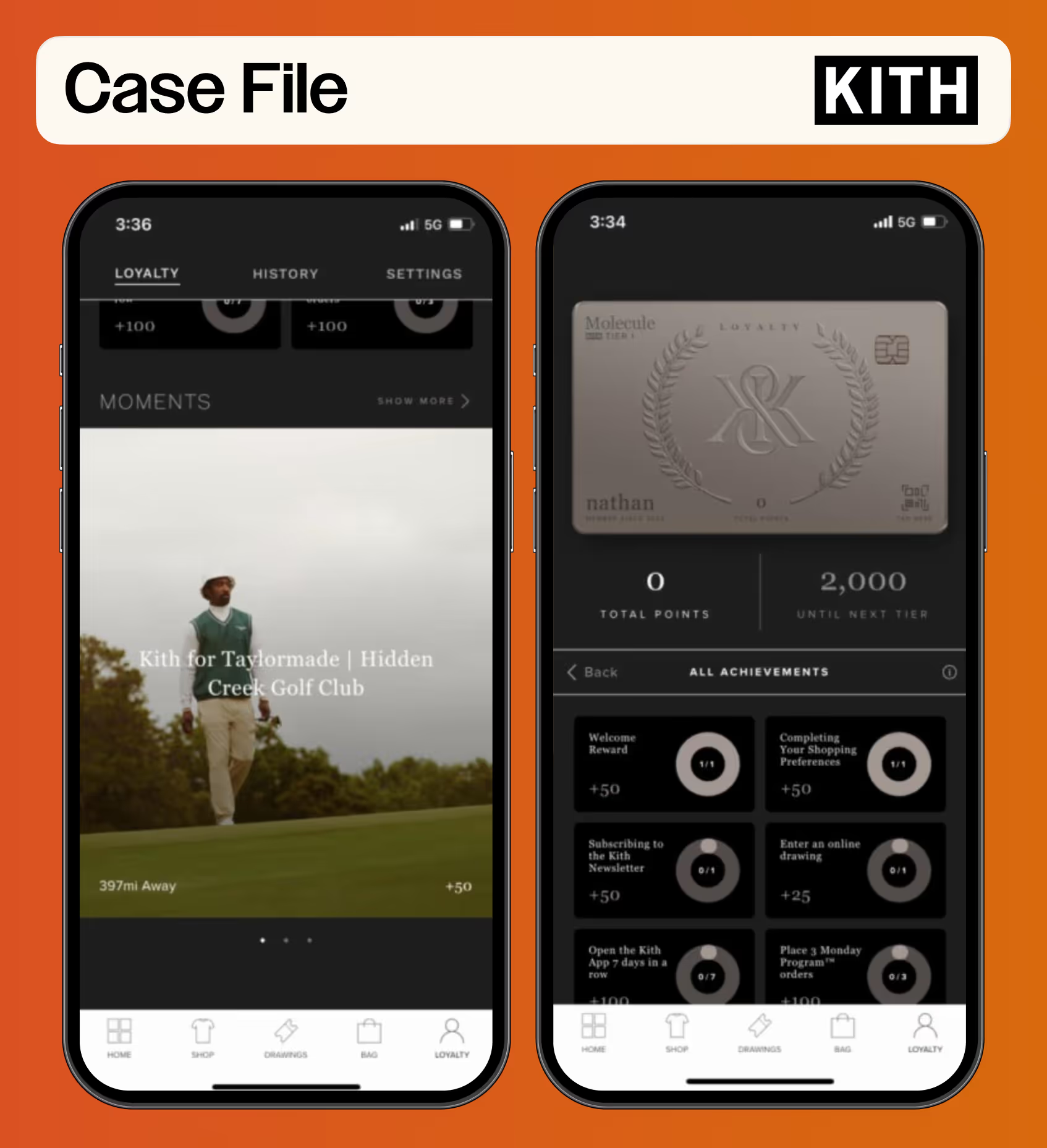
Kith turns “promotions” into repeat-value by using loyalty and app access (early access to drops, exclusive drawings, and member-only experiences) so the incentive is status and scarcity, not deeper discounts.
Steal this play:
- Try offers that build FOMO: early access windows, member-only drops, VIP waitlists.
- Use “lottery” mechanics (drawings) for hype products to drive repeat check-ins without discounting.
- Put the best perks behind an owned surface (app / logged-in loyalty) so the promo compounds LTV, not CAC.
AI Actions to Try Now
How AI Finds the Minimum Effective Discount for Every Customer
1. Predictive Discounting: Hitting the Sweet Spot, Not the Floor (Thinking AI)
AI determines the exact incentive needed to convert each shopper, and suppresses unnecessary discounts.
AI identifies:
- Discount sensitivity
- Past purchase margin
- Price ceilings and thresholds per customer
- Who should receive perks instead of percentage cuts
- When to show no discount at all
Outcome: Higher contribution margin + higher AOV + no brand dilution.
2. Dynamic Loyalty: Letting AI Decide When to Surprise and Delight
AI analyzes user behavior to dynamically adjust loyalty levers:
- Double points during churn windows
- Tier upgrades triggered by predicted CLTV
- Personalized milestone rewards
- Automated early-access eligibility
- VIP-specific offers during peak weeks
For enterprise brands: This builds long-term revenue without eroding margins.
3. Offer Suppression: When ‘No Discount’ Is the Smartest Move (Mechanical AI)
Not every shopper needs a deal. AI auto-suppresses offers to users who:
- Already have high purchase intent
- Are loyalty repeaters
- Engage deeply with content
- Convert from non-discount channels (email, social, push)
Result:
Revenue → up
Margin → protected
Discount exposure → controlled
Mini AI Toolbox
- Simple Bundles AI-bundle builder: A new feature within the Simple Bundles platform that analyzes your previous order history to recommend high-performing bundles. Have them live on a landing page within a few clicks.
- Shopify Magic: Built directly into the Shopify platform, this suite of AI tools generates marketing copy, edits product images, and helps create email campaign content.
Marketplace Competition and Where Shoppers Expect You To Show Up
Fast

Facts
- Marketplaces win the first purchase and brand-owned channels win the second.
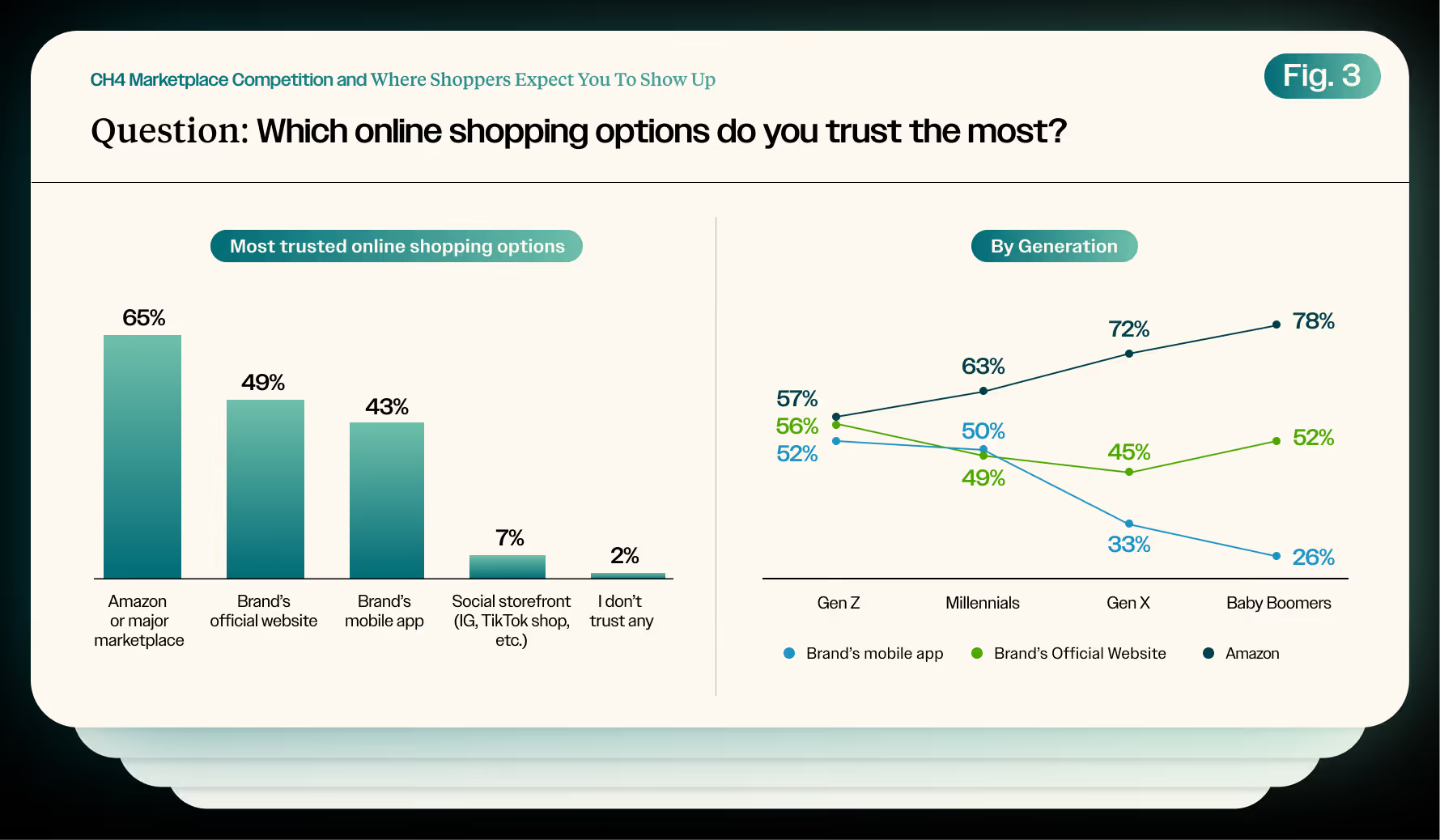
- Amazon still owns trust. 67% of shoppers say major marketplaces are their most trusted places to buy online.
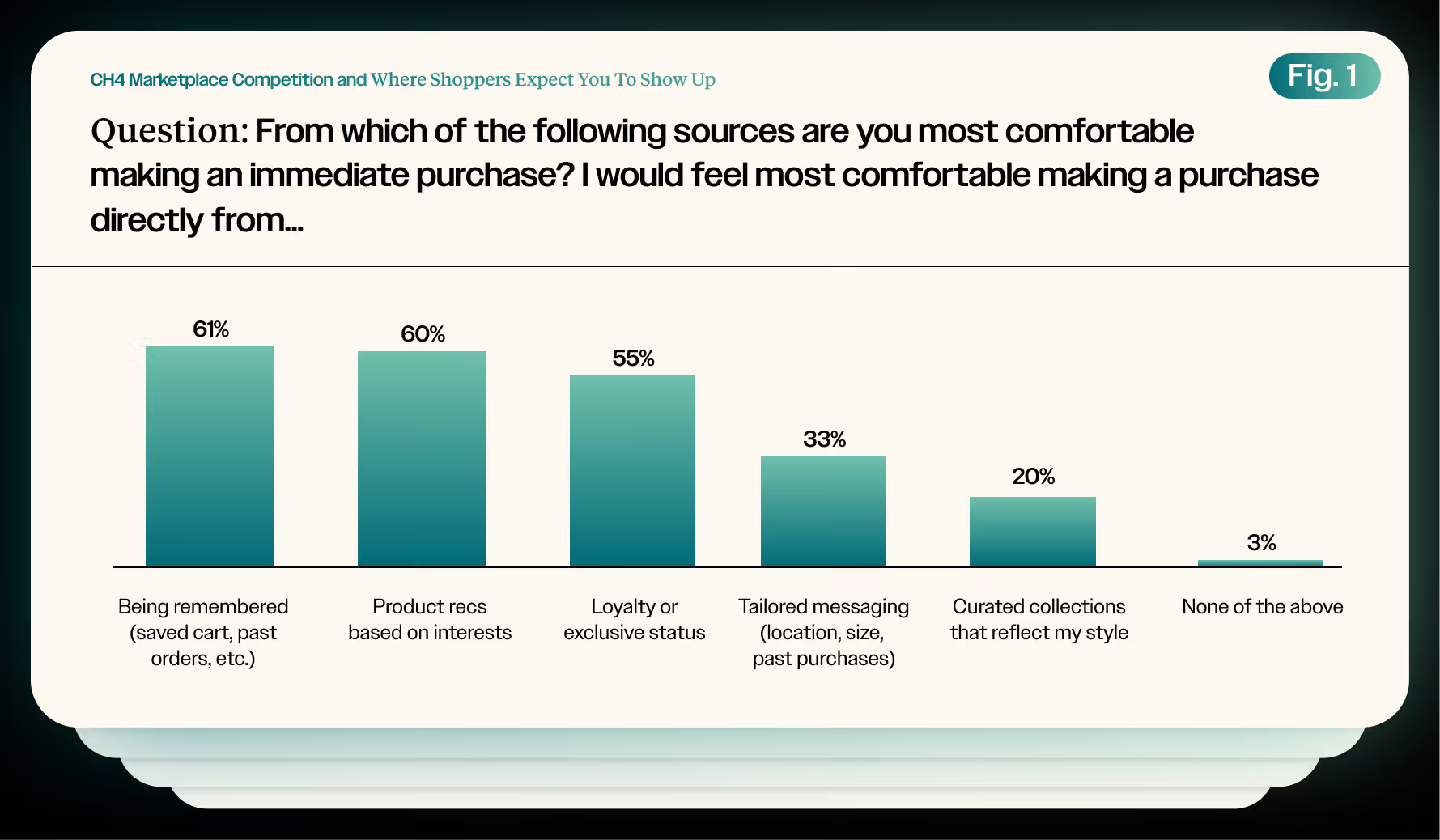
- 60% say the most “personal” experiences come from being remembered, receiving behavior-based recs, and loyalty recognition, not flashy design.
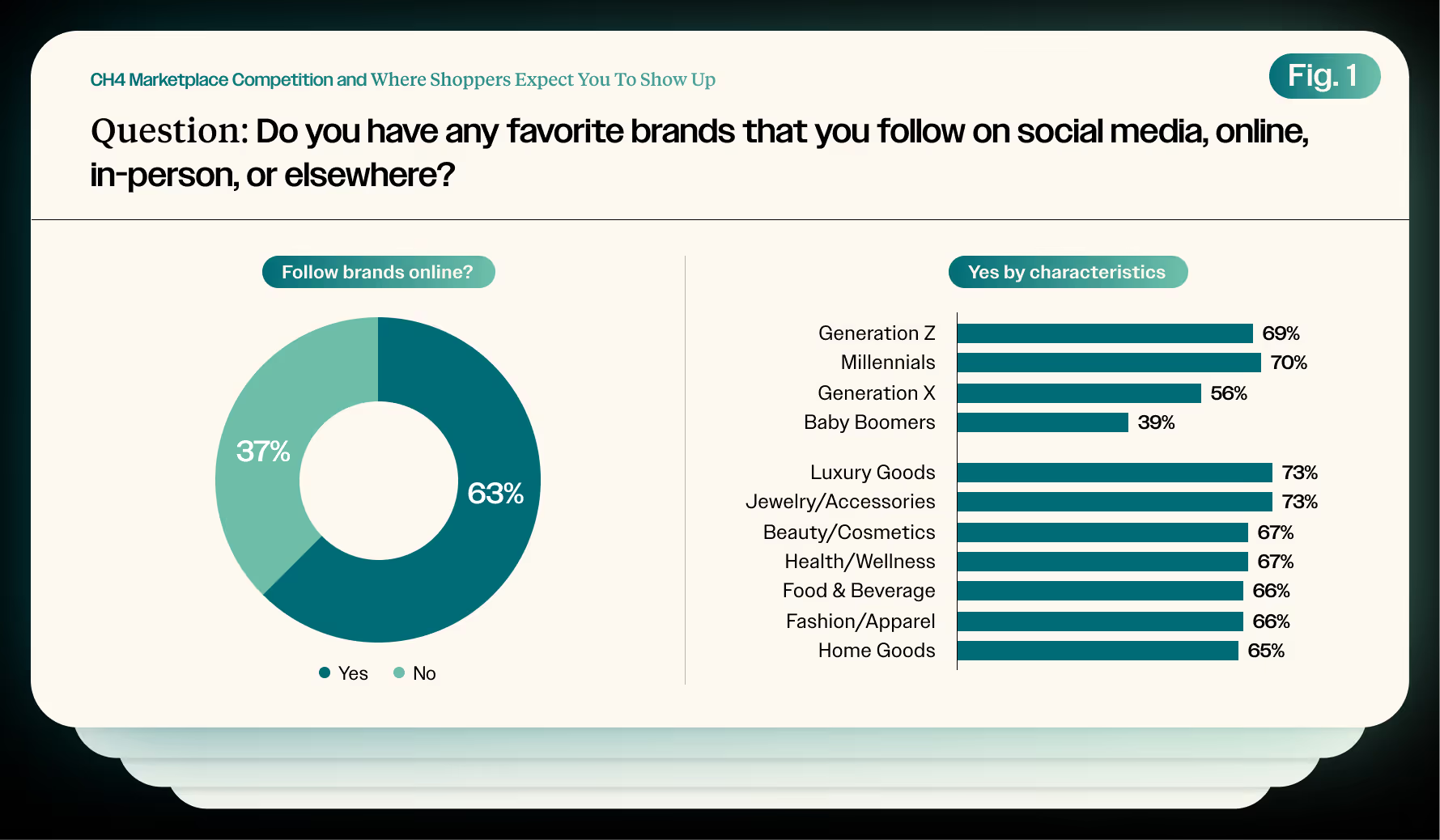
- 67% of shoppers follow brands somewhere online, but that number jumps to 70% for Gen Z and Millennials.
What the Data Shows
1. Where Shoppers Feel Safest Buying Online
- Marketplaces dominate trust. Two-thirds of shoppers trust Amazon-style marketplaces more than any other online destination.
- Brand sites hold steady. Just under half trust a brand’s website or app. this number stays consistent across generations.
- Apps show a generational divide. Trust in mobile apps is high among younger shoppers, but declines sharply with age.
2. What Actually Feels “Personal” (According to Shoppers)
- ~60% say an experience feels "personal" when the brand:
- Remembers them
- Tailors recommendations to their behavior
- Recognizes loyalty
- Curated collections, and tailored messaging barely register. Shoppers want to feel known, not profiled.
- Gen Z and Millennials over-index on wanting behavior-based recommendations and loyalty perks. Boomers care far less about dynamic experiences and far more about clarity and trust.
- Shoppers in luxury and jewelry categories are more likely to follow brands online, and expect a more personalized, relationship-driven experience.
3. Brand Followership is High but Generationally Skewed
- Two-thirds follow brands somewhere online. But the split is massive.
- ~70% of Gen Z & Millennials follow brands
- Only 39% of Boomers do
4. Where the First vs. Second Purchase Happens
- Marketplaces win the first purchase. Shoppers trust Amazon to get the job done:
- Fast shipping
- Easy returns
- High reliability
- This is where they try a brand for the first time with low emotional commitment.
- Brand-owned channels win the second. Once they know you, shoppers shift to your:
- Mobile app
- Website
- Loyalty program
- They want:
- Saved preferences
- Rewards
- Faster checkout
- Exclusive perks
What It Means for Brands
Why Amazon Will Win the First Sale (But You Should Own the Second)
Every brand is competing with Amazon for convenience, but the psychological game is different. Marketplaces win because they remove uncertainty:
- You know items are in stock
- You know shipping will be fast
- You trust the process
But Amazon can’t recreate:
- Rewards
- Recognition
- Emotional loyalty
- Brand affinity
- Community connection
- High-touch service
- Narrative-driven promotions
That’s where owned channels like mobile apps and data-powered personalization punch above their weight.
Brand apps unlock the one thing marketplaces can’t replicate: the feeling of being known. And that’s what turns a discount-driven shopper into a repeat buyer.
Case File → OluKai: Marketplace Discovery to App Flywheel
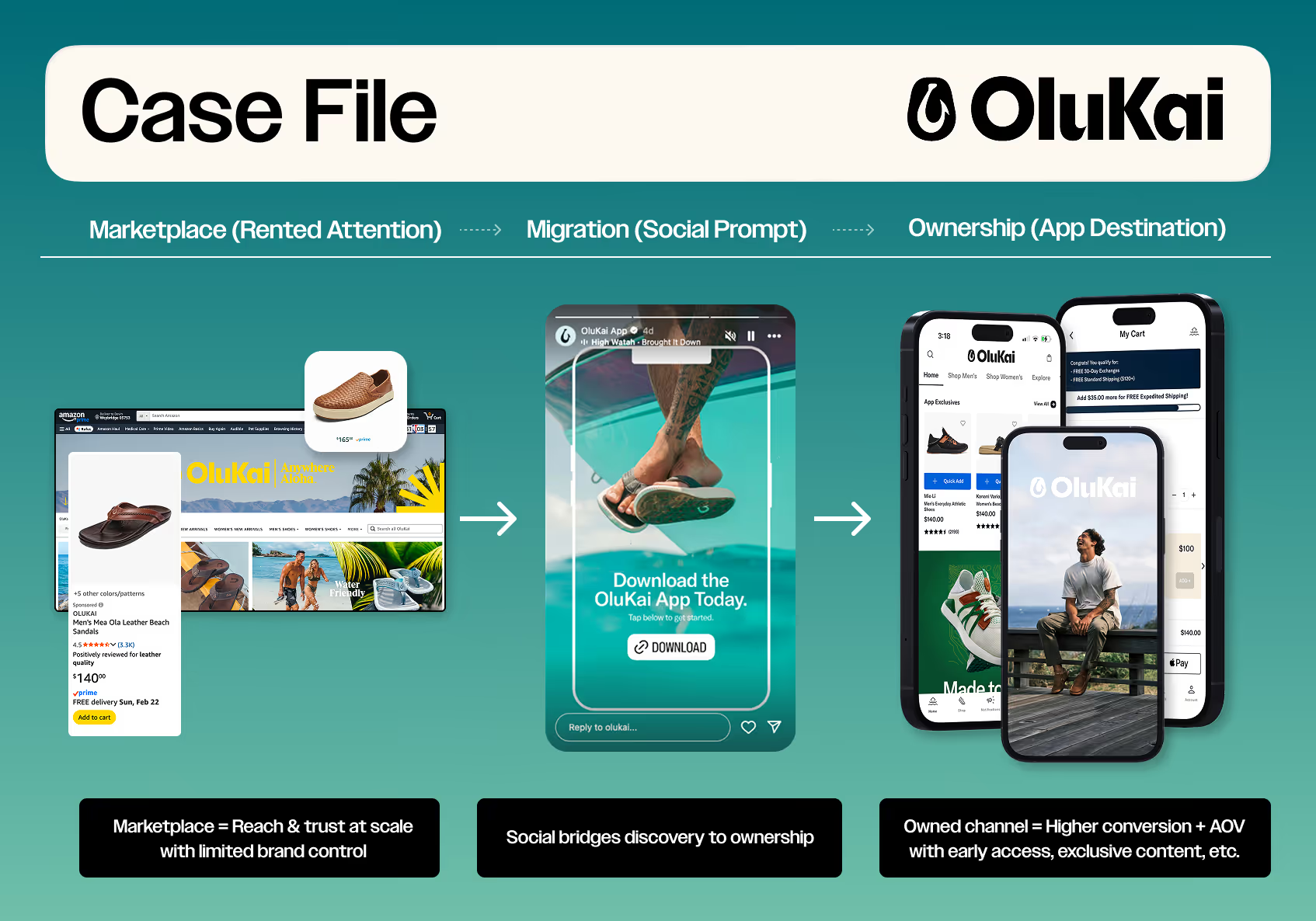
OluKai uses marketplaces for reach, then pulls shoppers into a branded app where the experience is faster, more curated, and built for repeat behavior. They used early access, expedited shipping, and exclusive content (not blanket discounts) to keep value aligned with the brand.
Proof: the app drove:
- 142% higher CVR vs. mobile web
- 21% higher AOV vs. mobile web
- 40%+ of app orders from new customers.
Steal this play:
- Use marketplaces as the top-of-funnel, then “graduate” buyers into your owned channel with a clear next-step incentive (early access, perks, or content).
- Send launches to curated landing pages first (not generic PDPs) so the story and education match the hype, then guide into purchase.
- Replace discounting with value-perks (shipping upgrades, app-only drops, exclusive guides) to protect margin while increasing retention.
- Treat the app as a controlled testing lab and take your findings on what lifts conversion/AOV back into your mobile web experience
Case File: Gymshark → “Service-Speed” Mobile Moments That Protect Conversion
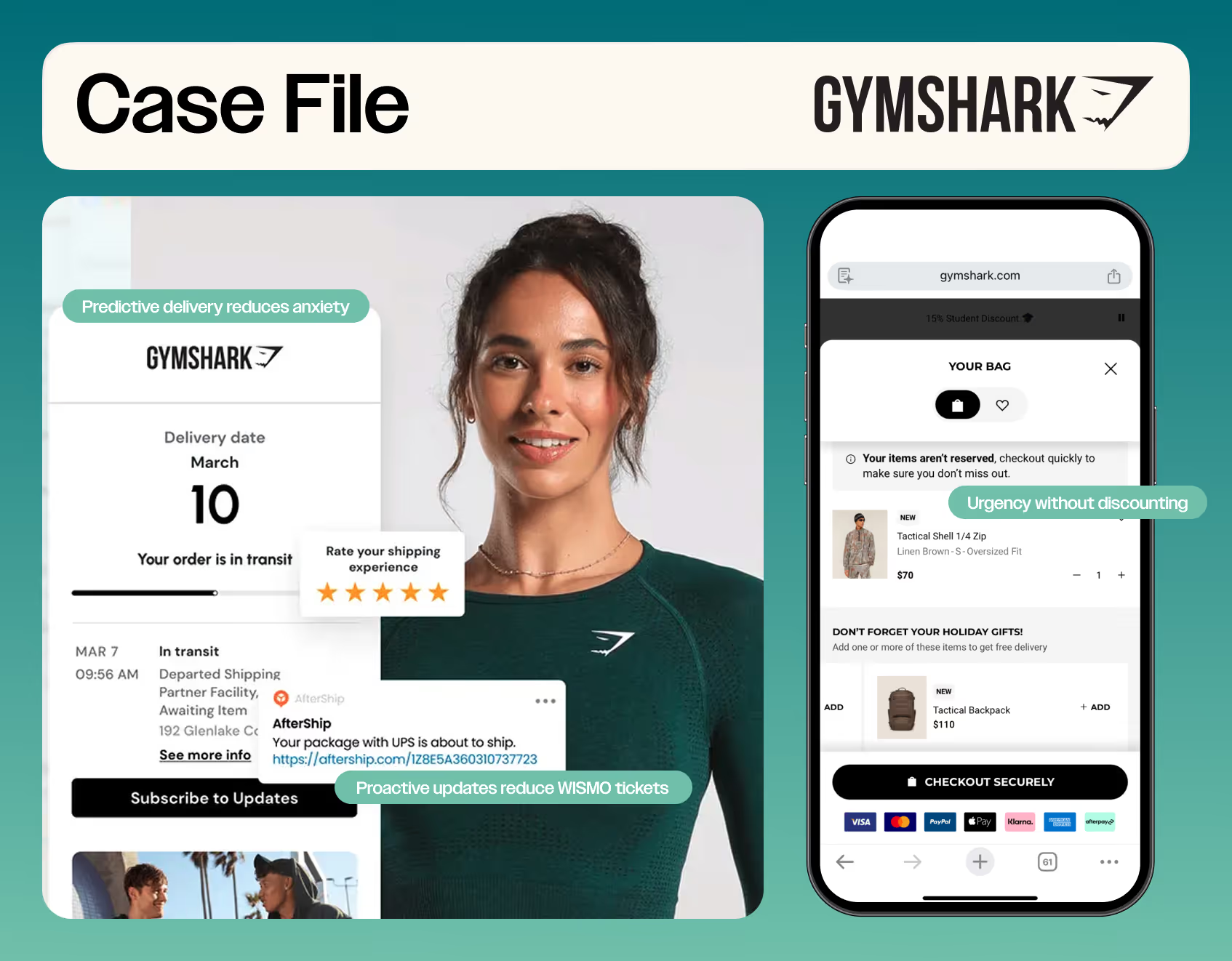
Gymshark shows how to win micro-moments by removing uncertainty at peak intent using conversational support (like chatbots for order tracking) to resolve “Where is my order?” friction fast, so shoppers don’t abandon the journey mid-stream.
When shoppers are impulsive, doubt kills carts and fast answers preserve momentum, trust, and repeat behavior.
Steal this play:
- Put order status + returns + sizing one tap away on mobile (and inside messaging if possible).
- Treat “WISMO” as a conversion lever, not a support cost center.
- Use AI to detect intent (“track order,” “swap size,” “when restock”) and route to the fastest resolution path.
AI Actions to Try Now
How AI Bridges Amazon Shoppers into Your Owned Ecosystem
1. Predictive Loyalty: Knowing Exactly When Recognition Converts (Thinking AI)
AI identifies the exact points in the customer journey where recognition matters most:
- After a repeat purchase
- When someone hits a spend threshold
- During a milestone month
- When their browsing behavior signals affinity
Instead of generic loyalty messages (“You earned 25 points!”), AI generates contextual, specific nudges: “Hey Sarah, you’ve purchased 3 times this year. Want to unlock faster shipping permanently?”
AI shifts loyalty from points to personal relevance.
2. Recognition, Not Surveillance: Personalization That Actually Feels Good (Feeling AI)
Most brands try to personalize everything. Shoppers don’t want everything personalized, they want the right things personalized.
AI can now:
- Analyze browsing patterns to surface replenishment reminders
- Segment customers by intent (like high-AOV researchers vs. impulse gifters)
- Predict next-best products
- Identify the perfect timing for a loyalty perk
- Trigger tailored promotions based on lifecycle momentum
The goal isn’t complexity. The goal is feeling seen without feeling surveilled.
As shoppers move between marketplaces and brand-owned channels, expectations don’t reset, they carry forward.
Once trust is earned, shoppers expect experiences that remember them, respond in real time, and feel intelligent (not static or generic).
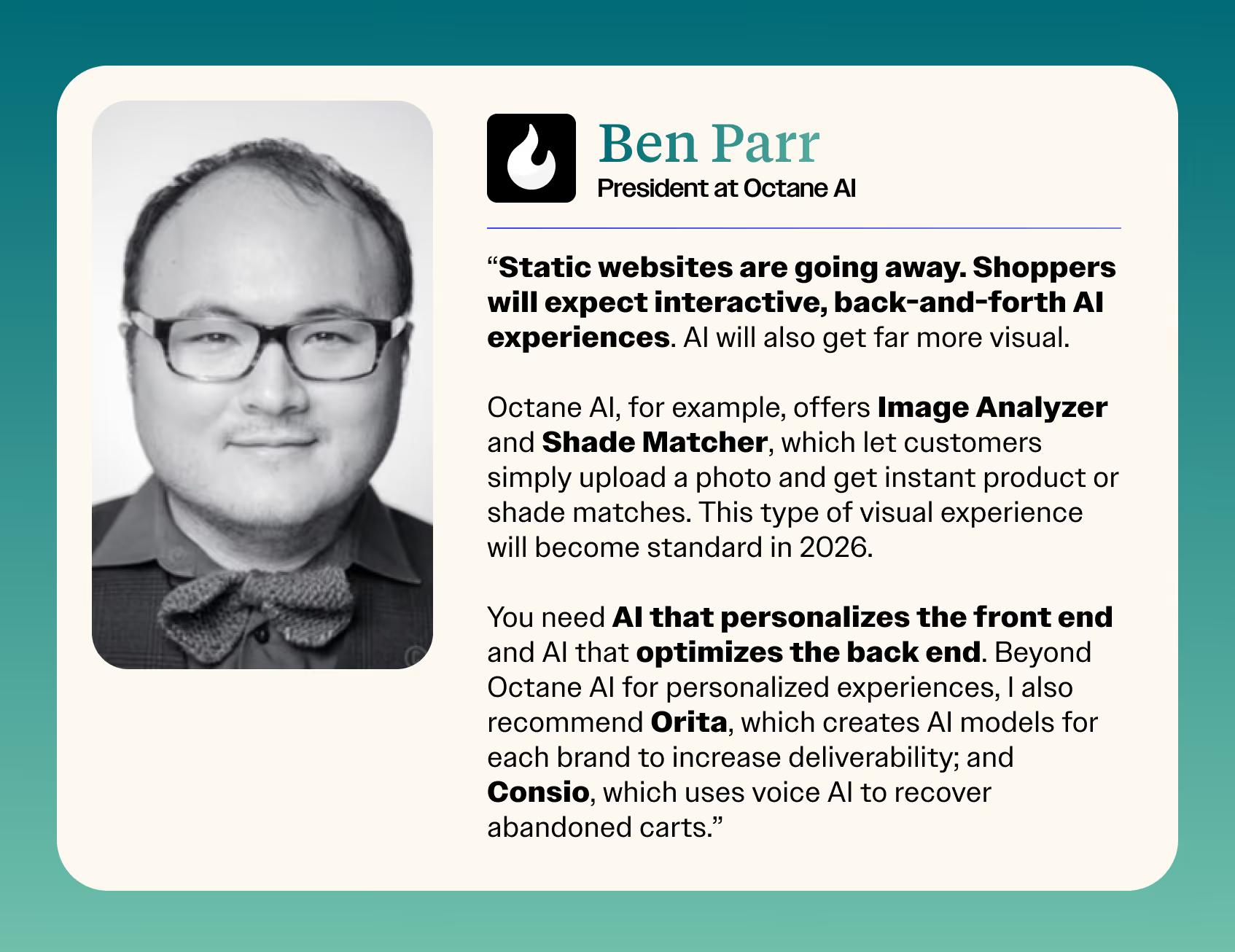
3. Marketplace → App: AI-Powered On-Ramps to Your Ecosystem (Narrative AI)
Marketplaces might bring in the first sale, but apps secure the relationship. AI-powered promotion flows can automatically:
- Identify marketplace buyers
- Trigger app download incentives
- Offer personalized rewards post-purchase
- Highlight faster checkout and better tracking
- Surface loyalty benefits tied only to the app
For example, “Your order’s on the way 🎁 — tracking is 2× faster in the app, plus your next purchase unlocks VIP early access.”
AI turns a one-time buyer into an ecosystem participant seamlessly.
Mini AI Toolbox
For Social + Loyalty
- AI Social Media Toolkit (Free): Notion template for speeding up asset creation by generating social calendars, engagement prompts, and multi-format posts.
- Sprout Social’s AI Toolkit: AI help for planning, writing, and optimizing cross-channel social content.
For Smart Messaging + Timing:
- Braze Intelligent Channel: Auto-selects the best channel (push/SMS/email) based on past behavior.
- Iterable Send Time Optimization: Predicts the exact minute each user is most likely to engage.
- Klaviyo Smart Send Time: Learns when users open emails and adapts timing automatically.
The Impulse Economy: Micro-Moments That Shape Year-Round Revenue
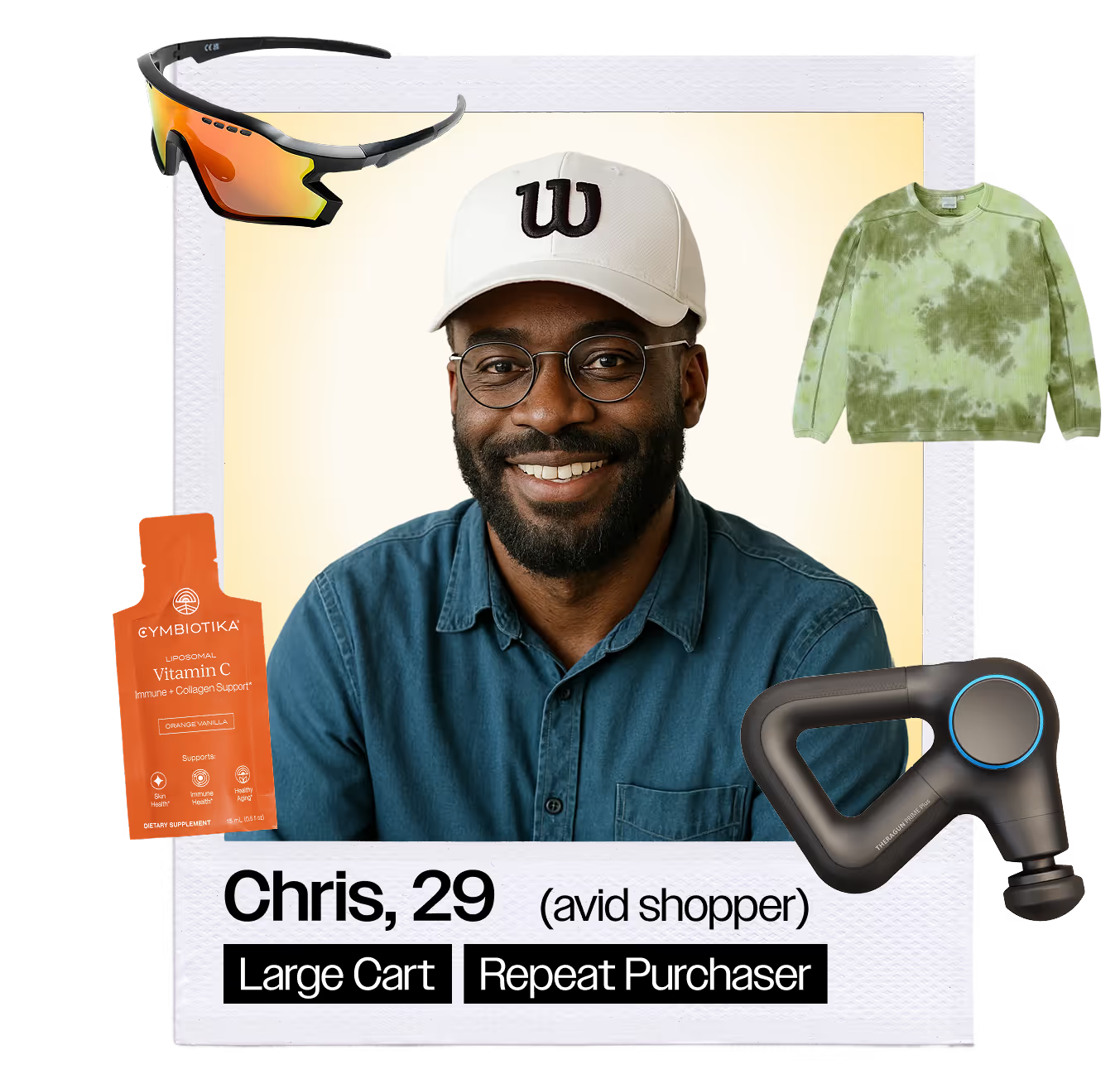
Fast

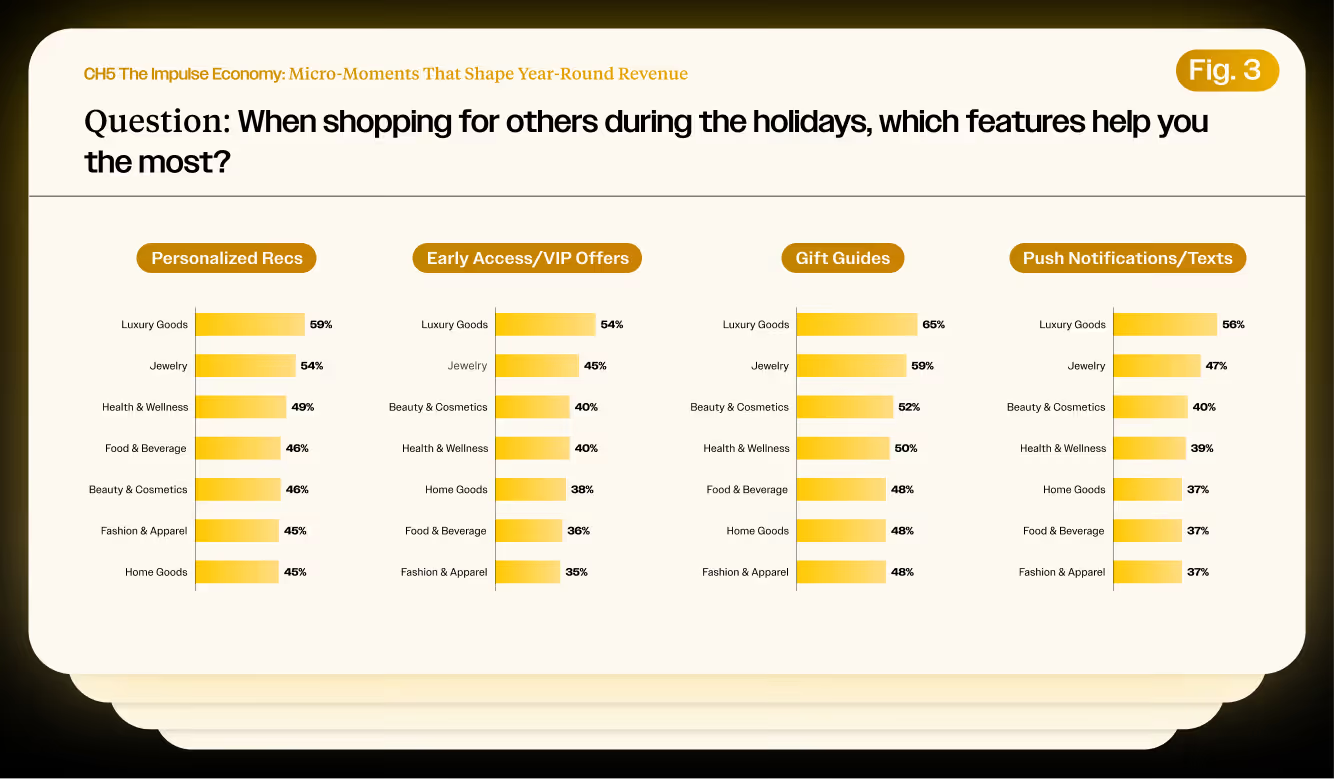
Facts
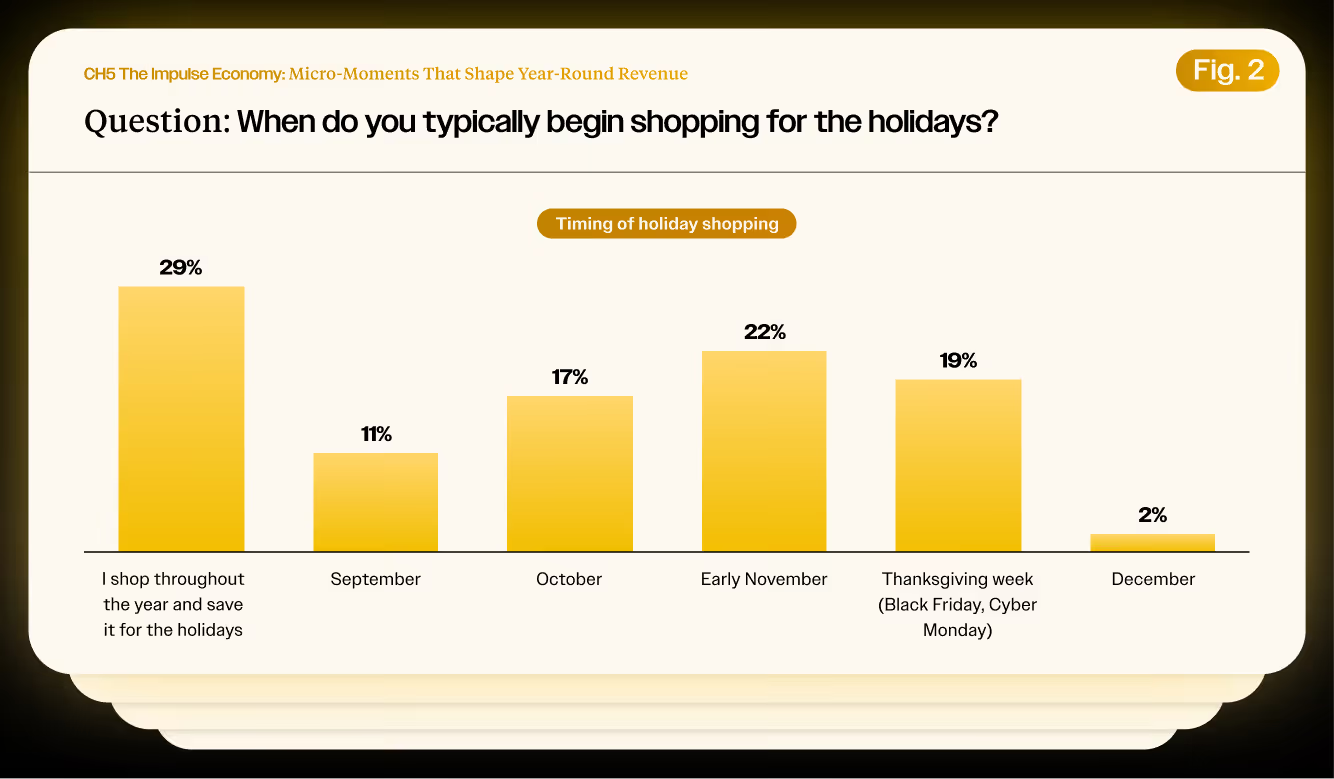
- 67% of shoppers begin buying in October or earlier, pulling spend forward.
- 71% of impulse purchases happen on mobile, and not desktop (across all generations).
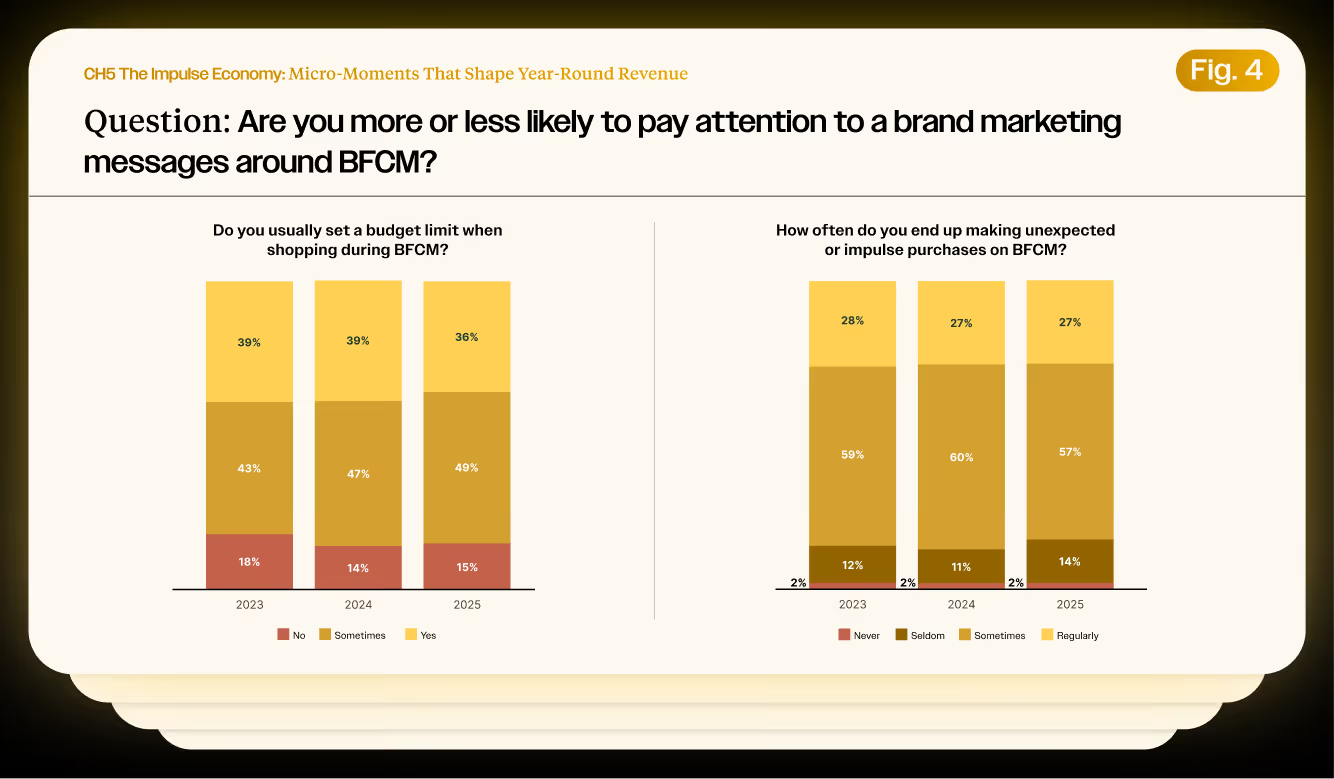
- 85% of shoppers impulse-buy; over 25% do so regularly.
- The #1 killer of an impulse buy is extra shipping cost (at 68%).
What the Data Shows
1. Peak Season Is No Longer a Season
- Holiday shopping isn’t a “weekend.” It’s a long runway.
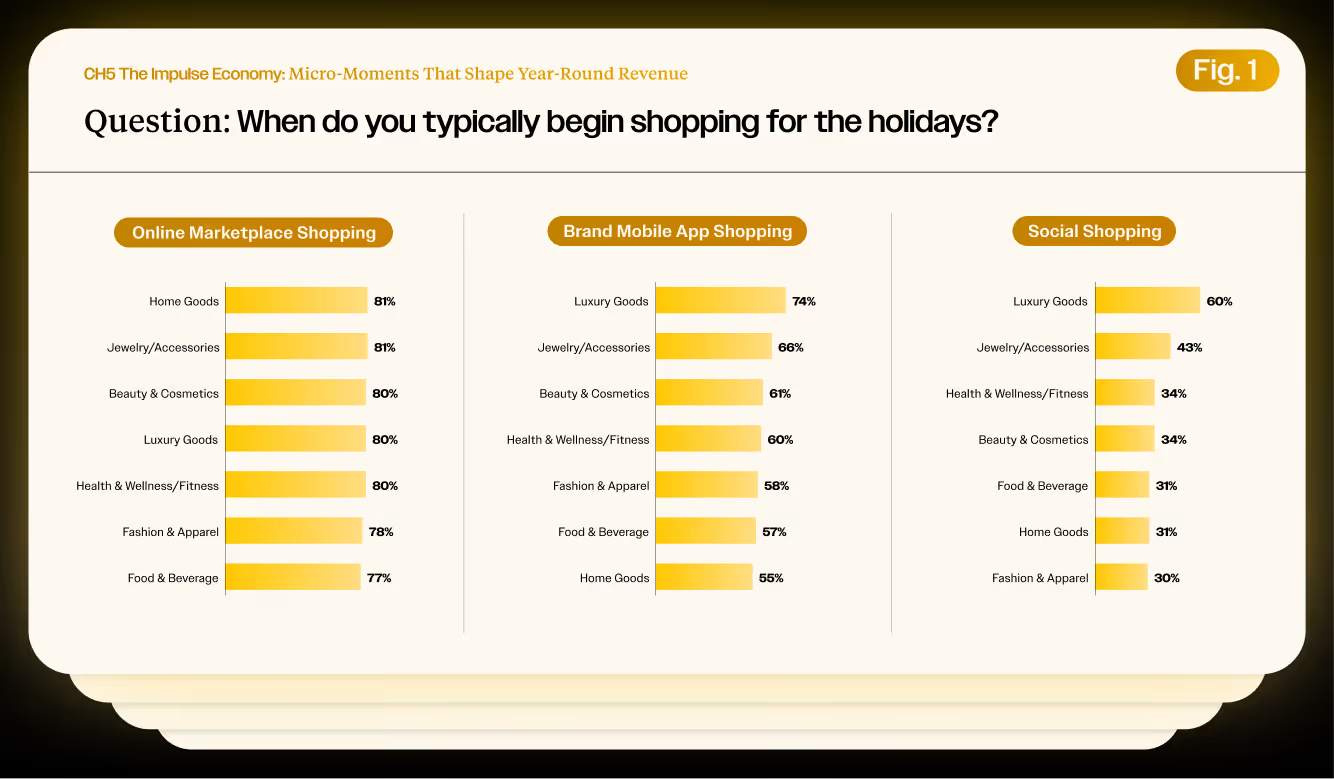
- Two-thirds of shoppers start in October or earlier.
- 32% shop year-round for holiday gifts.
- Only 14% wait for Black Friday weekend.
- The peak window now stretches 3–4 months (October → December), not just BFCM week.
- Gen Z runs on its own calendar. Nearly 40% of Gen Z shops before October. They don’t follow the traditional “launch right before Black Friday” cadence, they accelerate it.
- Operator takeaway: If your highest-intent shoppers start warming up in October, brands that wait until November are optimizing too late.
2. Impulse Behavior Is a Year-Round Reality
- Q4 concentrates and accelerates year-round impulse habits. Peak season simply stacks more triggers into an already existing habit pattern.
- 85% of shoppers make impulse purchases.
- 25%+ do so regularly.
- Most shoppers make 2–3 impulse buys per month, all year long.
- Why people impulse-buy:
- “A deal too good to pass up” (71%)
- “I deserve it” (43%)
- “Limited time” (39%)
- Millennials over-index when things feel personalized.
- What kills impulse purchases:
- Unexpected shipping cost (68%)
- Long delivery times (42%)
- Unclear return policies (31%)
- Bad mobile UX (28%)
- Operator takeaway: Impulse isn’t seasonal and you don’t “create” impulse, you capture it. And the fastest way to lose it is friction (especially shipping surprise).
3. Impulse Is Deeply Category-Dependent
- Impulse plays differently depending on how emotional vs. technical the decision is.
- High-impulse categories:
- Jewelry + luxury
- Beauty
- Apparel
- Home goods
- Low-impulse categories:
- Electronics
- Fitness equipment
- Health consumables
- High-impulse categories:
- Operator takeaway: The more “identity” and occasion-driven the purchase, the more micro-moments matter and the more mobile can win.
4. Mobile Browsing Fuels Micro-Moments That Drive Impulse Purchases
- Impulse doesn’t happen in long sessions. It happens in small windows.
- 60% of Gen Z + Millennials browse multiple times per day
- Over half of all adults browse several times per week
- 71% of impulse purchases happen on mobile (vs desktop)
- Operator takeaway: Micro-moments are the new funnel. The channel mix is fragmented, but the purchase moment is overwhelmingly mobile.
5. Post-Purchase is the Most Underused Impulse Lever.
- Most brands treat post-purchase as support. In 2026, it’s one of your highest-attention conversion surfaces.
- 66% always open order confirmation emails
- 52% check order-status pages multiple times
- Gen Z checks tracking pages 3–4× more than Boomers
- Gen Z is 2× more likely than Boomers to impulse-buy for emotional reasons (“I deserve it”)
- Millennials impulse-buy when the suggestion feels personalized.
- Why this matters: Post-purchase is a rare moment when shoppers want to hear from you because they’re already paying attention. That attention can either become:
- confidence (lower anxiety → fewer cancellations/returns)
- habit (repeat behavior)
- or churn (if friction shows up)
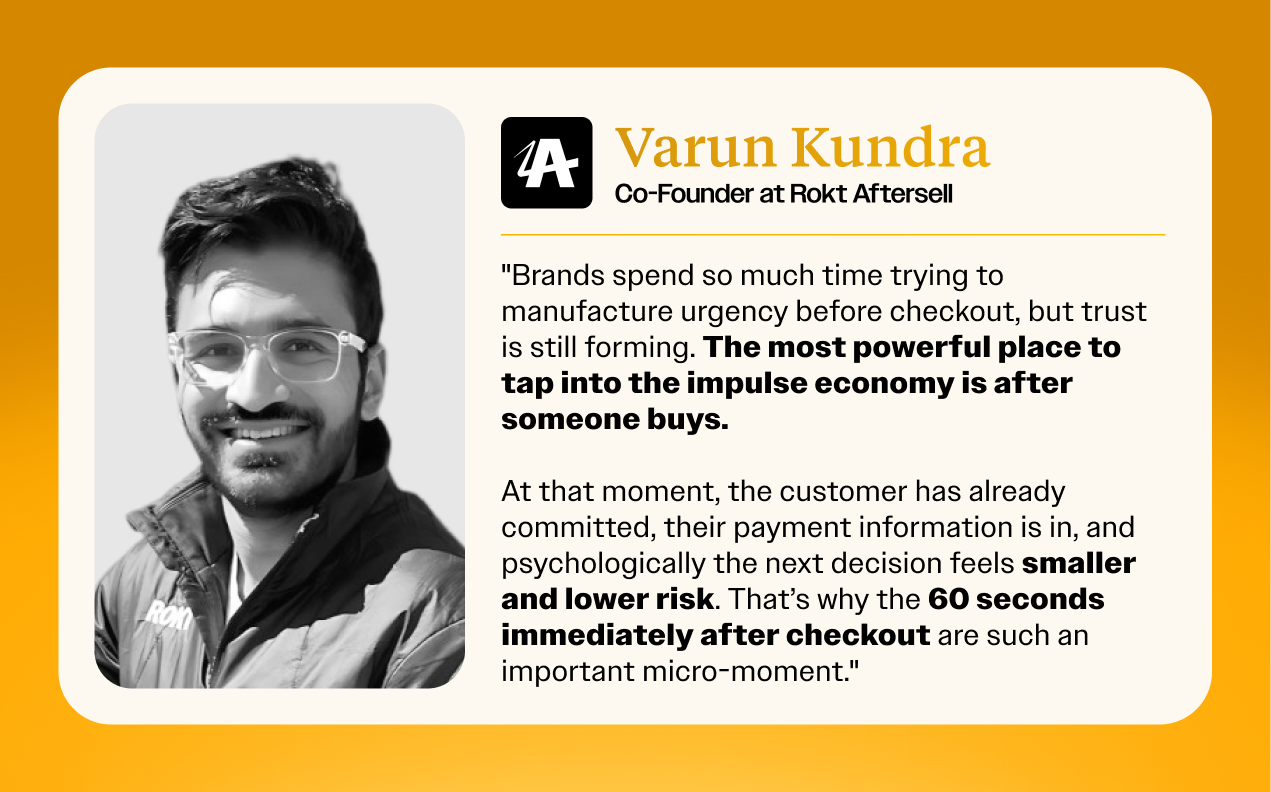
While most brands treat checkout as the finish line, the psychological peak of trust actually happens 60 seconds later. Varun Kundra, Co-Founder at Aftersell, explains why this post-purchase window is the ultimate frontier for the impulse economy:
To capture this window, growth-oriented teams are using AI to monetize confirmation pages with native, frictionless offers that feel curated rather than promotional. Saran notes that "What performs best isn’t a blanket ‘10% off’ discount. It’s ‘complete the set,’ ‘upgrade your experience,’ or ‘add the refill now.’" By matching the recommendation to what was just purchased, brands protect their margins while simultaneously increasing AOV."
How winning brands operationalize the post-purchase window (without discounting):
- Reduce uncertainty fast: clear delivery expectations, easy returns, proactive updates
- Keep momentum: “complete the look,” replenishment reminders, routine builders
- Turn tracking pages into conversion surfaces: personalized modules, FAQs, smart routing
- Time outreach to behavior: trigger messages when customers check tracking (not randomly)
This proactive approach is also redefining the subscription model according to Ebuka Chukwuonwe, Technology Partner Manager at Recharge. By reaching customers before an order ships or a payment fails, brands are seeing action rates four times higher than email.
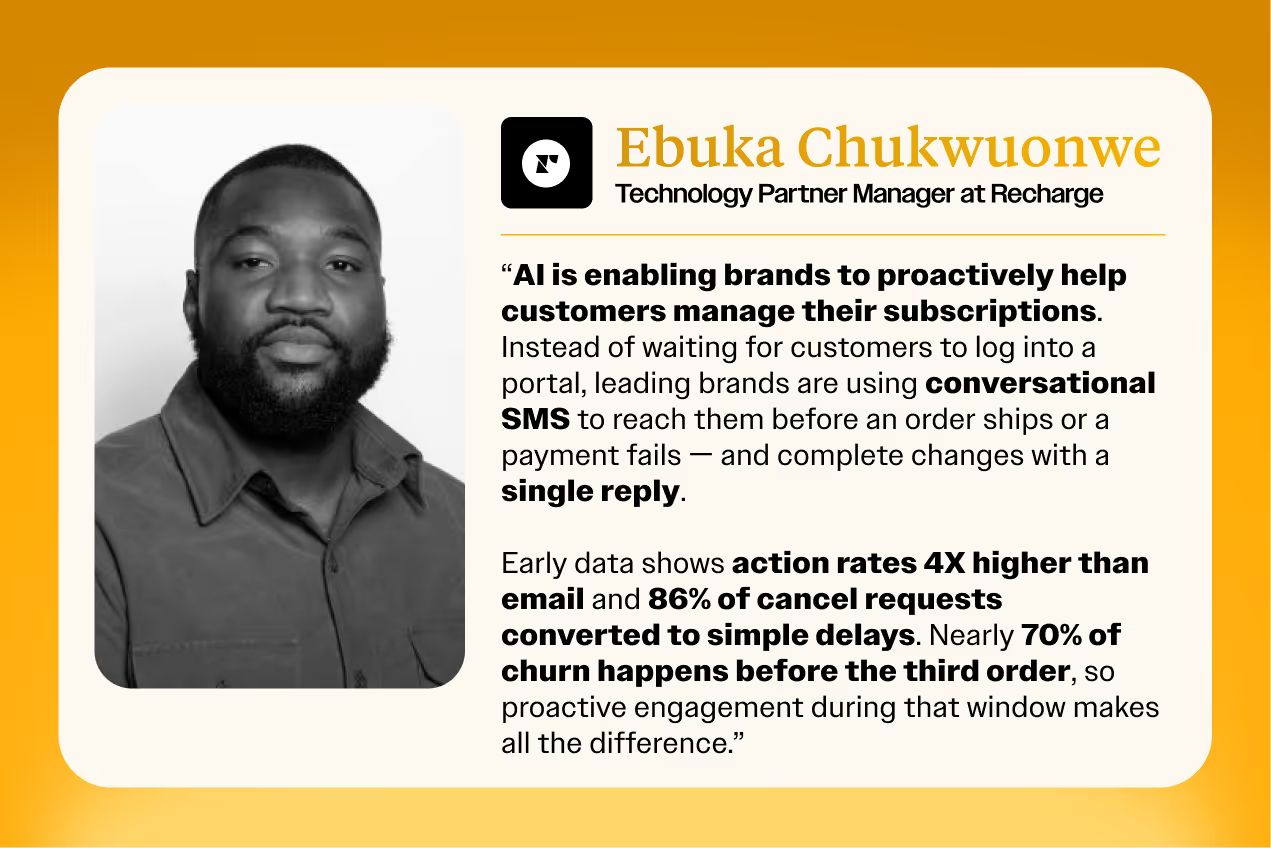
The takeaway: Post-purchase isn’t the end of the journey — it’s where impulse turns into retention.
What It Means for Brands
Why Treating Impulse as Random Is Costing You Repeat Revenue
Impulse behavior isn’t chaos, it’s pattern. And the patterns are getting sharper, shorter, and more mobile.
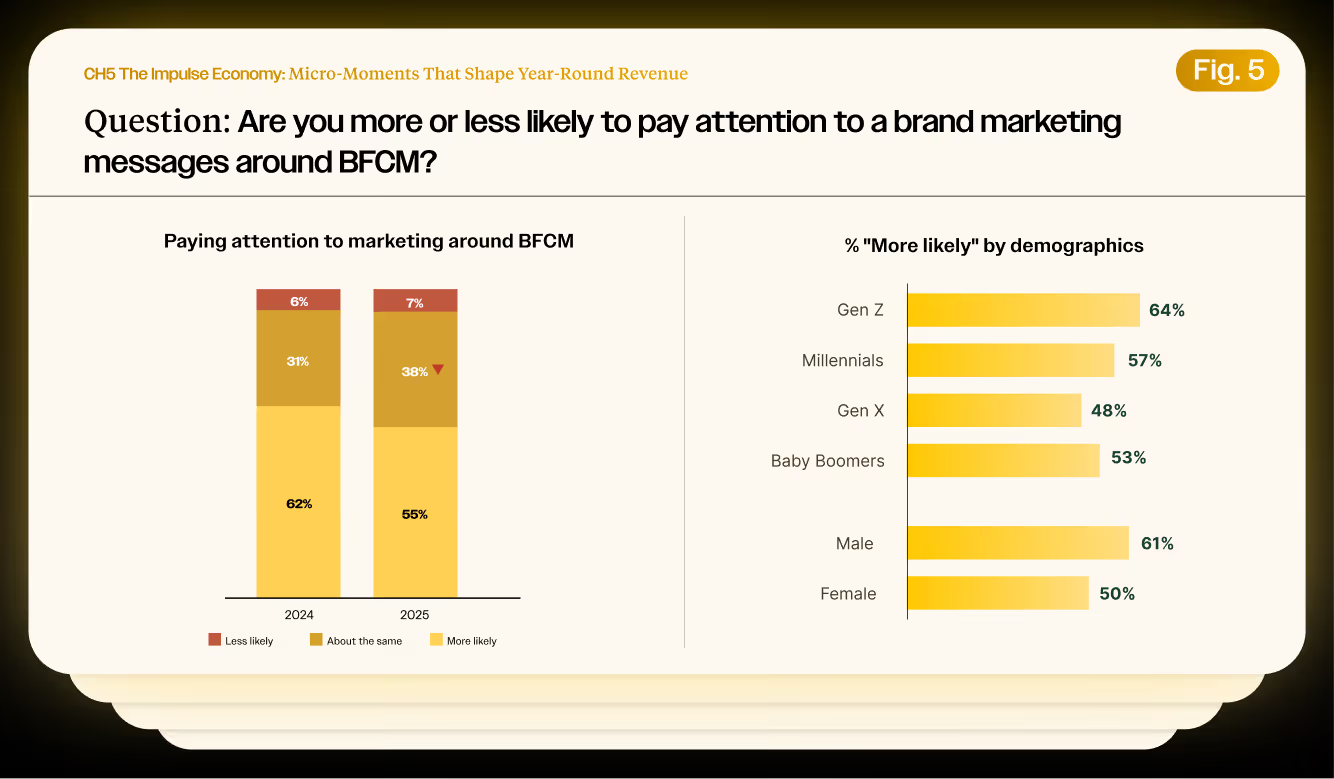
Peak season has shifted from a single “big weekend” into a rolling impulse economy that starts in September and extends into January. Shoppers browse constantly, trigger impulse windows multiple times a day, and buy when an offer, moment, or message snaps perfectly into place.
Most brands still treat impulse as luck. That’s risky, because:
- Impulses are fleeting: If your app, site, or message isn’t instantly clear, you lose the moment.
- Micro-moments are fragmented: Shoppers bounce from TikTok to email to app in seconds. If the story breaks, the conversion dies.
- Friction kills intent: A surprise shipping fee destroys the conversion faster than any incentive can save it.
- Peak spend is early: Brands that wait for Black Friday to optimize their messaging miss the entire Q4 warm-up period.
The real risk isn’t losing a sale. It’s losing the moment that creates the sale, and the repeat behavior that follows.
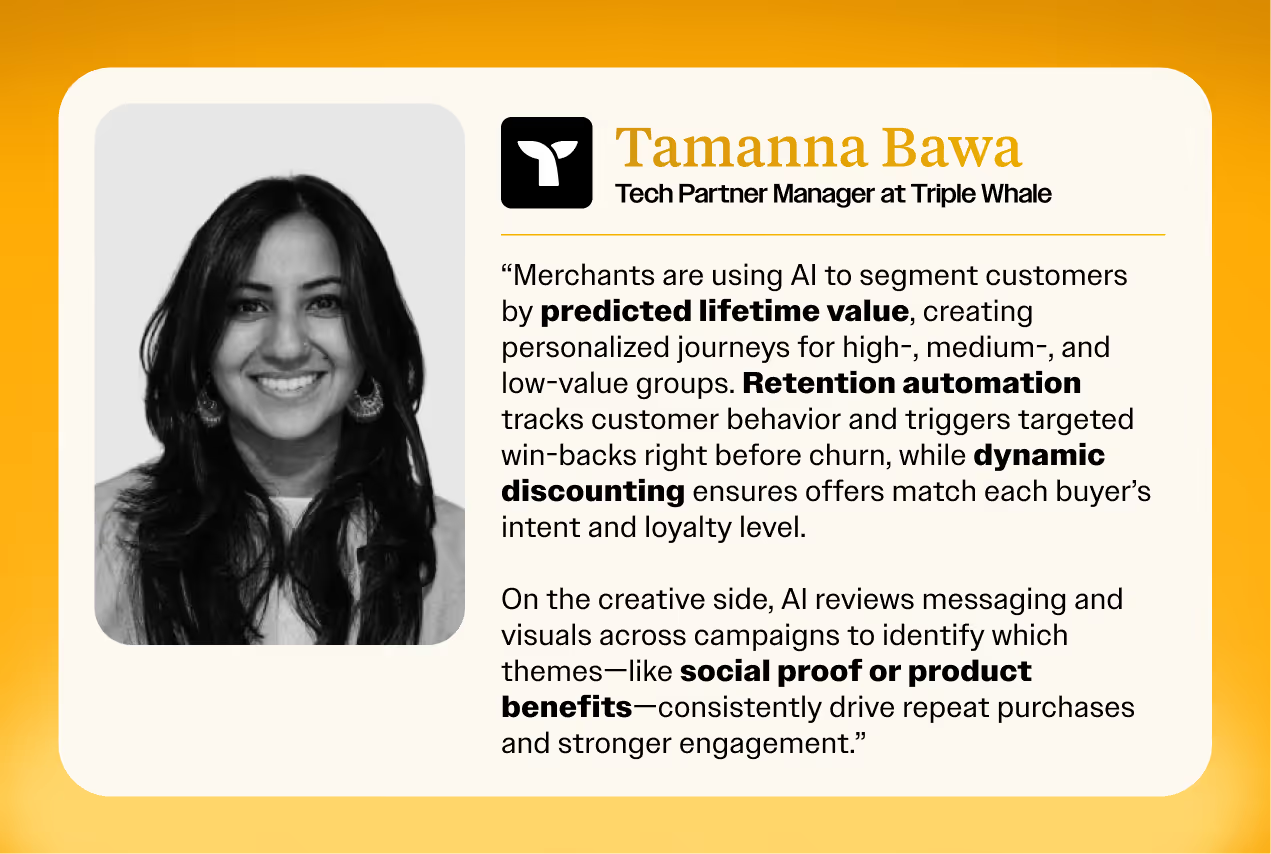
As impulse becomes more frequent, the challenge shifts from simply generating demand to making sure that demand compounds. Tamanna Bawa, Tech Partner Manager at Triple Whale, explains why this shift is pushing teams beyond channel-level performance and toward true customer-level profitability:
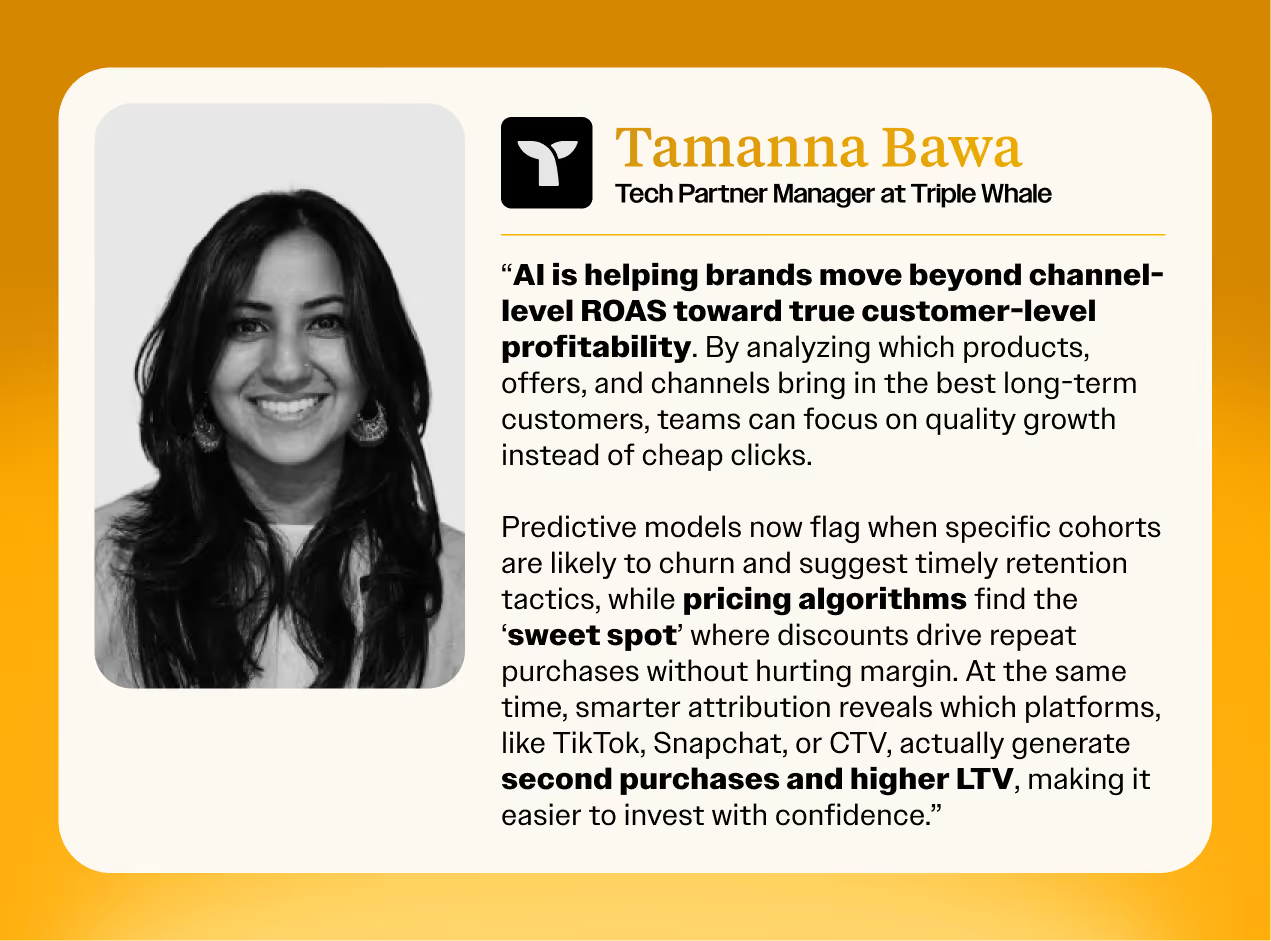
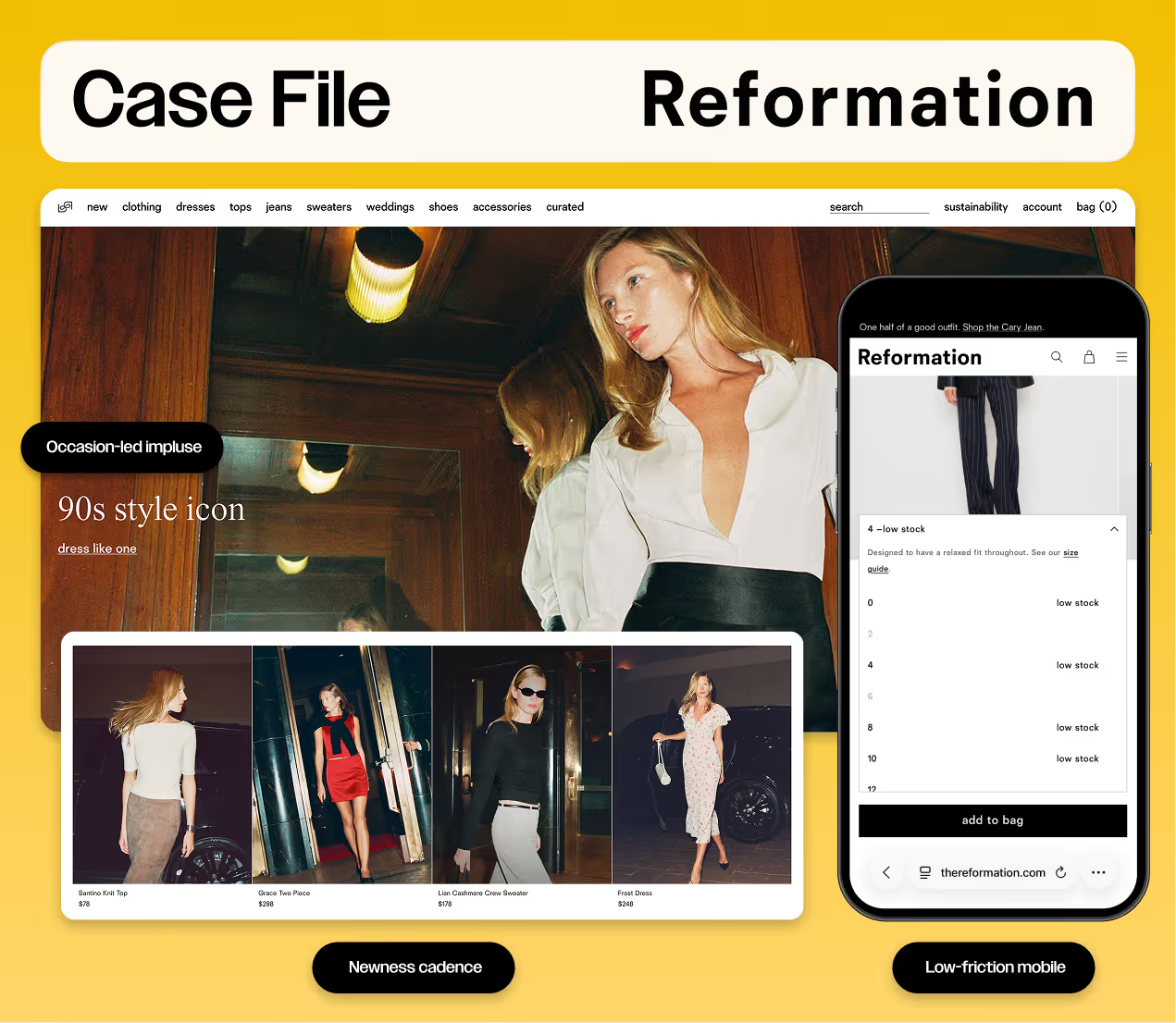
Case File → Reformation: Engineering Impulse through Occasion-Led Discovery
Reformation turns year-round occasion shopping into impulse purchases by pairing constant newness with a low-friction mobile experience that makes the decision feel instant and justified.
Whether it’s a wedding guest dress, vacation outfit, or last-minute event look, Reformation meets shoppers in high-intent moments—when timing matters more than price. New arrivals, limited inventory cues, and tightly edited collections reduce decision fatigue, while mobile-first PDPs make checkout feel effortless.
Why this works:
Impulse doesn’t always look spontaneous—it often looks situational. Reformation converts “I need something for this” moments into immediate purchases by removing friction at the exact point of intent.
Steal this play:
- Merchandise around occasions, not just categories (events, seasons, moments)
- Use newness + low-inventory cues to create urgency without discounting
- Keep PDPs tight and decisive: clear fit, fast visuals, minimal friction
- Optimize mobile checkout so high-intent moments don’t cool off
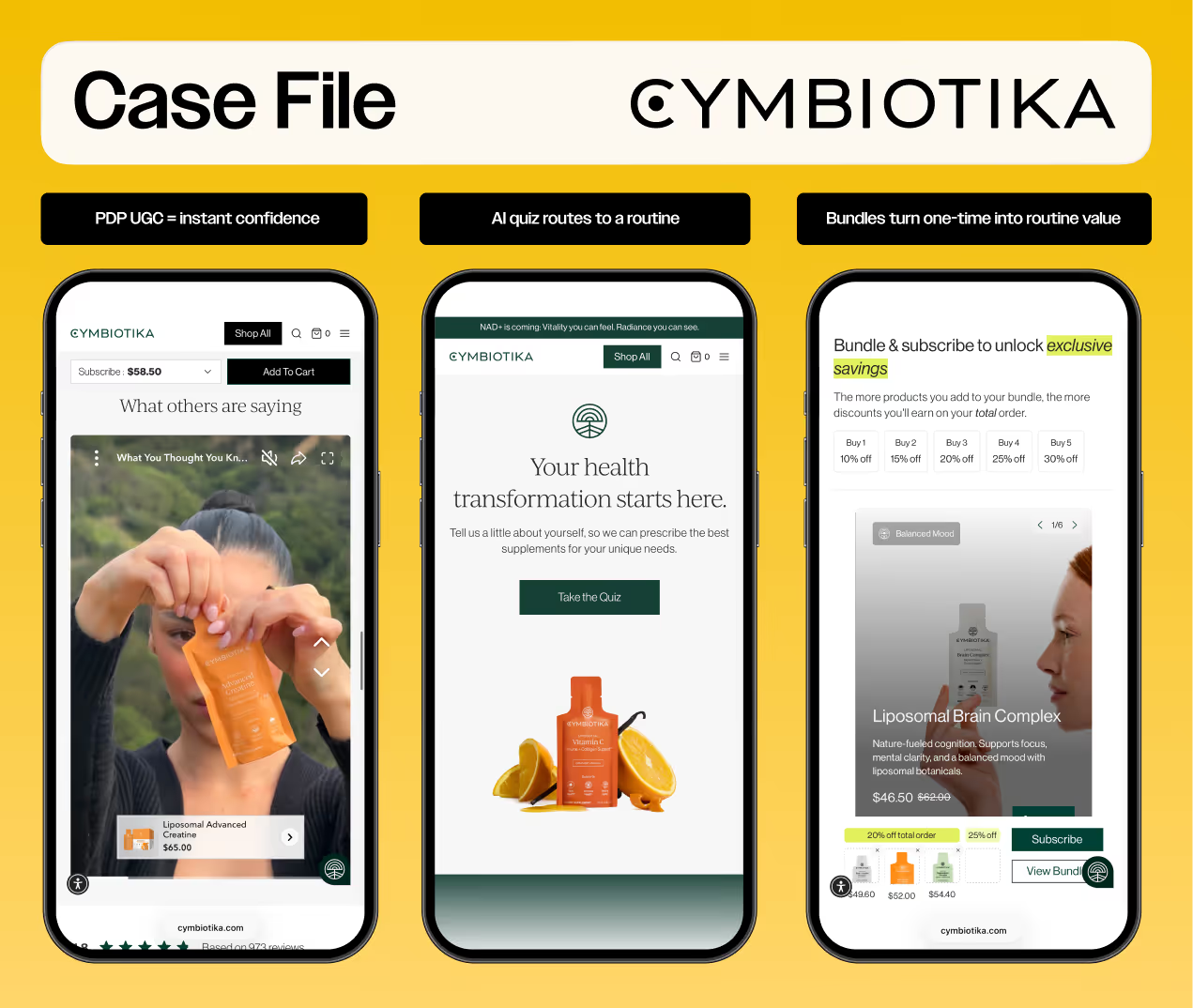
Case File → Cymbiotika: Turn Micro-moments into Routine Revenue
Cymbiotika turns impulse into habit by pairing PDP-level UGC + live launch energy with an “AI quiz” that routes shoppers into personalized recommendations—then nudges higher AOV through build-your-own bundles.
Steal this play:
- Turn “I’m curious” into a fast decision: add a quiz entry point that maps shoppers to a starter routine
- Make impulse feel safe: place high-signal UGC video directly on PDPs; use launches/drops to create momentum
- Capture the AOV moment: offer a “build your bundle” path immediately after education/recommendation
Trigger the next buy before intent fades: use post-purchase timing + replenishment cues to encourage routine behavior
AI Actions to Try Now
How AI Turns Micro-Moments into a Repeatable System
1. Impulse Mapping: Timing Offers to When Shoppers Are Weakest
AI identifies when each shopper is most likely to impulse-buy based on:
- browsing frequency
- session depth
- product category
- emotional trigger (deal-led vs. “I deserve it”)
- past abandonments
For example, AI might predict a shopper is most likely to impulse-buy after 8 PM and responds best to time-limited offers—automatically triggering a push notification with a 2-hour bonus.
By identifying these patterns, AI turns “random impulse” into scheduled predictability.
This tactical timing works best when it is paired with broader cohort orchestration. As Bawa further explains, the real power of AI lies in its ability to organize these fleeting moments into high-value customer segments:
2. Micro-Offers: Minimum Discount, Maximum ‘Add to Cart’
Forget blanket discounting. AI can calculate the lowest incentive needed to convert each individual.
- For deal-sensitive shoppers → small % discount
- For luxury shoppers → exclusive access
- For Millennials → personalized bundles
- For Gen Z → “you deserve this” messaging
Enterprise value: This protects margin and increases AOV without resorting to blanket cuts.
3. Narrative AI for Post-Purchase Upsell and Loyalty Flows
AI transforms the high-engagement post-purchase window into a retention engine:
- inserts personalized product modules on tracking pages
- tailors offers to what the customer just bought
- adapts tone by age + category (“reassuring” for Boomers, “hype-forward” for Gen Z)
- times messages for when the customer checks tracking (predictive timing)
This is where “one-time” buyers become two-timers.
4. AI-Powered App Personalization (Your Highest-Intent Surface)
AI uses in-app signals to create individualized impulse opportunities:
- predicts which products the shopper is likely to buy next
- surfaces bundles dynamically
- pushes restock or “complete the look” recommendations
- detects churn risk and triggers preventative nudges
- adjusts home screen layout per user
Mobile apps become living, breathing impulse engines. Impulse becomes loyalty.
Mini AI Toolbox
- Pecan lets you automate your sales pipeline with predictive customer analytics. Some key use cases include sales forecasting, customer churn reduction, and demand planning.
- Talkwalker extracts text from social media posts (including images and audio) and packages it into AI-generated summaries and conversation clusters, which you can use to understand buyer impulses and interested.
Impulse copy generator prompt: For ChatGPT or any other LLMs, use the following prompt to help create engaging ad copy that taps into natural impulse behavior:
- Act as a behavioral extraction engine. Rewrite this message for impulse buyers by:
- Reducing cognitive effort
- Increasing emotional payoff
- Removing friction words
- Constraints:
- Max 2 short sentences (punchy + direct)
- Grade 6 reading level for clarity
- No hype language; strictly benefit-led
- Under 150 characters for push/SMS previews (to make it mobile-first)
- Act as a behavioral extraction engine. Rewrite this message for impulse buyers by:
The App Advantage: Where Loyalty, Personalization & LTV Compound
Fast

Facts
- Mobile is the Baseline: 90% of shoppers say a great mobile experience is a critical factor for brand loyalty.
- The Trust Multiplier: 67% of shoppers (and nearly 80% of Gen Z) trust and engage more with brands that have an app.
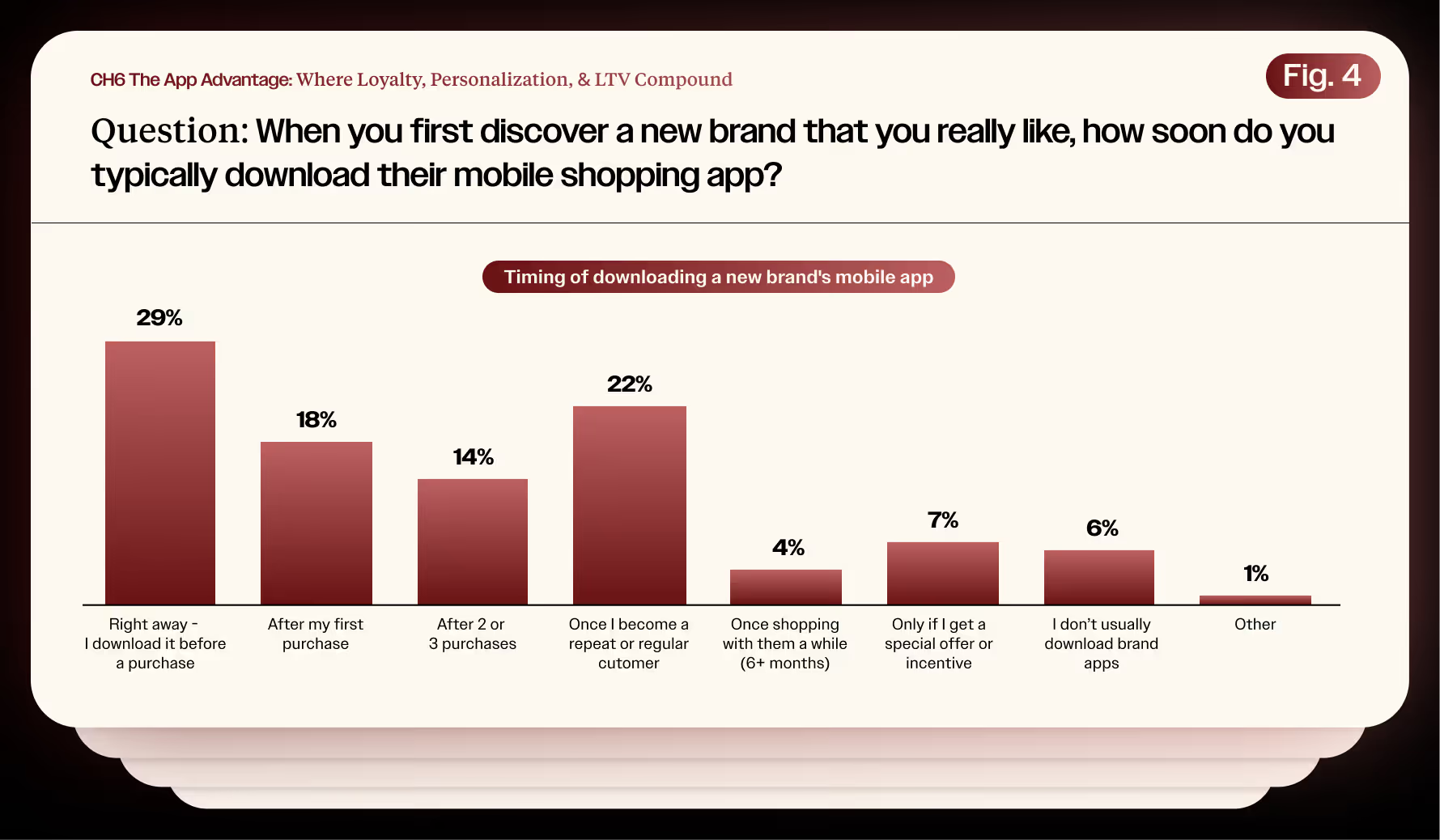
- High-Intent Adoption: 60% of shoppers install a brand’s app within their first three purchases; nearly 30% download it immediately upon discovery.
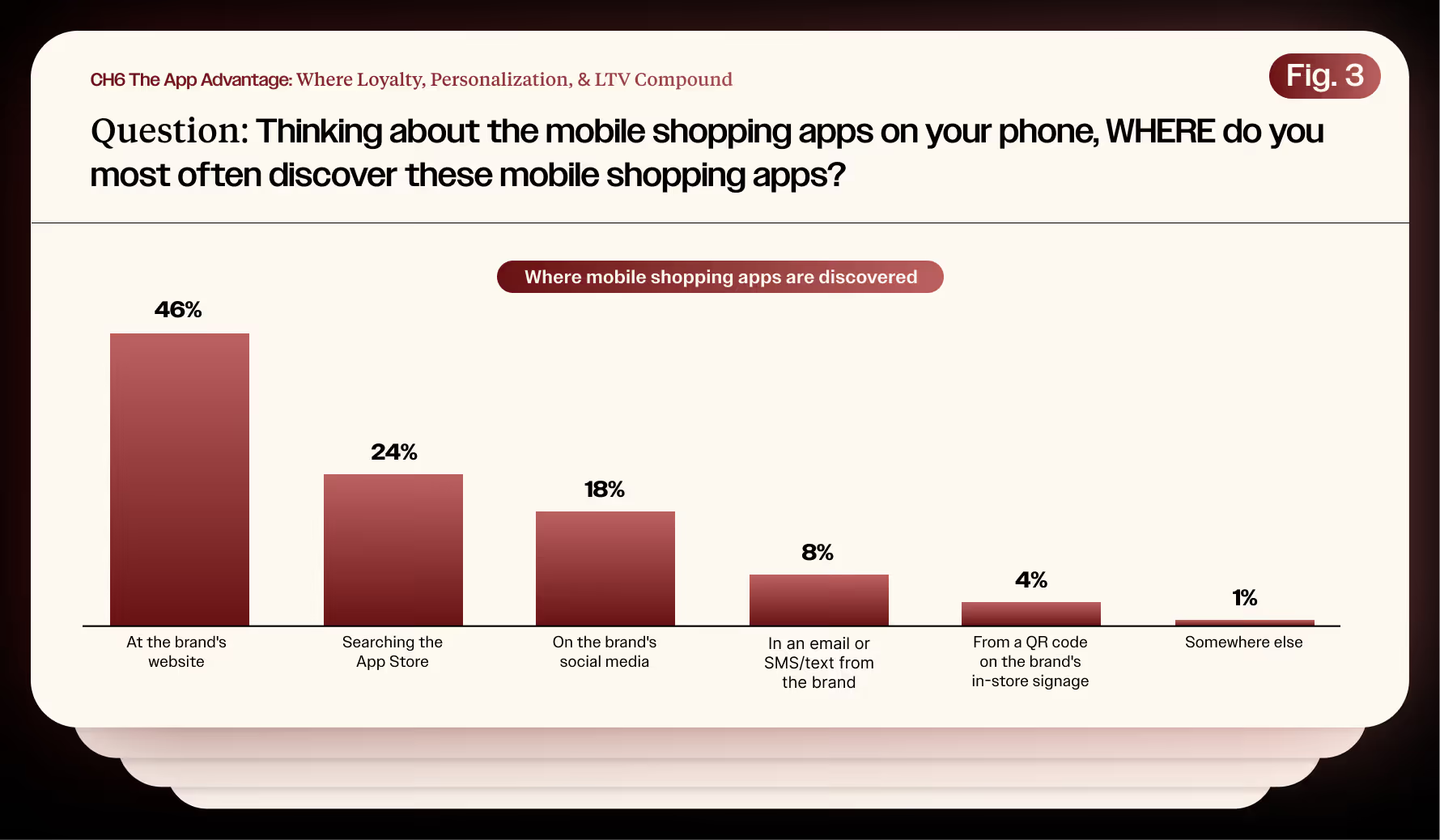
- Your website is the engine: 50% of app discovery happens on your site, not social.
What the Data Shows
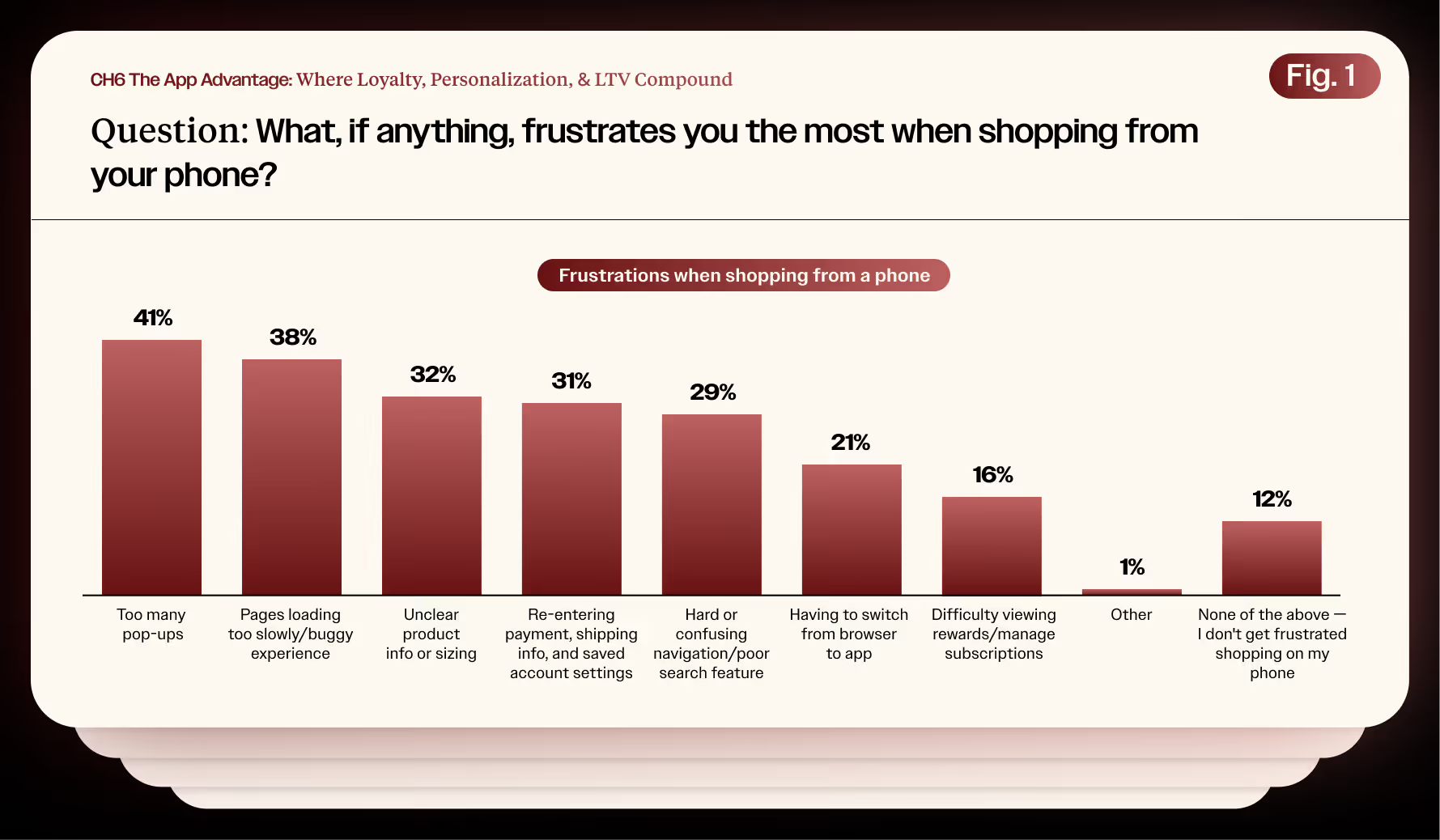
1. Mobile Frustration Is Universal and Apps Solve It.
- Only 12% of shoppers say mobile browsing never frustrates them. The biggest friction points are structural:
- Pop-ups (41%)
- Slow/buggy pages (38%)
- Unclear info, re-entering details, confusing navigation (25%+ each)
- Operator takeaway: Shoppers don’t abandon brands because they want less mobile, they abandon because mobile web still breaks under pressure.
2. Mobile Experience Is a Conversion Determinant
- 90% say great mobile UX matters
- Only 1% don’t care at all
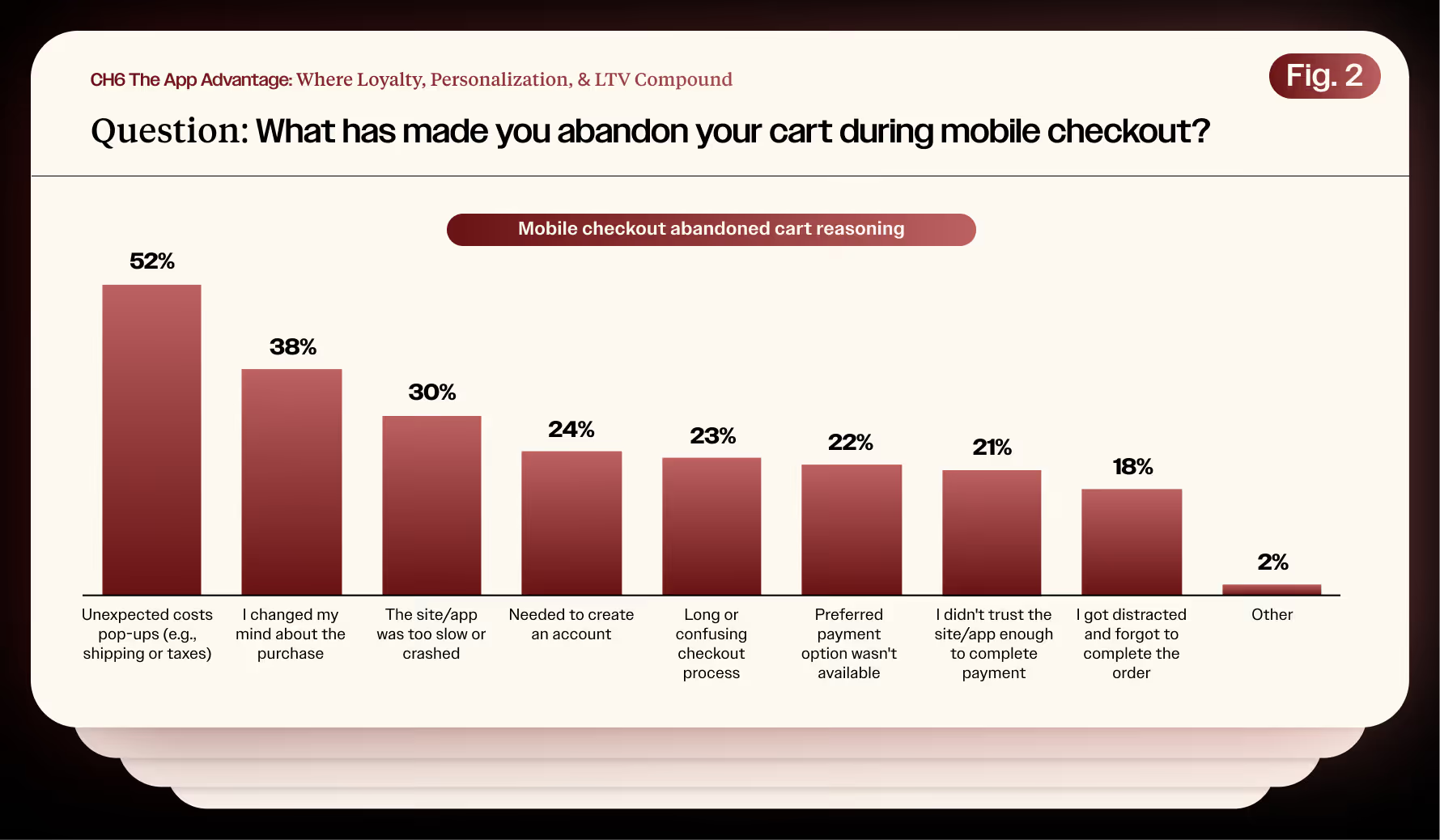
- Shoppers rarely abandon checkout, but when they do it's because friction interrupts intent:
- Unexpected shipping/taxes (50%)
- Changing their mind (38%)
- Technical friction or forced account creation (25%)
- Operator takeaway: The fastest path to higher conversion isn’t more persuasion, it’s less friction.
3. Apps Beat Mobile Web Across Generations
- Apps have become the preferred shopping environment… not just for Gen Z and Millennials.
- 50% prefer shopping in an app.
- 33% prefer the mobile browser.
- Preference is strongest among younger shoppers, but apps lead in every age group
- The shift is clear: shoppers expect app-level speed and ease everywhere, but only apps consistently deliver it.
4. App Download Behavior is Fast and Intentional
- App adoption isn’t a long nurture cycle. It happens early.
- 60% install within the first three purchases
- 29% install immediately when discovering a brand
- Only 71% of impulse purchases happen on mobile
- And the first moments after download are high-intent:
- 27% browse or shop immediately
- 20% explore app features
- 20% look for rewards or discounts
- Operator takeaway: The download is the opt-in moment, but the first few sessions determine whether the app becomes habit or gets deleted.
5. Trust Skyrockets When Brands Have Apps.
- 67% of shoppers say they trust and engage more with brands that have an app.
- For Gen Z, this climbs even higher (80%).
- For Boomers, trust is lower but still meaningful.
- Operator Takeaway: An app isn't just a conversion tool; it’s a credibility marker. In a crowded market, having a dedicated icon on a user’s home screen signals that your brand is a permanent fixture, not a passing trend.
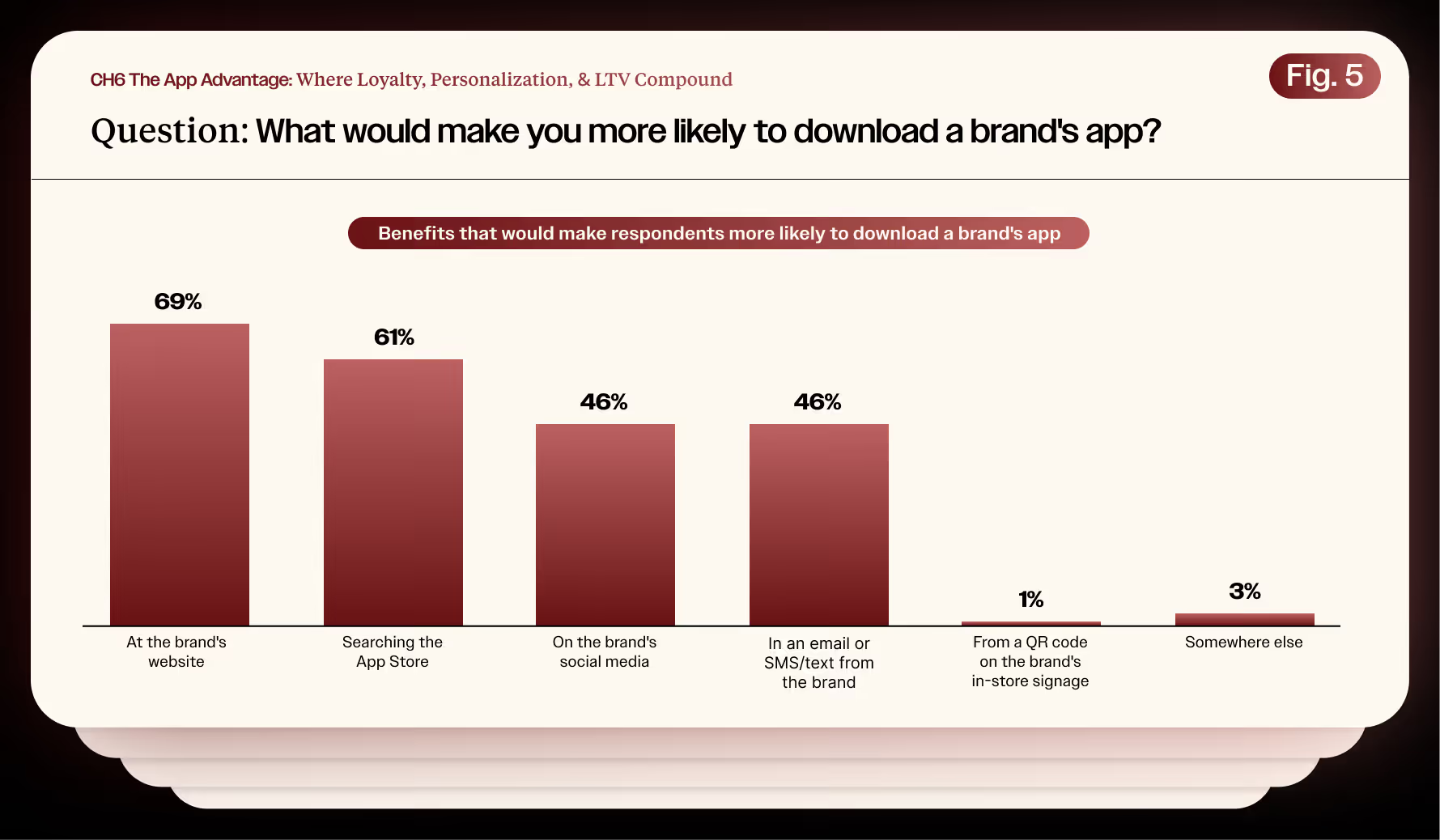
6. Websites Drive App Discovery, Not Social.
- While social media is great for top-of-funnel awareness, it isn't the primary driver for app adoption.
- 50% find apps on the brand’s website
- 24% via App Store search
- 18% via social
- 8% via text
- 4% via QR codes
- Operator Takeaway: Your mobile website is your #1 install engine. Stop over-investing in "App Install" social ads and start optimizing your web-to-app banners (Smart Banners). If a shopper is already on your site, they are at the peak of their intent—capture them there.
- Pro-tip: Easily build app marketing with Capture Kit.
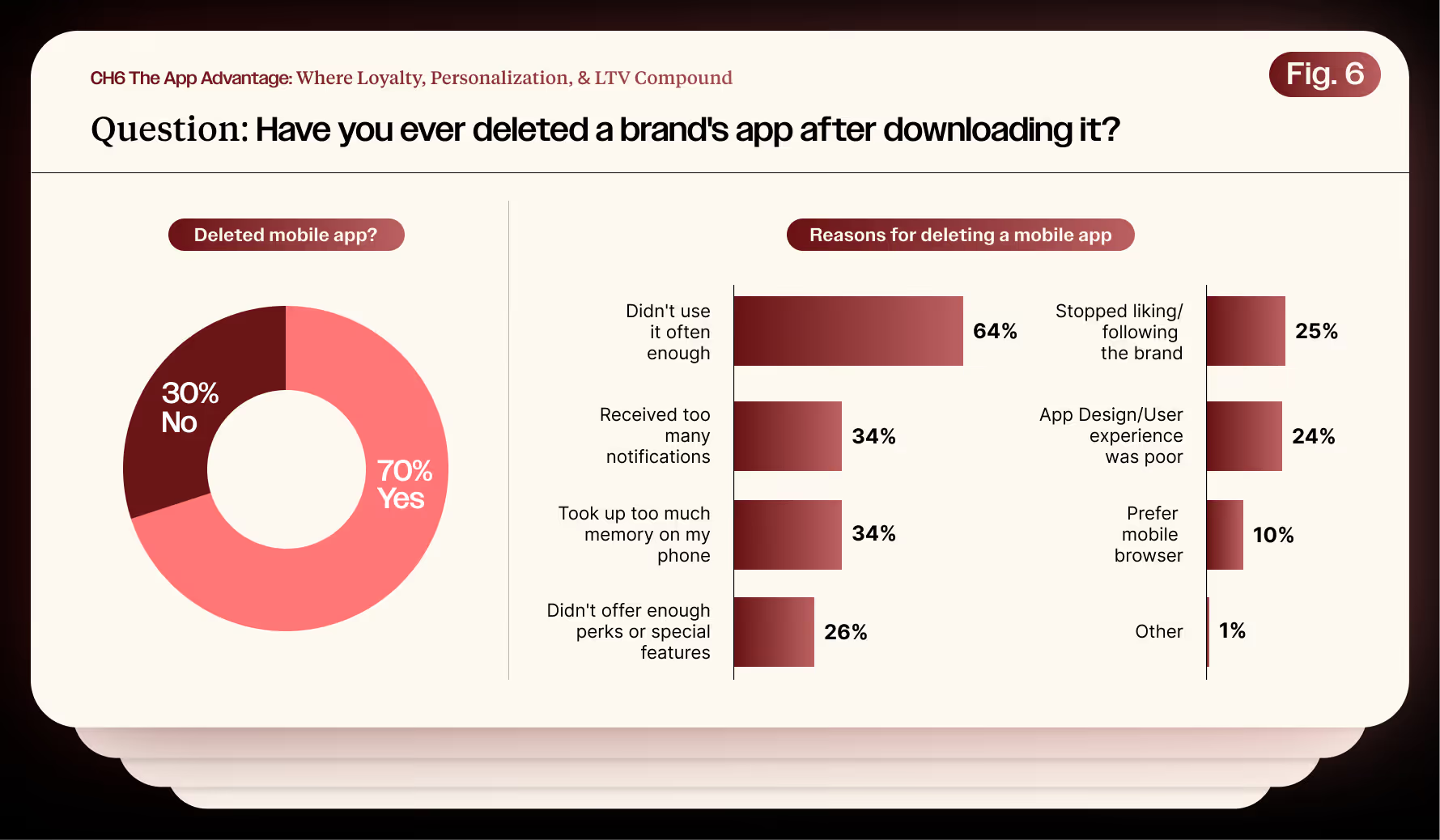
7. Retention Is The Biggest Hurdle on Mobile.
- 70% have deleted a brand’s app at some point. Why
- 64% due to lack of usage
- ~33% due to notifications or storage issues
- 25% cite poor design
- Only 10% prefer a mobile browser over an app
- The primary deletion driver isn’t dissatisfaction — it’s low activation and low habit building.
- If the app doesn’t become useful within the first few sessions, shoppers churn.
What It Means for Brands
Why Your App Is the Only Surface You Truly Control
The modern shopper expects app-level convenience everywhere, but only branded apps actually deliver it. Mobile browsers still break, load slowly, require re-entry of info, and create friction. Apps solve these problems, and they’re the only environment where brands control every variable.
And with shoppers jumping from TikTok → Instagram → Amazon → your site → your app → back to social, a mobile app becomes the only stable environment where brands can control experience, messaging, and personalization without wrestling algorithms.
Apps are no longer just a “second storefront.” They’re your:
- loyalty hub
- personalization engine
- repeat-purchase machine
- push-notification megaphone
- data-rich AI lab
When a shopper downloads your app, they opt into a longer-term relationship.
When they use your app, they build habits.
When your app personalizes itself around them, that habit becomes loyalty.
That said, after download, shoppers need early “activation energy” — AI helps build that momentum through:
- Personalized welcome flows
- Predictive “first purchase” incentives
- Nudges based on browsing frequency
- Adaptive home screen that updates when interest shifts
- Auto-generated “your favorites are back” reminders
- Engagement triggers before churn window hits
If you can keep your app valuable, you win LTV.
If you can’t, you’ll get deleted.
Your app is your most powerful AI lab.
As brands move beyond experimentation, the role of AI is shifting from a visible “innovation layer” to quiet infrastructure. The biggest gains aren’t coming from flashy AI features — they’re coming from embedding AI directly into everyday commerce workflows so it removes friction at scale without diluting brand quality.
Simon Hamblin, Co-Founder & CEO of fusefabric, argues that 2026 will be defined by this shift toward operational advantage:
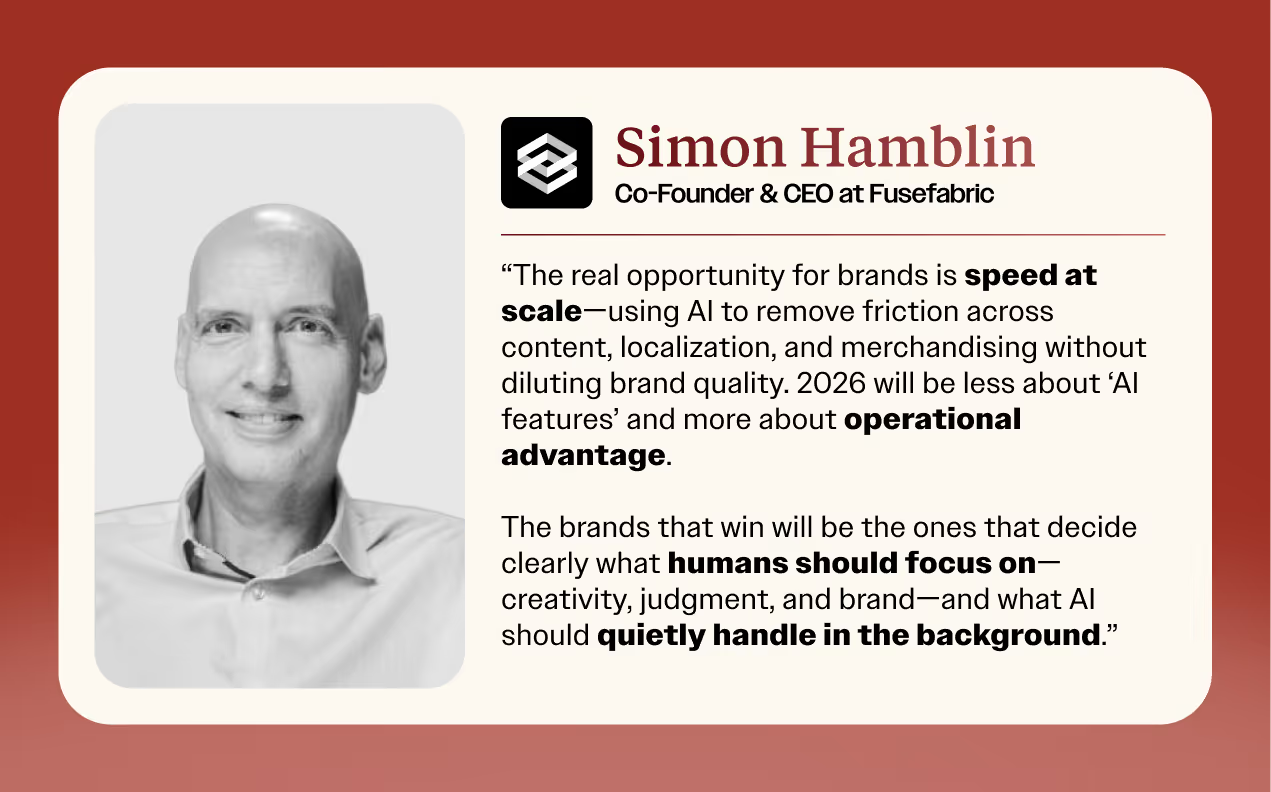
According to Hamblin, the strongest brands are building on API-first, platform-led foundations, allowing teams to experiment from the bottom up. This structural shift is already delivering tangible outcomes for leading operators:
- Automated translation across global markets to accelerate expansion.
- Faster product launches by reducing manual merchandising tasks.
- Smarter discovery journeys that move beyond static catalogs into conversational experiences.
- Leaner, more agile teams that use AI to handle background tasks, exposing organizations still slowed down by legacy thinking.
This shift matters because mobile apps are the only environment where this operating model fully works. Apps provide the controlled surface and real-time feedback loop AI needs to operate invisibly—personalizing the experience and accelerating decisions without fragmenting the brand.
The Takeaway: Apps aren’t just faster storefronts; they are the infrastructure that makes AI useful at scale.
Apps provide the controlled surface, behavioral signal, and real-time feedback loop AI needs to operate invisibly — personalizing experiences, accelerating decisions, and reducing friction without fragmenting the brand experience. When AI runs in the background and the app adapts in the foreground, speed and relevance compound without adding operational complexity.
In other words: apps aren’t just faster storefronts. They’re the infrastructure that makes AI useful at scale.
Ashley Hildreth, VP of Marketing and Growth at Tapcart, emphasizes that this infrastructure is the only way for brands to escape the rising costs of traditional channels:
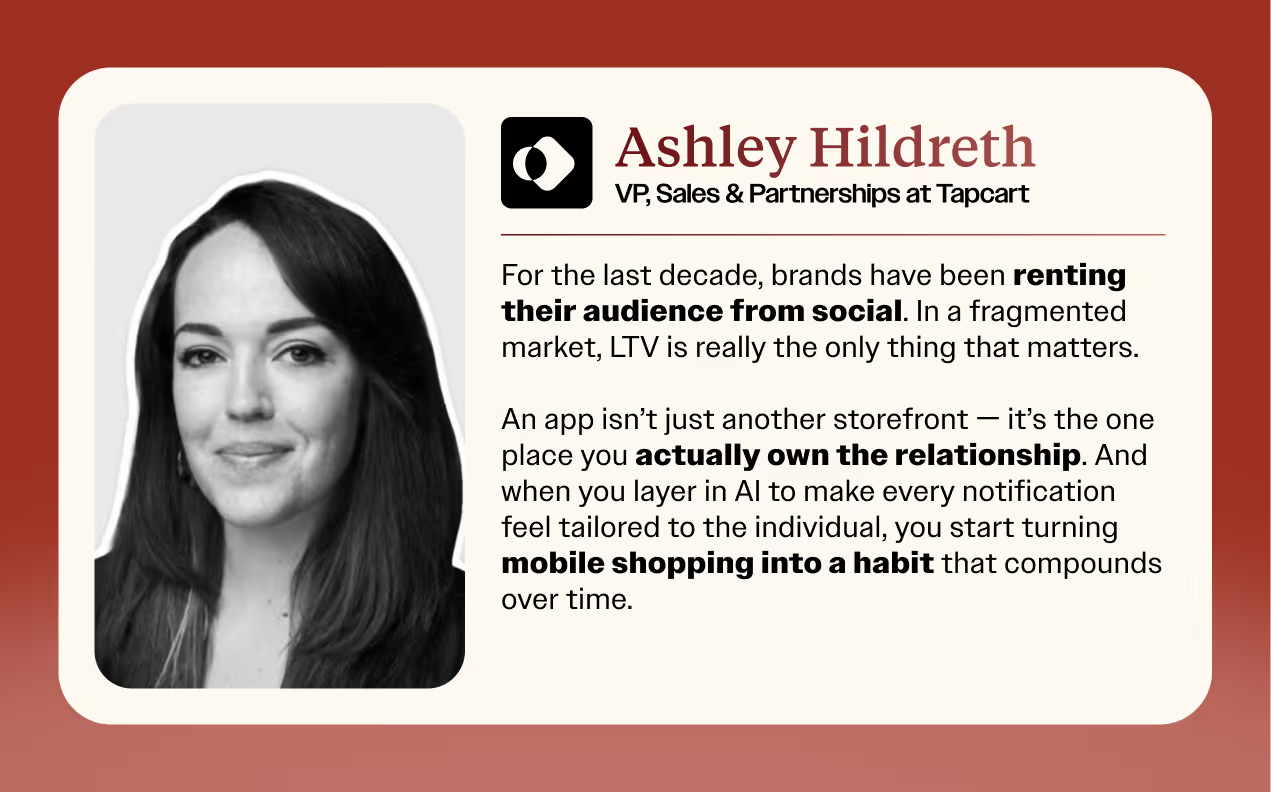
For years, retention has been treated as a clean-up function — something teams address only after a customer shows signs of churn. But as mobile behavior accelerates and shopper expectations rise, that reactive model is breaking down.
The most durable gains in lifetime value now come from anticipating needs before friction appears. Instead of waiting for customers to open a support ticket, abandon a subscription, or disengage silently, leading brands are using AI to predict when intervention matters — and to deliver the right message, incentive, or option at the exact moment it can still change behavior.
In this model, retention isn’t about saving a relationship after it’s damaged. It’s about designing experiences that make customers feel supported, in control, and confident long before they consider leaving.
The future of retention isn’t reactive rescue — it’s anticipating needs before friction appears.
For years, retention has been treated as a clean-up function—something teams address only after a customer shows signs of churn. But as mobile behavior accelerates, that reactive model is breaking down. The most durable gains in lifetime value now come from anticipating needs before friction appears.
Ebuka Chukwuonwe, Technology Partner Manager at Recharge, explains that while AI is a powerful tool, it must be paired with a thoughtful, human-centric strategy:
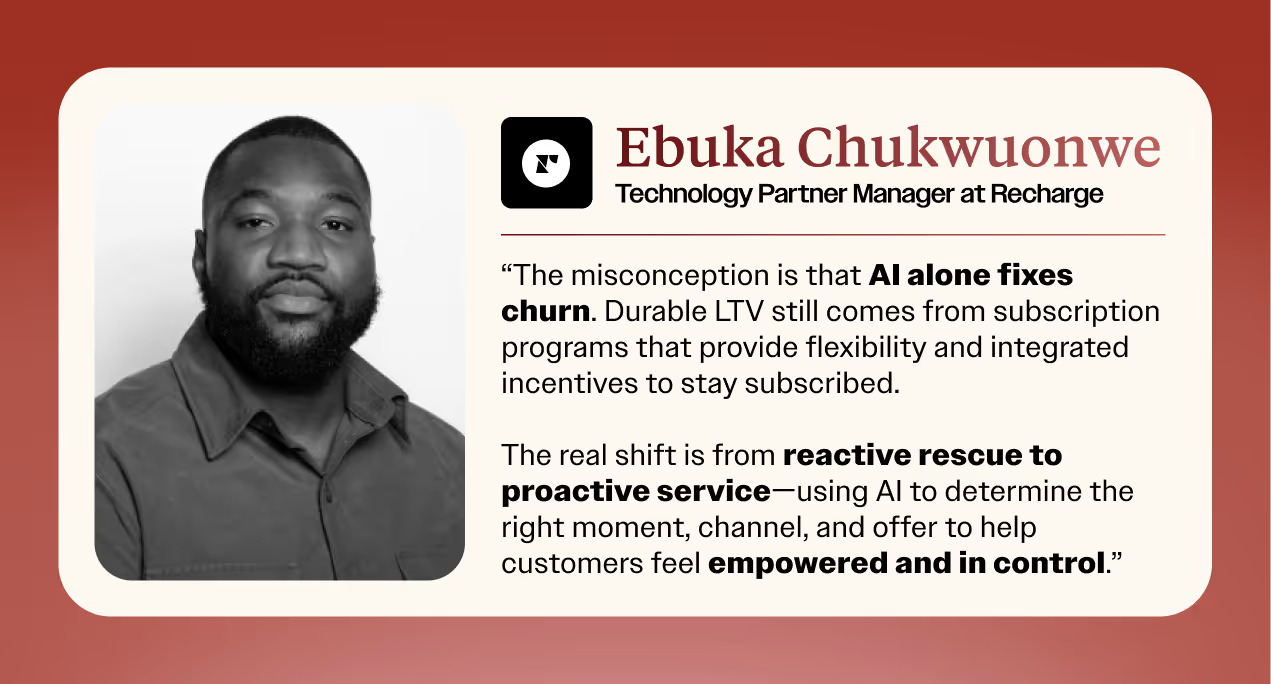
According to Chukwuonwe, the future of retention isn’t about a "rescue mission" after the damage is done; it’s about thoughtful interventions when customers are first considering canceling. By shifting to a proactive service model, brands can ensure their customers feel understood and supported long before they reach a point of frustration.
In this model, AI acts as the navigator—identifying the exact moment and channel to deliver an offer or update that keeps the customer in the driver’s seat of their own experience.
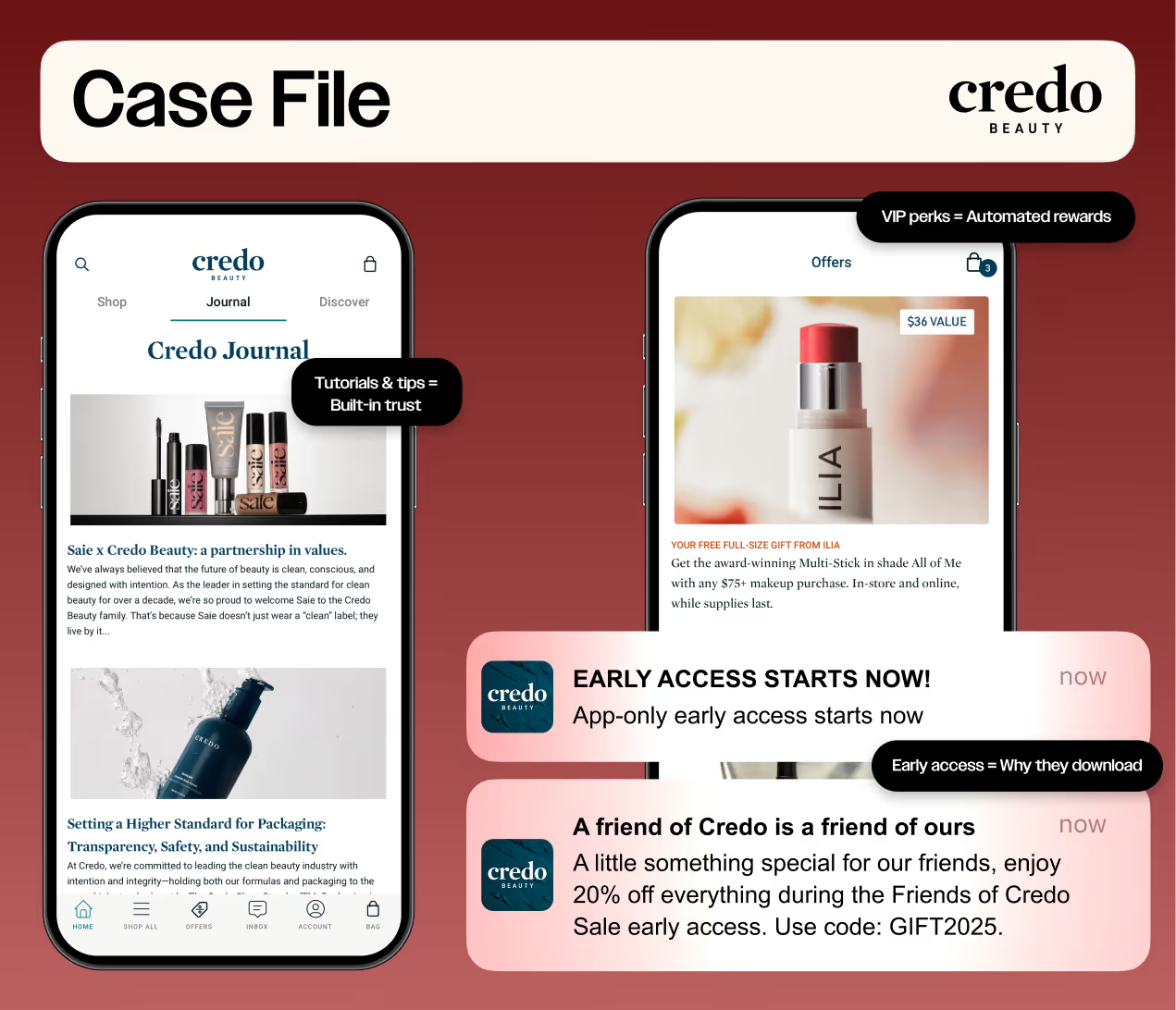
Case File → Credo Beauty: Make Trust the Offer (So You Don’t Need Bigger Discounts)
Credo drove higher basket quality by embedding education and proof directly into the mobile shopping flow, then using app-first early access and owned push to convert high-intent moments without adding headcount.
Beauty shoppers don’t just need a deal... they need certainty. Credo reduces “hesitation friction” (ingredients, performance, fit) at the exact moment of purchase.
Proof (from Credo’s app strategy):
- The Velocity Win: Hit their 6-month incremental revenue goal in just 2 months.
- Basket Quality: +23% AOV and +30% UPT (Units Per Transaction) on app vs. web.
- The "Net-New" Engine: 15% of initial app orders came from new customers (proving the app isn't just for existing fans).
- Extreme Efficiency: The team spends only ~1.5 hours per week managing the app—no new headcount or developers required.
Steal this play:
- Launch into a moment: tie installs to a tentpole event (like the Friends of Credo) and make the app the “early access lane.”
- Make content a conversion tool: put short editorial modules (routine builders, “why it works,” FAQs) inside PDP and category browsing.
- Use push for clarity, not noise: reserve push for time-sensitive value (early access, back-in-stock, tier perks), not generic promos.
- Merch the value automatically: surface GWPs/threshold perks where intent is highest (home → collection → PDP → cart) so shoppers don’t miss the deal.
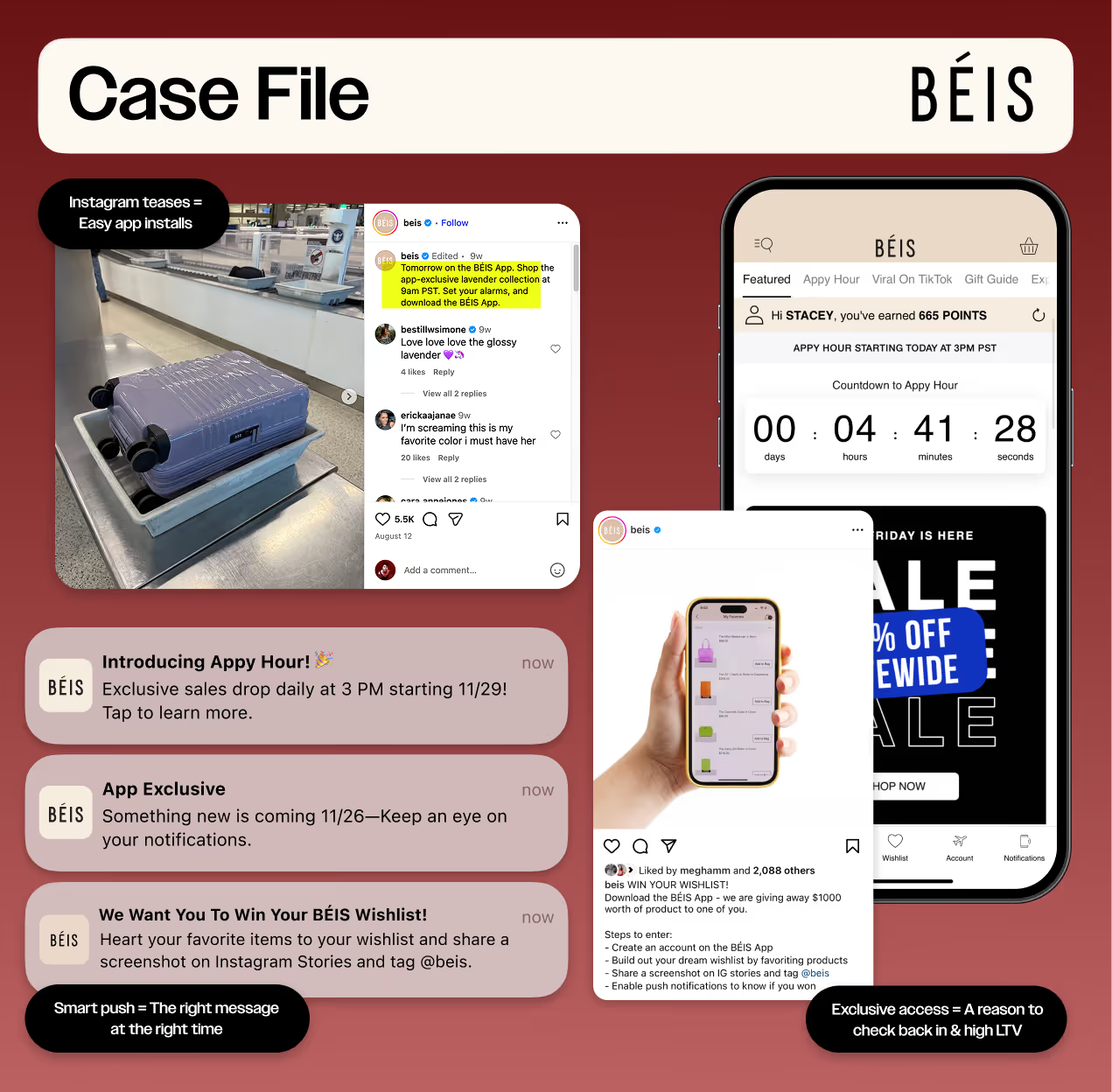
Case File → BÉIS: Solving the "Low-Frequency" Purchase Gap
BÉIS proves that you don't need a daily-use product to build a daily-use app. By positioning the app as a content and early-access hub, they stay top-of-mind between big-ticket purchases. This "always-on" engagement ensures that when a shopper is finally ready for a new luggage set, BÉIS has already won the sale.
The Proof:
- Conversion Power: 67% higher conversion rate on the app vs. mobile website.
- Basket Quality: +19% AOV on the app vs. the website.
- Direct Growth: The app accounts for 13% of total US revenue.
- Profitability Lever: 12% of app revenue is driven by push notifications—a channel with $0 per-message costs, unlike SMS or paid ads.
Steal this play:
- Sell “membership,” not just messages: gate behind-the-scenes content, previews, and launches so the app feels like VIP access.
- The "24-Hour" Habit: By granting app users 24-hour early access to every new drop, BÉIS "trains" its most loyal customers to prioritize the app as their primary shopping surface.
- Bridge the Physical & Digital: During real-world pop-ups and activations, "Download the App" is the primary CTA to unlock event-only perks.
- Protect the "Ping": BÉIS reserves push notifications for high-signal moments (drops, back-in-stock alerts, and travel-season triggers).
AI Actions to Try Now
How AI Transforms The App Experience
1. From Static Homepages to Self-Rewriting App Feeds
Your app sees everything: scroll depth, session timing, browsing clusters, item saves, categories skipped. AI uses this to build dynamic personalization engines that:
- Predict what each shopper wants next
- Auto-rank products in personalized feeds
- Surface replenishment reminders before items run out
- Highlight loyalty-earning opportunities based on behavior
- Trigger offers when intent is highest
Think: Your homepage becomes a living organism — different for every shopper.
2. Set-and-Learn: AI That Brings Shoppers Back Before They Churn
Manual segmentation is dead. AI automatically orchestrates:
- Push reminders
- Loyalty updates
- Discounts based on predicted receptiveness
- Replenishment nudges
- Back-in-stock pings
- “You left this behind” micro-prompts
AI knows when to send, what to send, and what channel to use — all calibrated to maximize LTV.
3. App as Concierge: Messaging That Feels Human at Scale
AI ensures every push, email, and PDP feels human and feels like your brand. It adapts tone by:
- Age segment (Gen Z ≠ Boomers)
- Category (luxury ≠ essentials)
- Intent (browser vs cart abandoner)
- Emotional cues (price sensitivity, urgency, loyalty stage)
Think: A push notification that sounds like a real concierge, not a bot.
Mini AI Toolbox
Tapcart AI Offers: Auto-generated, personalized discounts delivered at the right moment.
- Creates personalized offers automatically
- Predicts which users will respond + when
- Chooses the right format (modal, banner, push)
- Sends autonomously — no segmentation required
Tapcart AI Push: Observes shopper behavior, then builds and ends personalized messages you wish you had time to send.
- Picks up key moments: views, favorites, cart adds, back-in-stock, new drops
- Win-back messages tailored to what a lapsed customer used to buy
- Groups shoppers by real behavior and intent
- Automatically generates thousands of on-brand, personalized push
- For shoppers, it feels relevant, not random, because it reflects what shoppers actually care about.
- For your team, core journeys like cart recovery and win-back are handled automatically. You review, refine, and approve while Tapcart AI does the heavy lifting.
Tapcart’s AI Autopilot: Say goodbye to manual updates, double setup, and extra busy work. AI Autopilot automatically pulls in new content when published to your website and recommends blocks to build in your app. All content synced and built automatically, and nothing new published without your permission.
- Automatically keeps app collections updated
- Re-merchandises categories based on what’s trending
- Pulls in Shopify changes instantly
- Uses predictive logic to elevate products likely to convert
Book a personalized demo of your mobile growth engine
You’ve seen the strategy. Now see how loyalty, personalization, and retention compound for your brand in a 1:1 strategic walkthrough.

See how top brands use apps to increase conversion, AOV, and lifetime value without relying on deeper discounts
Explore how AI-driven personalization, push, and merchandising work together across the full customer journey
Identify where your current mobile experience is leaking value — and where compounding gains are possible
Get a tailored view of how Tapcart can support your 2026 mobile, retention, and growth strategy


